What does Trump's midterm elections loss mean for strained US-India ties?
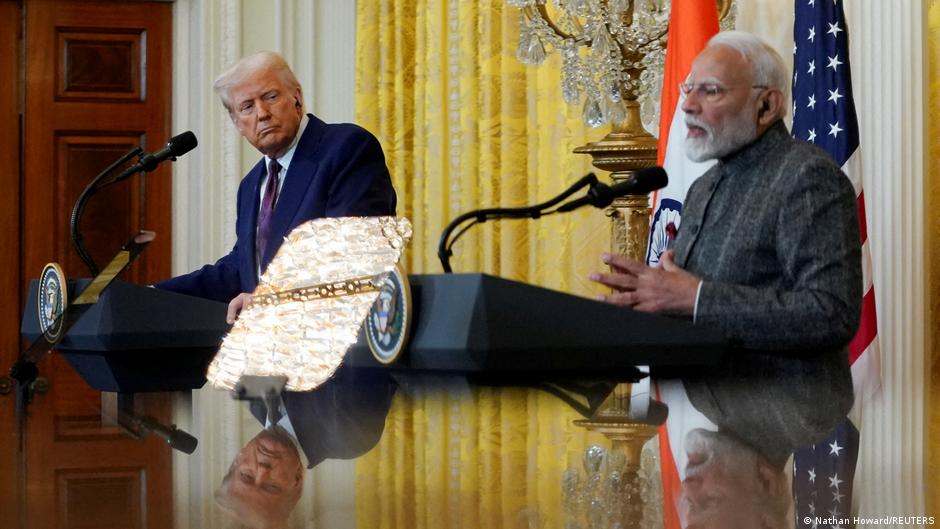
Donald Trump's electoral setback might give New Delhi and Washington space to reset relations, but there is no guarantee that the US will actually change its approach to India.
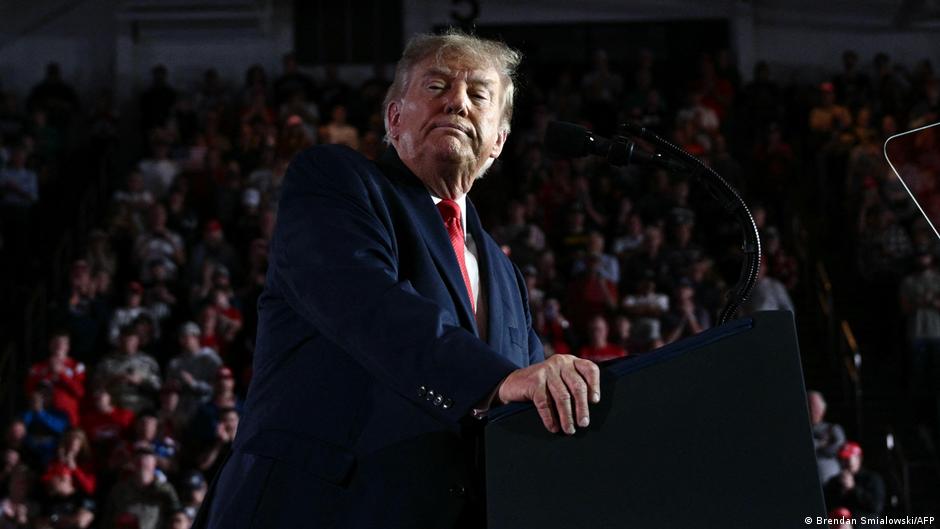
With the US Democrats scoring a resounding midterm victory and taking control of both chambers of Congress, the Republican administration led by Donald Trump is set for a new level of scrutiny until the end of Trump's term.
Trump is likely to face pushback on his controversial foreign policy, which saw the US alienate most of its allies and get entangled in yet another unpopular war in the Middle East. At the same time, the Trump administration has also taken a slew of less conspicuous but still highly controversial moves on the global stage, including a series of confrontations with India.
The ties between New Delhi and Washington are still strained by a stalled trade agreement, restrictions on immigration, and disagreement over India buying Russian oil and weapons, despite the US granting an oil ban waiver in March 2026 and Trump waving some of the Russia sanctions in October.
And while the new US Congress can choose to pressure Trump over issues such as tariffs and immigration, the president still wields significant authority on foreign policy.
The immediate test for Trump's India policy is trade. India and the US have yet to formalize the interim framework discussed by Trump and Prime Minister Narendra Modi in February, with the two nations still at odds over market access and other trade commitments.
Shanthie Mariet D'Souza, founder of the Mantraya Institute of Strategic Studies, expects the new Congress to apply "increased scrutiny of protectionist measures" pushed by the Trump administration.
The US lawmakers could push for "stronger trade oversight and clearer standards for environmental and labor issues," she told DW.
For India, whose largest export market is the US, this could offer some breathing room.
She also emphasized that "the fundamental pillars of the India-US strategic partnership are expected to remain strong" and "the long-term goal of deepening economic ties is likely to continue."
Immigration presents a different challenge. The administration's tightening of H-1B visa rules, including imposing a $100,000 (€88,761) payment for certain new petitions, has alarmed Indian professionals and tech companies that rely on the visa program to secure jobs in the US.
A Democratic majority could increase scrutiny on that issue as well, but would not automatically reverse measures introduced by Trump's executive action.
"Both parties have bigger issues to grapple with," said Rajkrishna Iyer, a California-licensed immigration lawyer. "For the last 25-plus years, Congress has done nothing for immigration," he added.
Iyer believes that legal immigration itself is not a major priority for voters. Nevertheless, he sees the midterms' result as a message to Trump about his immigration policies.
"A rational president would not spend time imposing further restrictions on legal immigration. But as we know, the president is not rational," Iyer said.
The immigration lawyer believes that new, steep fee for some H-1B applications will be challenged in court.
"Most likely, the new rules will not come into effect. And if they do, federal courts are likely to strike them down because the fees are not reasonable," said Iyer.
While the executive branch of government can raise fees to reflect administrative costs and inflation, Iyer argues that charges of this magnitude could deter people from pursuing legal immigration. "Only Congress can pass such legislation," he said.
The new balance of power in Washington could also trigger a new geopolitical reshuffle and a change of course on Russia. However, it is unclear if the Democrat-dominated Congress will force any changes in the dispute between New Delhi and Washington over India's purchasing Russian energy. During a congressional vote on Russian sanctions in September, a substantial number of Democrats joined Republican lawmakers to endorse trade restrictions against Moscow.
"Regarding Russian oil, the administration is likely to maintain its preference for reducing dependence on Moscow, but it will approach this issue with diplomatic caution to avoid straining relations with New Delhi," D'Souza says.
The war in Iran adds another dimension. Any new escalation could affect energy exports from the Middle East and make India more vulnerable due to its need for high oil imports.
But Navtej Sarna, a former Indian ambassador to the US and Israel, urges cautions when discussing the future of US policy in the Middle East.
"It may be facile to try and parse these results for their immediate impact on specific areas of foreign policy. Much will depend on how Trump reacts," Sarna told DW.
At the same time, Sarna expects Washington to become "a more contested place," with greater congressional pushback on issues that divide India and the US.
"If that injects some balance and stability and restores institutional linkages it's good for the long-term future of our relationship," he added.
Security cooperation is another stumbling block. New Delhi is still by far the biggest buyer of Russia's arms exports, which irritates Washington. At the same time, India has objected to US supplying weapons to Pakistan, including the $686 million sale of advanced military tech for Pakistan's F-16 jets.
"Washington's military support for Pakistan remains a complex issue. However, ongoing regional adjustments and US concerns about stability in the region will probably prevent any significant policy changes," said D'Souza.
The broader question is whether the election produces a more predictable Washington or a more confrontational Donald Trump.
A weakened president could be more inclined to seek compromises at home. But Trump could also respond to congressional resistance by taking a harder line elsewhere.
"We hope the electoral setback will prompt Trump to undertake a more considered review of his earlier actions," Amitabh Mattoo, dean of the School of International Studies at Jawaharlal Nehru University, told DW.
But he also warns that it too early to assess the implications for India-US relations.
"Rather than moderating his approach, the president could double down and adopt an even harder line towards New Delhi if he comes to believe that Indians, particularly sections of the diaspora, played a role, directly or indirectly, in his party's defeat."
Harsh Pant of the Observer Research argues that the US president retains considerable leverage over foreign policy despite the Republican setback, and that the India-US partnership has traditionally enjoyed bipartisan support.
"I don't think India will be one of those issues" on which the White House and Congress are likely to clash, Pant told DW.
But the experience of the past two years, he argues, reinforces the need for India to reduce its dependence on any single partner.
"The need for diversification of partnerships, the need to be self-reliant in certain critical sectors, the need to have alternative supply chains — all of those issues remain where they are. The US midterms do not really change the calculus," he says.
- trump
- midterm
- loss
- india
- election
- tie
- donald
- setback