The Inconvenient Truth: When parties take turns winning while the nation keeps losing
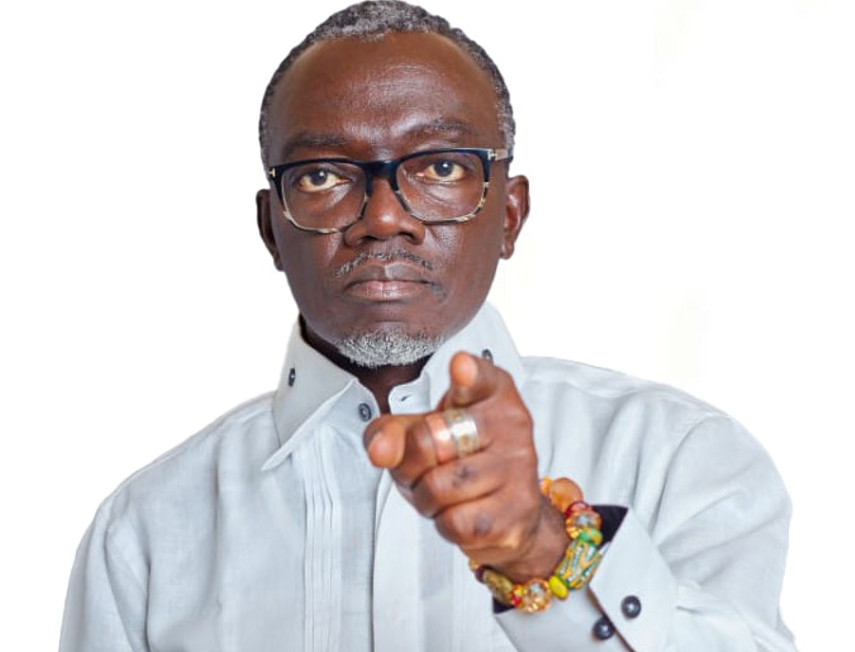
Prof. Douglas Boateng, Chartered Director UK | Chartered Engineer UK | Fellow, Institute of Directors UK | Fellow, Ghana Institution of Engineering | Governance, Industrialisation and Supply Chain Strategist | Founder, Boardroom Governance Summit | Founder and Scriber, NyansaKasa (Words of Wisdom) Cheering For Turbulence At Thirty Thousand Feet Imagine two political parties aboard the same aircraft, one seated in the cockpit and the other in the cabin, waiting with visible impatience for its turn at the controls. NyansaKasa (Words of Wisdom) observes that “only a confused passenger celebrates…
When political rivalry grows so fierce that a country's progress is treated as an electoral threat, democracy becomes a relay race in which the baton is passed faithfully from party to party while the nation itself never leaves the starting line. The bill, as always, is sent to ordinary citizens and to generations not yet born.
By Ing. Prof. Douglas Boateng, Chartered Director UK | Chartered Engineer UK | Fellow, Institute of Directors UK | Fellow, Ghana Institution of Engineering | Governance, Industrialisation and Supply Chain Strategist | Founder, Boardroom Governance Summit | Founder and Scriber, NyansaKasa (Words of Wisdom)
Cheering For Turbulence At Thirty Thousand Feet
Imagine two political parties aboard the same aircraft, one seated in the cockpit and the other in the cabin, waiting with visible impatience for its turn at the controls. The pilots make mistakes, some of their decisions deserve robust criticism, and the passengers have every right to demand better navigation and a safer journey. Then something extraordinary happens, because instead of insisting that the crew correct course, a few passengers begin quietly hoping for enough turbulence to discredit whoever is flying, and some look disappointed whenever the ride becomes smooth. The pilots, for their part, grow so busy proving their critics wrong that they ignore perfectly sensible warnings about the state of the engines. Now imagine that the aircraft is a nation, with government in the cockpit, the opposition in the cabin, citizens in economy class and the economy itself holding everyone aloft, and the absurdity suddenly becomes painfully familiar. NyansaKasa (Words of Wisdom) observes that "only a confused passenger celebrates the pilot's failure while forgetting that both are travelling in the same aircraft."
We create political parties to offer competing visions of national progress, and we hold elections so that leaders remain answerable, yet competition can quietly decay into something closer to hostility. A factory closes and families see unemployment while strategists see campaign material, a currency weakens and businesses see rising costs while rivals see an opportunity for embarrassment, and a stalled hospital project becomes less a tragedy for the sick than a debate about whose fault it is. Scrutiny of setbacks is essential, but there is a profound moral difference between exposing failure so that it can be corrected and privately welcoming failure because it might be useful at the ballot box. Inflation never checks a membership card before raising the price of bread, and unemployment has never once asked a young graduate how she voted. Perhaps each party should run its own electricity grid, hospitals and currency for its loyal supporters, so that everyone could enjoy only the consequences of their preferred party's decisions. Sadly, economics has never shown the slightest interest in party colours, and it is unlikely to start now.
The Political Tailor And The Recycled Idea
Opposition is indispensable to democracy, for it exposes wrongdoing, challenges weak policy and presents alternatives. The difficulty is not disagreement but the strange alchemy by which disagreement becomes an incentive to see the nation stumble. A promising reform may be resisted because its success would flatter the governing party, while a government may reject a sensible opposition proposal simply because accepting it would look like defeat. Thus unfolds a curious national theatre in which one party proposes an idea, the other condemns it, an election is held, the condemning party wins, and the very same idea reappears a year later dressed in a political uniform. The policy has not changed; only the tailor has. NyansaKasa (Words of Wisdom) captures the comedy and the cost together: "when a good idea becomes bad because an opponent proposed it, national progress becomes a prisoner of political ownership."
The Most Expensive Habit Of All Is Starting Again
The deepest economic wound inflicted by excessive polarisation is the death of continuity, because industrialisation demands patience, infrastructure demands persistence and education reform demands consistency, while electoral cycles are comparatively short. When an incoming government judges an inherited project chiefly by its political parentage rather than its economic merit, the nation pays twice, first to begin the project and again to abandon it. Nigeria's Presidential Projects Assessment Committee reported in 2011 that 11,886 federal government projects lay uncompleted or abandoned, requiring an estimated 7.78 trillion naira to finish, and the Ajaokuta steel complex has stood for decades as a monument to billions spent without sustained production. A bridge does not become structurally unsound because a rival laid its foundation, and a hospital does not become unnecessary because the ribbon was cut by the previous administration. As NyansaKasa (Words of Wisdom) warns, "a nation that demolishes yesterday's foundations whenever leadership changes should not be surprised when tomorrow's buildings remain unfinished."
What Singapore, Seoul And Gaborone Understood
Investors fully expect political parties to disagree; what they need is the reassurance that contracts will be honoured, regulations applied consistently and institutions kept professionally competent whoever wins. Singapore's transformation rested on long range planning and institutional steadiness, South Korea's industrial rise required decades of coordinated investment in skills and technology, and Botswana's careful stewardship of its diamond wealth shows what institutional stability can achieve. These countries followed very different paths, and none offers a template for Africa to copy, yet they share one lesson that deserves to be framed and hung in every parliament: long term development cannot be left entirely at the mercy of individual political fortunes.
Polarisation also has the curious effect of turning every national challenge into a football. Unemployment is kicked from one end of the pitch to the other, healthcare is headed into the stands, public debt is dribbled endlessly in midfield, commentators deliver passionate analysis, supporters roar, and social media erupts, yet the problem remains exactly where it started. The only real difference between our politics and a football tournament is that football matches eventually end, whereas our political arguments appear to enjoy unlimited extra time with no penalty shootout in sight. NyansaKasa (Words of Wisdom) offers a sobering verdict: "when leaders spend more time scoring political points than solving national problems, citizens become spectators in a match where everybody loses."
A Young Continent Cannot Wait For A Ceasefire
The heaviest price of permanent political warfare falls on those with the least say in starting it. With a median age of roughly 19, Africa is home to the youngest population on earth, and that demographic promise could become an engine of prosperity or a source of profound frustration depending on whether productive investment, industrialisation and skills development are sustained across successive governments. A graduate seeking work gains nothing from rival histories of who created unemployment, an entrepreneur battling unreliable power needs electricity rather than explanations. NyansaKasa (Words of Wisdom) reminds us that "young people cannot build their futures from political promises that are demolished before they become economic opportunities." A society that keeps postponing reform for the sake of rivalry may one day discover that its young people have lost patience not with one party, but with the entire political establishment.
Patriotism Must Be Larger Than Party Colours
Political parties are vital instruments of representation, but a party is not the nation, its leaders are temporary custodians of public authority, and its supporters were citizens long before they collected their membership cards. Yet polarisation tempts some citizens to celebrate national achievements selectively, depending on which party receives the credit, and makes others reluctant to acknowledge genuine progress because doing so would require a compliment to the other side. NyansaKasa (Words of Wisdom) sets a demanding standard: "true patriotism is revealed when you can celebrate your country's progress even when your preferred party receives none of the applause."
From Political Warfare To National Purpose
The answer is not permanent consensus, for democracy depends on disagreement and on the freedom to change governments, but on distinguishing healthy competition from the national priorities that deserve continuity. Countries should strengthen independent national planning institutions with long term mandates, and parties should agree a small charter of strategic priorities, such as foundational education, public health, water security, critical infrastructure and institutional integrity, while continuing to argue vigorously about how best to achieve them. Inherited projects should face independent technical and financial assessment before anyone decides to continue, restructure or end them, with the central question being value for money and value for development rather than political parentage. Parliamentary oversight should become more constructive without becoming less rigorous, public institutions should be staffed and judged on competence rather than loyalty, and citizens and the media should ask whether a policy works before asking who proposed it. Finally, every party must cultivate the maturity to applaud national achievements delivered under its rivals, because, as NyansaKasa (Words of Wisdom) puts it, "a party may win an election by proving its opponent failed, but a nation only wins when its people succeed."
The Unborn Child Holds No Membership Card
Picture an African child born twenty five years from now, who will inherit the schools we build or neglect, the hospitals we equip or abandon, the industries we develop or forgo and the debts we accumulate, but none of our campaign slogans. One day that child may study our debates and ask, "if you knew that development required continuity and cooperation, why did you spend so long proving that the other party could do nothing worthwhile?" We might mumble that an election was approaching, and history may listen politely, but the child will still be living with the consequences. Let us therefore return to our aircraft, where pilots may change and crews may propose different routes, but the engines must be maintained, the navigation must work, and nobody should ever cheer turbulence merely because it might embarrass whoever occupies the cockpit. We must learn to disagree without destroying, to compete without sabotaging and to transfer power without repeatedly transferring the country back to the starting line. NyansaKasa (Words of Wisdom) leaves us with a final reflection: "when political parties wait for one another to fail, a nation may spend generations waiting for itself to succeed." Political victory may belong to one party, but economic failure belongs to every citizen, and the Africa we desire remains, as it always has been, in our own hands.
Ing. Professor Douglas K. Boateng is a strategist in governance, industrialisation and supply chains, and serves as a professional chairperson, an international Chartered Director (UK) and a Chartered Engineer (UK). A Pan-Africanist and social entrepreneur at heart, he has spent his career working across public institutions, corporate boards and industrial policy, in Africa and beyond, guided by the conviction that strong institutions are built one honest decision at a time. His contributions to industry and academia have earned him more than six lifetime achievement awards. He is the founder of NyansaKasa (Words of Wisdom), a collection of daily aphorisms he has written and shared since late 2019, distilling decades of experience advising governments, boards, and enterprises on governance, accountability, and institutional resilience into words meant to challenge and endure. He convenes the Boardroom Governance Summit, Africa’s largest boardroom-focused summit, and writes a widely read weekly op-ed series titled “Inconvenient Truth” and “What Is Wrong With Us”, featured on some of the region’s leading digital media platforms. Professor Boateng can be reached via LinkedIn or at info@panavest.com.
- party
- nation
- idea
- nyansakasa
- word
- wisdom
- aircraft
- pilot