Germany’s Gen Z protest riots spark debate on integration and bias
Political debate about the recent Gen Z riots have raised the question: Can Germany talk about problems with integration without putting entire groups of people under suspicion?
Responses to the violence scenes that followed recent Gen Z demonstrations in Germany have revealed differences in opinion within the federal government over who or what is responsible.
While there is general agreement that the perpetrators responsible must be punished, some conservative lawmakers have largely blamed migrant groups — raising questions about whether they are identifying problems or reinforcing prejudice.
Leading Social Democrats have warned against generalizations and one CDU minister would prefer to examine the causes of the violence. Meanwhile, Gen Z's fears for the future are at threat of being overshadowed.
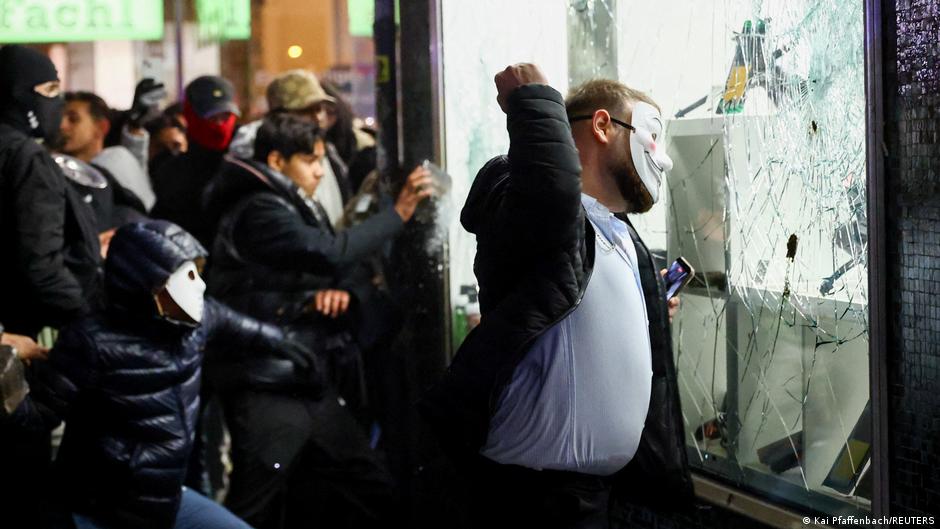
In Frankfurt, more than 100 police officers were injured, one severely, in the street battles that erupted after the protest on Saturday (October 31). Shops were damaged and looted, too. The situation in Cologne, Hamburg and Berlin also escalated.
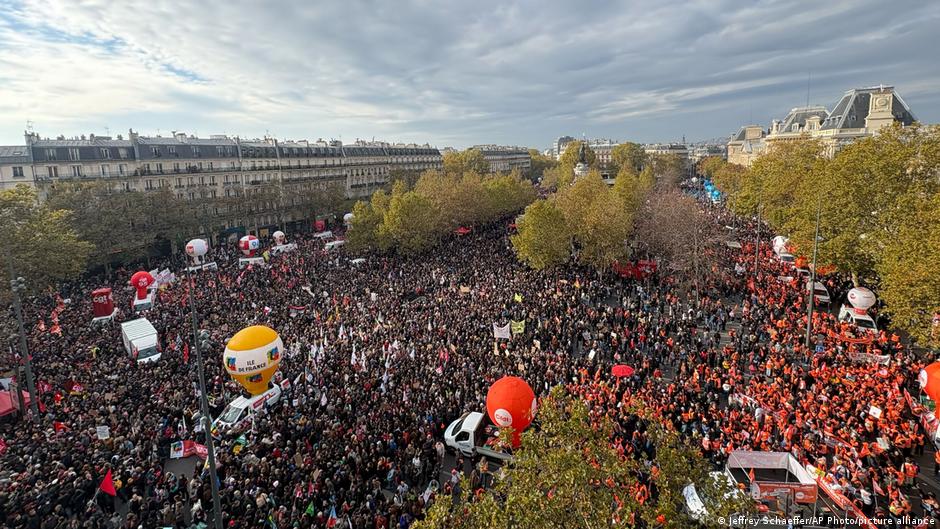
Earlier, tens of thousands of young people had taken to the streets across Germany in predominantly peaceful rallies. The initiative Gen Z regelt — which roughly means Gen Z takes charge — had urged young people to highlight their fears for the future and to call for better educational opportunities, affordable housing and more climate action.
German Interior Minister Alexander Dobrindt and Roman Poseck, Interior Minister of Hesse, the state in which Frankfurt is located, quickly set the tone of the response. Most of those arrested were German citizens, said Poseck (CDU), but added: "This group of offenders was predominantly from a migrant background."
Dobrindt, who is from Bavaria's CSU, the sister party to Friedrich Merz's CDU, said: "There were peaceful demonstrations, which into the evening were hijacked by violent left-wing groups and migrant hooligans."
Chancellor Friedrich Merz (CDU) backed the statements made by his Interior Minister. His assessment of the background of the offenders was based on "the observations of the investigating authorities and the emergency personnel on the ground," his spokesperson Stefan Kornelius said. It also matched "the images that many have seen."
Merz announced a tough approach toward the rioters. "Violence does not belong on our streets, and my government will show no tolerance here," Merz said, according to the script for a speech he was due to give at a closed-door CDU party event in Berlin on Monday (November 2). "Whoever attacks police and emergency services officers and loots shops attacks our freedom, ridicules society and the legitimate interests of young people."
The center-left Social Democrats (SPD), who are in a coalition government with the conservative CDU and CSU bloc, are in agreement on the point that criminals were involved. "It is criminals who attack and injure police officers and commit serious property damage," Defense Minister Boris Pistorius (SPD) told German public broadcaster ZDF on Sunday (November 1).
This is, however, where the similarities end. "What then are ‘migrant groups'?" said Pistorius, challenging the Interior Minister's choice of words. "Does that include people in the third generation living in Germany and who are German citizens? When do we stop drawing this distinction?" he countered. "I think that leads in the wrong direction."
The German federal government's integration commissioner, SPD politician Natalie Pawlik, followed up on Monday (November 2). "Always attributing such violent riots to migrant milieus is too simplistic," Pawlik told the German newspaper, the Frankfurter Allgemeine Zeitung. "Because blanket generalizations about groups also affect those with migrant backgrounds who demonstrated peacefully or who were themselves on duty with the police or emergency services."
She said nothing justified the outbreak of violence and that such crimes had to be punished. However, Pawlik added that if investigations showed that certain groups, in particular, were involved, then the root causes also had to be named. "We cannot ignore difficult questions about the lack of prospects, experiences of marginalization or possible integration problems," the integration commissioner said.
German Family and Education Minister Karin Prien (CDU) also wants to examine the causes of the violent behavior. She told German public radio broadcaster Deutschlandfunk that stirring resentment "would also be politically wrong." It is much more about reflecting upon reality. "If the (perpetrators) come from migrant backgrounds then that should cause us concern," Prien said.
According to Germany's Federal Statistical Office (Destatis), some 31% of the German population have a migration background. The proportion is higher in many big cities. The figure is over 50% in Frankfurt. Prien says it is necessary to examine why integration has been less successful in some groups of immigrants than others. The real challenge lies in facilitating societal participation and preventing parallel societies.
The political discussion was intensified by the Hesse interior minister suggesting a ban on further Gen Z protests. In respect of demonstrations planned for November 20, Poseck said that the right of assembly was very valuable, but social peace just as crucial. He said there had also been "massive attacks" against the police even during the demonstrations. "The organizers do not have these gatherings under control," he added.
The organizers of the demonstrations reject those accusations. They immediately distanced themselves from the violence. Germany's Family Affairs Ministry has announced that Karin Prien is due to meet with representatives from the Federal School Students Council (BSK) as well as the German Education Union (GEW) this week.
Prien herself called for younger people's interests to be taken into account more. "These are exactly the debates we need to be having, which young people are also very rightfully demanding," she told German public regional broadcaster RBB.
- germany
- gen
- debate
- integration
- protest
- riot
- bias
- question