‘In moments of pain, football comes together’: Spain says goodbye to Jesús de Miguel
Silence accompanied the funeral cortege as its made way from the funeral home to the parish church of San Miguel Arcángel carrying Jesús de Miguel Alameda, “Demi”, the Tenerife striker who died after an on-field collision with the Andorra goalkeeper Jesús Owono three days earlier. The club’s majority shareholder, Rayco García, had cried as they left the building where De Miguel’s body had laid in Santa Cruz de Tenerife and he asked his teammates to be close to his widow Maria, when he had vowed they would for ever take care of his daughter, Clara.
Only 3,587 people live in his family’s village but the streets of Navahermosa were fuller yet quieter to mourn the Tenerife striker at his funeral
The narrow streets of Navahermosa in La Mancha were fuller than they have ever been on Thursday afternoon and quieter too. Silence accompanied the funeral cortege as its made way from the funeral home to the parish church of San Miguel Arcángel carrying Jesús de Miguel Alameda, “Demi”, the Tenerife striker who died after an on-field collision with the Andorra goalkeeper Jesús Owono three days earlier. Only 3,587 people live in his family’s village but now they were joined by the game he loved. “We wanted to be close to his parents, his wife and daughter. In moments of pain, football comes together more than ever,” said Luis de la Fuente.
The Spain manager did not say much else; there was not much else he could say, not much anyone could. These have been dark, desperate days, days when it was impossible to assimilate what has happened, and there will be more. “We will get through this together but we will need help, professional help,” the Tenerife president, Felipe Miñambres, said. The club’s majority shareholder, Rayco García, had cried as they left the building where De Miguel’s body had laid in Santa Cruz de Tenerife and he asked his teammates to be close to his widow Maria, when he had vowed they would for ever take care of his daughter, Clara.
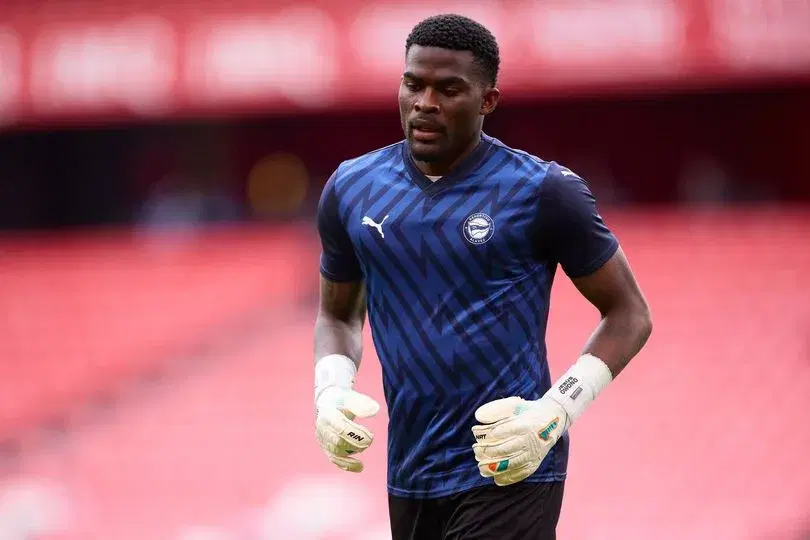
Maria was in the stands with 16-month-old Clara in her arms when, in the 96th minute of Monday’s second division game, she saw her partner chase a ball up the pitch and, still inside the centre circle, crashed into by Owono. De Miguel’s father was watching it from the hotel Alameda in Navahermosa, where he goes for most games. His son’s football career had mostly been played not far from there and from the Leganés home where he had grown up – at Fuenlabrada, Inter Madrid, Unión Adarve and Navalcarnero, then Salamanca and Castellón – but now he was 1,000 miles away.
Medical staff rushed on to the pitch. Players stood, terrified, while for six minutes De Miguel was treated there. He was then taken on a stretcher to the ambulance waiting in the corner where, the club reported, they were able to re-establish a pulse. He was transferred to the Hospital Universitario de Nuestra Señora de Candelaria in Santa Cruz, where medics succeeded in getting him to breathe again. He remained in a critical condition but, with his body temperature lowered, he was stable, they said.
With De Miguel’s parents hurrying to find a flight to Santa Cruz, where García collected them, doctors told Tenerife there would be no news until the morning. But at 3am, there was another call to say his condition had deteriorated neurologically. At 8am, he passed away; Tenerife announced his passing at 8.31am. He was 30. The preliminary autopsy pointed to a trauma of the thorax: commotio cordis which can only occur upon impact within a 40-millisecond window in the cardiac cycle. A routine investigation was opened, the focus not just on Owono but the medical protocol applied.
Football is supposed to be a safe space, a refuge, an escape. All those lines about giving your life to the game are not supposed to be literal. This didn’t make sense. The images and the outcome shocked; the contradictory combination of the improbability and the plausibility of it all made it harder still to come to terms with: this couldn’t happen yet it could have happened to anyone. “I am the same age,” Raphinha, Barcelona’s captain, said. There is an everyman quality about De Miguel. He was also a partner, a father. “How we loved him,” García told Cadena Ser. “He was so humble, his feet on the ground.”
“He was a worker, a footballing labourer,” teammate Javi Alonso said. “He was in the AFE, the players’ union, and helped me a lot. He was a great teammate and a good person, wonderful. He was always willing to help.”
He had begun in the academy at Leganés, a modest start to a career at modest clubs; real football. It hadn’t been easy and he had endured injuries too. He met Maria when he was playing for Navalcarnero in the third tier: she lived in one of the houses in front of the small, municipal ground with its astroturf pitch. It was not until he was 27 that he played “professionally”, always understood in Spain as referring to the first two divisions. He took his teams there too, twice winning promotion.
He never played in the top flight and played 40 games in the second division: he was not a star and was not rich. García vowed that his daughter would not want for anything. Fran Sol, a former Tenerife player, started a crowdfunding page for his family. Almería said that their gate receipts when they play Tenerife would go to the family. During the funeral one of the eulogies noted that playing in segunda for Tenerife was his dream, finally fulfilled at 30: this wasn’t the end of his career; it was the start. When they won promotion, he told reporters: “When I started playing as a little kid, I never thought I would live all this.”
An interview he did with Ser Tenerife resurfaced this week in which he said: “nothing in life is easy. There will be good moments and bad ones too; it is a path you have to walk. Making fans happy is what makes you proud; seeing people celebrate goals is the loveliest thing in football.”
Now they mourned him, desperately sad. Outside gate No 9 at the Heliodoro Rodríguez López, fans brought flowers and left candles. So too did the squad, standing in silence. The Spanish Federation cancelled all Copa del Rey games. The Champions League went ahead; Como’s Nico Paz, whose father played for Tenerife, held up a T-shirt in his honour. Messages came in from across the game; minutes’ silences were held. Las Palmas announced that they will wear their third kit this weekend, because it is blue and white, the same colour as their rivals’ shirt.
They would prefer not to play at all. The players’ union De Miguel was part of said it wanted to stop, that it had canvassed footballers and they agreed: they were not ready, their heads not right. But La Liga decided all games will go ahead except those involving Tenerife, Andorra and De Miguel’s former club Castellón – a decision they did not finally confirm until Thursday afternoon.
By then, De Miguel’s funeral had finished. His body was flown to the mainland on Wednesday, the decision made to hold the funeral in his parents’ village, although there will be an event at Tenerife’s stadium on Saturday, open to everyone. Tenerife’s players and staff boarded a charter at 7am on Thursday and then went to Navahermosa by bus, all of them. The presidents of the AFE, the federation and the league came; the presidents of Real Madrid and Atlético Madrid, too. Representatives from clubs across Spain. Andorra’s owner, Gerard Piqué; president, Ferran Vilaseca, and general manager, Jaume Nogués.
The minster of sport, Milagros Tolón Jaime. Pablo Blanco, ambassador of Sevilla, the club that lost Antonio Puerta and Jose Antonio Reyes. Their midfielder Giorgi Kochorashvili, a former teammate, who had asked for leave; the head coach, Luis García, said: “We’re people above all else.”
Before the cortege set off, Manuel Hernandez, De Miguel’s agent, said: “In those difficult moments, we want to thank everyone from the bottom of our hearts for the words and gestures, all the support we have received. We’re very grateful; to feel so much affection towards Jesús and see the impact he made on people is something we will always take with us. Jesus leaves a void that is impossible to fill but also leaves everyone who was fortunate enough to share their life with him great memories.”
Wreaths of flowers from all his clubs covered the hearse as it edged towards the church, following the cross-bearer there, 500m or so covered slowly and in silence. De Miguel’s parents, his sister and partner led, Maria carrying his shirt. It was 2pm when they arrived, barely a third of those who had come able to fit in. When they came out on to the plaza again, Tenerife’s players lifted the coffin on to their shoulders and carried their teammate back through the crowd to his final resting place in Navahermosa.
- miguel
- pain
- football
- spain
- tenerife
- jesús
- moment
- goodbye