IG Kanja orders additional police deployment to Moyale amid Ethiopia border crisis
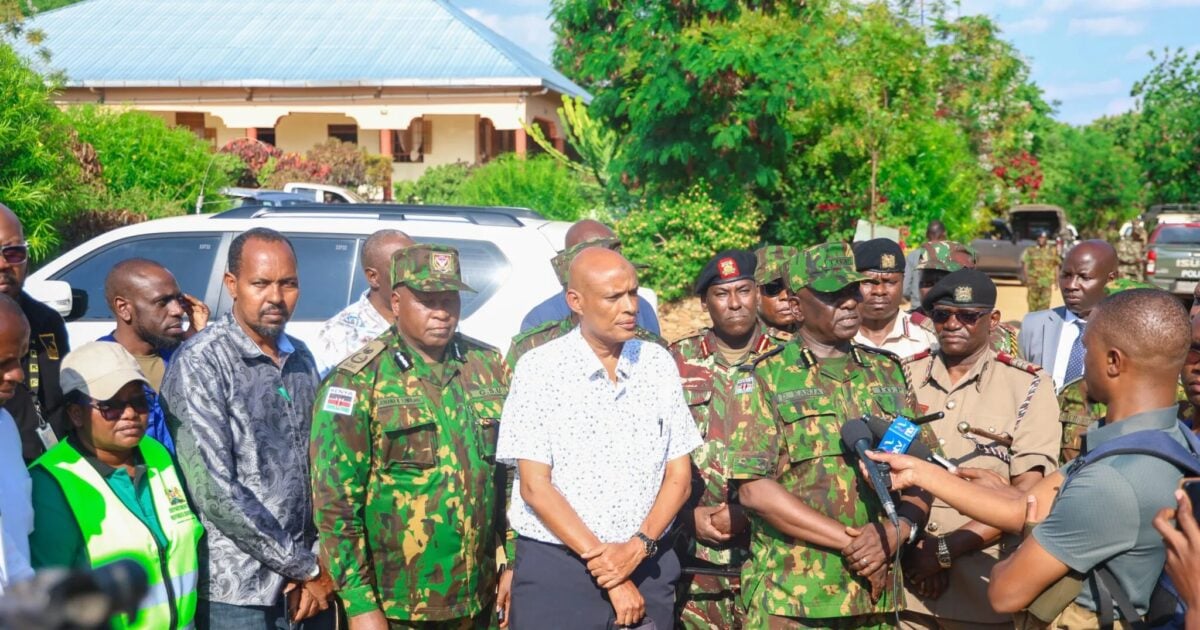
NAIROBI, Kenya Nov 6 – Inspector General of Police Douglas Kanja has ordered the deployment of additional police officers to Moyale, Marsabit County, amid growing security concerns over escalating violence in neighbouring Ethiopia that has forced thousands of people to flee across the border into Kenya. Areas affected include Lami, Manyatta Heillu, Sessi and parts of Moyale town, where houses have reportedly been damaged by stray bullets and rocket-propelled grenades.
NAIROBI, Kenya Nov 6 – Inspector General of Police Douglas Kanja has ordered the deployment of additional police officers to Moyale, Marsabit County, amid growing security concerns over escalating violence in neighbouring Ethiopia that has forced thousands of people to flee across the border into Kenya.
Kanja announced the reinforcement on Thursday, November 5, during a high-level security assessment in the border town, where he chaired a strategic meeting with regional security commanders to evaluate the situation and strengthen measures to prevent the conflict from spilling into Kenyan territory.
The Inspector General directed security officers deployed in the area to remain on high alert and enhance surveillance to protect residents, their property and other people seeking refuge in the country.
He assured Moyale residents that the National Police Service (NPS) was committed to safeguarding lives and maintaining stability despite the deteriorating security situation across the border.
Kanja also urged residents to cooperate with security agencies by providing timely and credible intelligence that could help detect and prevent potential security threats.
During the visit, he toured one of the camps hosting families displaced by the violence, assuring them of enhanced security and coordinated humanitarian assistance in partnership with relief agencies.
The visit came amid an influx of Ethiopian nationals fleeing deadly clashes in the border town of Moyale on the Ethiopian side, where fighting between communities linked to the Oromia and Somali regional administrations has triggered widespread displacement.
The violence, which escalated in October, has been linked to a dispute over territorial administration and the establishment of a Somali regional government office and display of its flag in contested territory.
The clashes have resulted in deaths, injuries and destruction of property, with reports of heavy gunfire and artillery exchanges forcing civilians, particularly women and children, to seek safety in Kenya.
The crisis has raised concerns about the safety of communities living on the Kenyan side of the border, with reports of stray bullets and rocket-propelled grenades hitting residential areas.
Reports indicate that several Kenyan families had also fled their homes following repeated incidents involving stray ammunition. Areas affected include Lami, Manyatta Heillu, Sessi and parts of Moyale town, where houses have reportedly been damaged by stray bullets and rocket-propelled grenades.
The humanitarian situation has also worsened, with the United Nations High Commissioner for Refugees (UNHCR) reporting on October 28 that up to 50,000 people had crossed into Kenya, although the figure remained subject to verification.
The agency said many of those fleeing were women and children, with some accommodated in temporary shelters, including schools and churches, while others were staying with relatives and host communities.
UNHCR, alongside other humanitarian agencies, has been mobilising emergency supplies, including food, clean water, shelter materials and essential household items. The agencies are seeking approximately Sh1.16 billion to support up to 50,000 displaced people over three months.
The crisis has also disrupted cross-border trade, with trucks stranded and some businesses near the One-Stop Border Post temporarily closing amid fears of stray gunfire.
Marsabit Governor Mohamud Ali has previously called for an immediate ceasefire and peaceful dialogue, warning that continued fighting could worsen the humanitarian crisis and threaten stability in the border region.
Kanja was accompanied by Directorate of Criminal Investigations Director Mohammed Amin, General Service Unit Commandant Johanna Tonui and Kenya Police Service Director of Operations Philip Opiyo.
Others present included Eastern Regional Commissioner Jacob Muganda, Eastern Region Police Commander Stephen Chebet, Eastern Region Administration Police Commander Michael Owino and Eastern Regional Criminal Investigations Officer Michael Sang.
- border
- kanja
- police
- moyale
- crisis
- security
- kenya
- agency