Dear Andy Burnham: the full story of enslavement has to move beyond comforting stories
The prime minister’s focus on white abolitionists and working-class solidarity diminishes the true scale of Manchester’s reliance on the slavery economy In May 1767, a notice was placed in the Manchester Mercury for “Any Gentleman, or Lady, wanting to purchase a Black Boy, 12 years of age” to inquire on Market Street, at the site of today’s Uniqlo clothes shop. After 15 years of painstaking work through the scattered fragments that recorded and pointed to Manchester’s enslaving history, I still don’t think I have come to terms with my moment of discovery, a few months ago, of those few words…
The prime minister’s focus on white abolitionists and working-class solidarity diminishes the true scale of Manchester’s reliance on the slavery economy
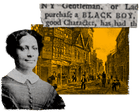
In May 1767, a notice was placed in the Manchester Mercury for “Any Gentleman, or Lady, wanting to purchase a Black Boy, 12 years of age” to inquire on Market Street, at the site of today’s Uniqlo clothes shop.
After 15 years of painstaking work through the scattered fragments that recorded and pointed to Manchester’s enslaving history, I still don’t think I have come to terms with my moment of discovery, a few months ago, of those few words captured in black and white. The sale of a human being, a child, on our busiest shopping street.
The reality of Manchester’s relationship with enslavement is something that we as a city are yet to fully appreciate and are only slowly beginning to unravel.
Andy Burnham’s article published in the Guardian on Friday is the most positive response yet by a UK prime minister to calls for full recognition and reparation for Britain’s role in transatlantic enslavement. It offers hope and new space for dialogue and development.
From the point of view of Britain’s collective memory and understanding, however, the statement leaves space for greater depth of engagement and reflection to inform a national and local understanding of the true scale and reality of this history.
While clearly acknowledging that “Manchester’s cotton industry was built on the labour of enslaved people”, the region’s former mayor chose to lead and close his piece by referring to Thomas Clarkson’s 1787 anti-slavery speech at Manchester Cathedral and the letter of solidarity from a group of Mancunians, collectively described as “workingmen”, during the Lancashire Cotton Famine.
On the surface, these seem natural touch points that a leader might use to draw inspiration from progressive moments in our history. However, understanding our local or national relationship with enslavement by focusing on a few short windows of solidarity and success in more than three centuries of brutalisation, dehumanisation and systemic profiting and reliance is like trying to tell the entire story of the Norman conquest through looking at a single panel on the Bayeux tapestry. In the dark. With just the light off your mobile phone.
Many readers, perhaps, will think this is splitting hairs. But consider for a moment the difference between these statements: “We were the first country to end the slave trade” v “It took us 250 years to end the slave trade.”
Or, from a Mancunian context: “Starving cotton workers stood in solidarity with enslaved people during the civil war” v “The whole economy and development of industrial Manchester relied on enslavement and public solidarity with the enslaved came about once the cotton had already been already embargoed for years.”
The 1863 Lincoln letter that Burnham refers to came 56 years after Britain had ended its own transatlantic slave trade and 25 years after slavery was ended in Britain’s colonies – a period during which Manchester’s economic reliance on enslavement actually grew.
In 2007 UK government and lottery funding was deployed in a nationwide programme to commemorate the bicentenary of the abolition of the British slave trade. This was the most widespread collective effort to date to conduct local projects around these themes and resulted in hundreds of exhibits and events.
One of the biggest reflections from communities and historians after that programme was the concern that in many areas it resembled a national “Wilberfest” – with a disproportionate focus and celebration of white abolitionists’ successes. We naturally want to tell ourselves a positive story about our national history, and by far the most comfortable aspect of it is abolition and the eventual success of those campaigns.
And as for Mancunians, we are rightly proud of our progressive history and working-class identity. The Cotton Famine story – that thousands of out-of-work operatives met on New Year’s Eve 1862 and voted to support the union blockade of vital cotton supplies to Lancashire on humanitarian, anti-slavery grounds – in particular, appeals to our best version of ourselves with its “workingmen” aspect. This is echoed in our memorial landscape, where the only public marker of the fundamental reliance of the emergence of the world’s first industrial city on enslavement is the statue of a white man: Abraham Lincoln.
That meeting and letter from Lincoln thanking these working men is a fact. But less than four years earlier, on the eve of civil war, the activist Sarah Parker Remond bravely declared from the stage of the city’s Athenaeum that she was “convinced that, as a rule, the heart of Old England beat truly to the anti-slavery cause, but in Manchester and Liverpool she had found something that approximated more to the pro-slavery spirit of America”.
In the Guardian’s Cotton Capital series, published after it acknowledged its founders’ links to transatlantic enslavement, we showed how Manchester as a city, its institutions, and its textile production grew in symbiosis with the expansion of the Cotton Kingdom of the US South from 1790 to 1860 – at which point 80% of its raw cotton came from enslaved labour in America.
These facts were not lost on Frederick Douglass, who five weeks before his 1846 arrival in town succinctly and perfectly analysed the colonial-capitalist system, which the Manchester Men stood at the head of shaping and financing: “I will give you an invariable rule by which to ascertain the price of human flesh in the United States. When cotton gets up in the market in England, the price of human flesh gets up in the United States”. Seventeen more years of unprecedented slavery-based economic growth ensued before the Lincoln letter was drafted.
All of this, of course, came after the abolition of British slavery in the 1830s. New research into local anti-slavery debates for the forthcoming landmark exhibition at the city’s Science and Industry Museum exhibition (in partnership with the Guardian and the Scott Trust Legacies of Enslavement programme) has shown that calls for the abolition of British slavery surged into Manchester’s political debate directly in response to the uprising of up to 15,000 enslaved people in Demerara in 1823, only to drop off again until becoming a key election issue in 1832 after the Christmas Uprising of about 60,000 enslaved people in Jamaica, which finally forced the British establishment into decisive action.
Burnham fails to mention in his piece that the British people were very much “made to pay for the wrongs of slavery” at that point. The eventual 1838 emancipation from British slavery was bought through a government loan of £20m in reparations to the enslavers, who re-invested much of it into British and imperial economic development. The formerly enslaved people received neither financial compensation nor land.
As the exhibition’s consultant historian, I would like to invite the prime minister to join us in Manchester next year, where we will be attempting to give a much broader and holistic context to re-ground our collective memory of our shared history. He would be welcome to invite the culture secretary and the heads of the Heritage Fund and Arts Council. He can even bring all the G20 leaders and the king, too, if he’d like.
As the UK builds towards the bicentenaries of abolition in 2033 and emancipation and compensation in 2038, we need to see commitments of serious investment into descendant-led programmes and multi-year community engagement and research to tell the fullest story possible.
By no means should we knock down or decry those aspirational moments that challenge us to live up to the highest ideals of solidarity and shared humanity. But Burnham’s call to “confront our complicated history” does not involve telling yourself the best, most comforting version of that story.
That erases the true scale of our reliance on the slavery system, the injustice of state compensation paid to enslavers, and the vital agency of Black abolitionists in forcing debates through mass uprisings, radical intellectual analysis, and public provocations and testimony. It also means we cannot fully understand or come to terms with the reality of our local and national history and achieve true repair and restitution.
Matthew Stallard is a writer and historian of industrialisation, colonisation and enslavement
- story
- manchester
- andy
- burnham
- enslavement
- street
- minister
- focus