Maraga demands Lissu’s acquittal, accuses East African govts of weaponising treason charges
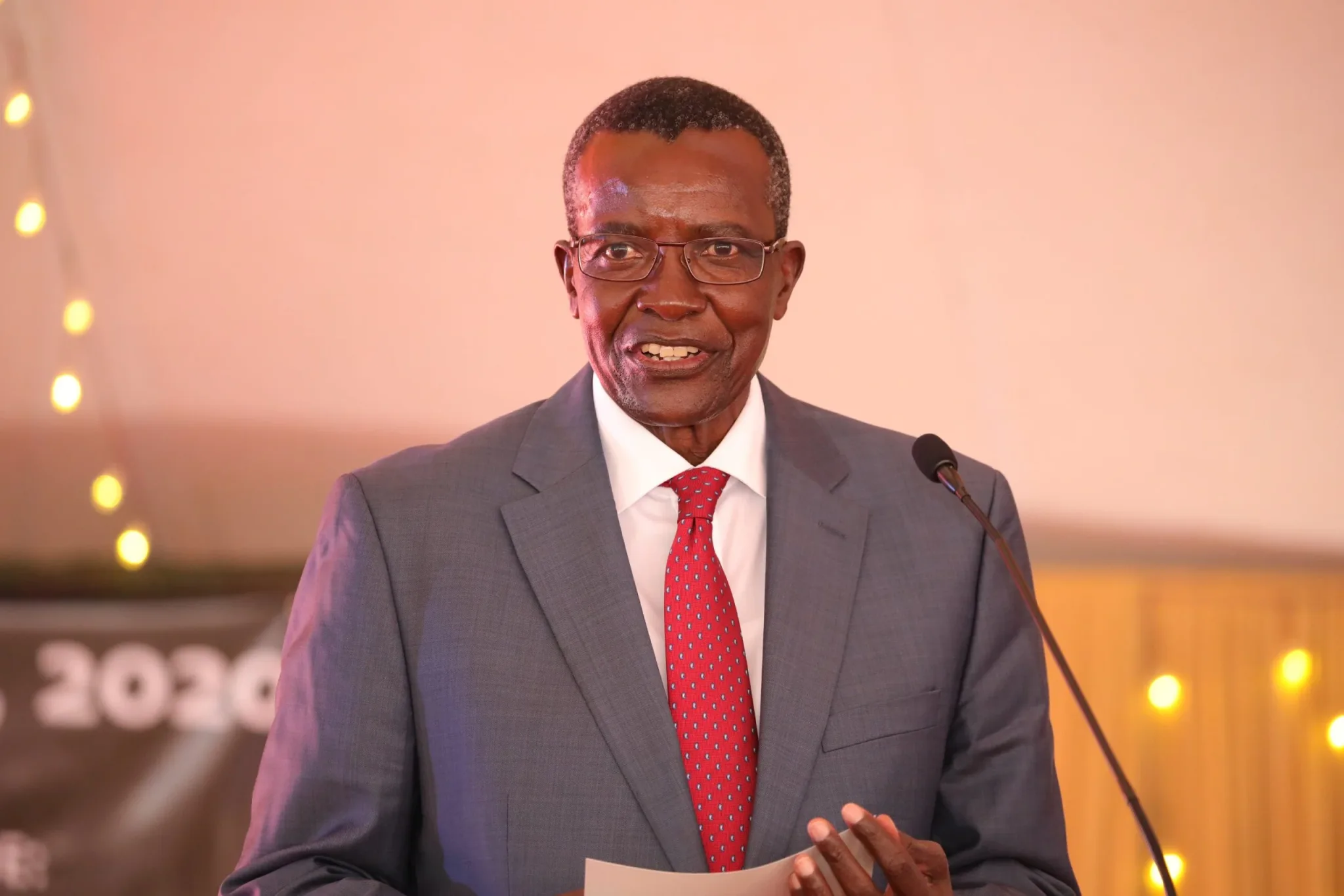
NAIROBI,Kenya, Nov 6-Chief Justice David Maraga has called for the unconditional acquittal of Tanzanian opposition leader Tundu Lissu, accusing East African governments of increasingly using treason and terrorism charges to silence political opponents and suppress dissent. “The path of judicial integrity demands the immediate, unconditional acquittal of Tundu Lissu,” Maraga said.
NAIROBI,Kenya, Nov 6-Chief Justice David Maraga has called for the unconditional acquittal of Tanzanian opposition leader Tundu Lissu, accusing East African governments of increasingly using treason and terrorism charges to silence political opponents and suppress dissent.
In a statement issued Friday, Maraga said Lissu’s prosecution lacked a credible legal foundation, arguing that calls for constitutional reforms, peaceful assembly and electoral boycotts could not constitute treason.
Maraga, who is the United Green Movement (UGM) Party co-leader and a 2027 presidential candidate, said the trial reflected a wider pattern of political persecution across the East African Community (EAC), where criminal justice systems were allegedly being deployed to remove opposition leaders from political participation.
“The path of judicial integrity demands the immediate, unconditional acquittal of Tundu Lissu,” Maraga said.
His remarks came as the High Court of Tanzania delivered its judgment in Lissu’s treason case, which has drawn regional attention over concerns about political freedoms, constitutionalism and the independence of judicial institutions.
Maraga said the prosecution had failed to establish the legal ingredients required to sustain a treason charge, particularly the requirement to demonstrate specific intent to overthrow a government through unlawful and violent means.
He further questioned the use of such charges against political leaders, describing them as evidence of democratic and intellectual bankruptcy among governments fearful of political competition.
The former Chief Justice also criticised Tanzania’s governing Chama Cha Mapinduzi (CCM), accusing it of abandoning the democratic and liberation ideals associated with its founding president, Julius Nyerere.
He argued that the East African Community envisioned by Nyerere was supposed to be anchored in democratic governance, credible elections and respect for fundamental freedoms.
Beyond Lissu’s prosecution, Maraga raised concerns over alleged cross-border abductions and the treatment of opposition figures and activists in the region, accusing Kenya of becoming a staging ground for operations targeting political dissidents from neighbouring countries.
He cited the disappearance of Tanzanian activists on Kenyan soil and the cross-border seizure of Ugandan opposition leader Kizza Besigye as examples of what he described as state-sponsored kidnappings.
Maraga accused the administration of President William Ruto of allowing foreign intelligence operations within Kenya’s borders, arguing that such actions undermine national sovereignty, regional cooperation and human rights protections.
He also condemned what he described as a pattern in which governments resort to financial compensation for families of victims of alleged state violence after killings, abductions and torture.
“You cannot govern a country by brutalizing your youth, and you cannot cleanse the state’s hands of innocent blood with financial payoffs,” he said.
Maraga’s statement further renewed calls for comprehensive constitutional reforms in Tanzania, arguing that successive reform initiatives had demonstrated the need for structural changes to the country’s governance and justice systems.
He cited the 2012–2014 Constitutional Review Commission led by former Prime Minister Joseph Warioba and the 2023 Criminal Justice Reform Commission led by retired Chief Justice Mohamed Chande Othman as evidence of longstanding demands for institutional reforms.
He also referred to the findings of the Chande-led commission of inquiry into violence surrounding Tanzania’s October 2025 General Election, which reported at least 518 deaths from unnatural causes, including 197 people shot dead, more than 2,300 injured and 758 missing persons.
Maraga warned that delaying constitutional reforms could deepen political tensions, urging President Samia Suluhu Hassan to engage the opposition in a national dialogue aimed at delivering a people-driven Constitution.
Drawing parallels with Kenya’s constitutional reform process, he cautioned Tanzania against allowing political resistance to reforms to push the country towards a similar crisis.
“Tanzania does not need to bleed to achieve progress,” he said.
The former Chief Justice also warned international partners against supporting governments accused of undermining democracy through surveillance systems and other security assistance allegedly used to target political opponents.
He maintained that East Africa’s future depended on constitutionalism, accountability, democratic institutions and respect for human dignity.
“The future of our Jumuia does not belong to neocolonial puppets, corrupt elites, or captured states. It belongs to deep structural reforms, constitutionalism (Ukatiba), and Pan-African solidarity anchored firmly in democratic values and human dignity,” Maraga said.
He reaffirmed his solidarity with Lissu, his family and Tanzania’s opposition, insisting that the region’s push for democratic reforms would continue regardless of the court’s decision.
Bruhan Makong is a Senior News Reporter for Capital FM in Nairobi, covering diplomacy, foreign policy, national security, climate, and human rights across East Africa and the wider region.
- maraga
- lissu
- treason
- acquittal
- justice
- reform
- leader
- charge