There is a showdown looming in the Democratic party over support for Israel
Even Donald Trump has acknowledged that support for Israel is increasingly a political liability in US politics. Abdul El-Sayed’s victorious path to the US Senate must become a wake-up call to the Democratic party.
Even Donald Trump has acknowledged that support for Israel is increasingly a political liability in US politics. Will the Democratic leadership listen?
Abdul El-Sayed’s victorious path to the US Senate must become a wake-up call to the Democratic party. It shows us, yet again, that Democratic voters care about Gaza, that Palestinian demands for freedom are increasingly connected to American demands for freedom, and that the old smears and accusations against Palestinians and their supporters are fast losing potency.
Even Donald Trump has acknowledged that support for Israel is increasingly a political liability in American politics. Will Chuck Schumer and the rest of the Democratic leadership listen?
El-Sayed ran a hard-fought and disciplined campaign that focused on issues which spoke to Michiganders. “Money out of politics, money in your pocket, Medicare for all” was the campaign’s signature slogan. But from the outset, the vilest Islamophobic and racist attacks, some of the worst that that we’ve seen in years, were constantly pelted at the candidate, in large part because of his outspoken support for Palestinians.
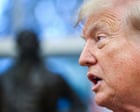
Over the last few months, Trump obsessively called him a jihadist and a terrorist sympathizer while mocking his name or referring to him by his middle name of Mohamed. “I will be Senator Mohamed to you, bro,” El-Sayed clapped back.
During the final televised debate between Michigan’s Senate candidates, Republican Mike Rogers asked El-Sayed: “Are you for America, or are you for these terrorist groups overseas?”
After calling the question “shameful”, which it absolutely was, El-Sayed responded with: “I’m proud of our constitution that guarantees all of us the right to pray as we choose to pray.” Roger’s TV ads were even worse.
Behind all of it was an eye-watering amount of money spent against El-Sayed, more than $150m, according to the nonpartisan organization OpenSecrets, which tracks money in politics. Pro-Israel groups, including Aipac, were behind much of it.
Back in August, Rogers was said to have asked Aipac not to advertise for him, and in October Aipac itself said it would no longer make endorsements or fund campaigns. Aipac and Israel-supporting politicians seem all too aware of the toxic associations the organization’s name now brings to political races. But the group is not dropping out of politics. It’s rebranding. The lobby is still channeling its money into races through other means, such as its super Pac, United Democracy Project, according to the Intercept. United Democracy Project donated heavily against El-Sayed.
But do you know who has been one of Aipac’s biggest recipients going back years? The man who will now almost certainly become the first Black speaker of the House in US history, Hakeem Jeffries. (Who can forget when the radio host Charlamagne Tha God called him “Aipac Shakur.”) And Chuck Schumer, the incoming Senate majority leader, said “my job is to keep the left pro-Israel” in a conversation with the New York Times last year.
Is there a showdown coming? The pro-Israel positions of the old guard are diametrically opposed to the values of the new members of their party. And there are many incoming progressives beyond the new senator from Michigan.
The number of Democrats who won their elections while proclaiming support to Palestine include New Jersey’s Adam Hamawy, a doctor who joined a medical mission to Gaza in 2024; New York’s Darializa Avila Chevalier, a doctoral student active in campus politics supporting Palestinian rights; California’s Randy Villegas, who has called Israel’s actions in Gaza a genocide and took no money from corporate or pro-Israel groups; and many more, including down-ballot winners such as Aber Kawas, the first Palestinian American to be elected to the New York state senate.
Palestine matters because, while the US government continues to walk in lockstep with Israel, Americans are increasingly critical of Israel and its policies (six in 10 American now hold unfavorable views of Israel, according to the Pew Research Center; with Democrats, it’s eight in 10). And Palestine matters because US support for Israel continues to disrupt and distort American politics and life.
JD Vance realizes this. The vice-president wrote on social media that “the real reason we [Republicans] lost is the war” in Iran, a war begun and carried out in partnership with Israel. And Donald Trump seems ready to loosen the public association of Israel with his administration. Just before the election, he announced that he would end military aid to Israel by the end of the year.
“We were giving them $4bn,” he said of Israel’s military aid. “But it gets cut off at the end of the year.” Experts have said such moves won’t change the deeply integrated military relationship between the two countries, but Trump is making the announcement anyway. The reason? “Why should we suffer the slings from lunatics like El-Sayed when they don’t need it?” Trump said. “It’s a bad talking point.”
For Trump, support for Israel is now about poor optics, not about destructive and inhumane policies. The Democrats, on the other hand, have an obligation. They must listen to their constituents, understand why they were elected and take a stand out of principle.
Since Congress controls government expenditures, the Democrats will soon have a very significant role to play. “We don’t want our money sent to do apartheid or genocide or war,” El-Sayed said on Tuesday night in his victory speech, to raucous applause. Hakeem Jeffries and Chuck Schumer better be listening.
Moustafa Bayoumi is the author of the award-winning books How Does It Feel to Be a Problem?: Being Young and Arab in America and This Muslim American Life: Dispatches from the War on Terror. He is a professor of English at Brooklyn College, City University of New York
- support
- israel
- party
- showdown
- donald
- trump
- liability
- politic