Health Ministry rejects claims of abandoning newly qualified doctors

The Ministry of Health has dismissed claims that Ghana is training medical doctors and subsequently abandoning them due to delays in recruitment and employment, insisting that established arrangements are in place to facilitate their transition from housemanship into permanent service. It explained that the recruitment and posting of house officers were jointly undertaken by the Medical and Dental Council of Ghana and the Ministry of Health.
The Ministry of Health has dismissed claims that Ghana is training medical doctors and subsequently abandoning them due to delays in recruitment and employment, insisting that established arrangements are in place to facilitate their transition from housemanship into permanent service.
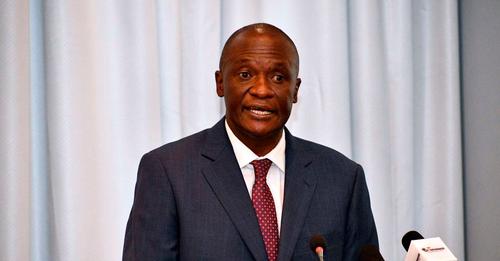
In a statement signed by its Spokesperson, Tony Goodman, Esq., on November 5, the Ministry said claims circulating on social media did not accurately represent the processes governing the training, recruitment and employment of newly qualified medical doctors and dentists.
While acknowledging the importance of public scrutiny, the Ministry said discussions about its activities must be based on accurate information, stressing that "such discussions must be grounded in facts and a proper understanding of the processes involved".
It explained that the recruitment and posting of house officers were jointly undertaken by the Medical and Dental Council of Ghana and the Ministry of Health.
The Ministry disclosed that three batches of medical doctors had commenced housemanship at different periods in 2026, depending on their graduation dates and the completion of the necessary processes.
It rejected suggestions that newly qualified doctors were left at home for years awaiting placement, insisting that the existing arrangements allowed them to begin their mandatory practical training after completing the required processes.
Housemanship, according to the Ministry, is a structured two-year mandatory programme designed to provide newly qualified doctors and dentists with practical experience at different levels of healthcare delivery.
The first year is spent at secondary and tertiary healthcare facilities, while the second year provides trainees with exposure to district-level healthcare delivery.
The Ministry said the two years constitute a continuous training programme intended to equip doctors with the clinical experience required before they enter permanent employment.
On the financial arrangements, it clarified that clearance covering the entire two-year housemanship programme is obtained before the first year begins, eliminating the need for separate financial approval for progression into the second year.
"Consequently, there is no requirement for a separate financial clearance for doctors to progress from the first year to the second year of housemanship," the statement said.
Regarding permanent employment, the Ministry said it had an established arrangement with the Ministry of Finance to facilitate the immediate recruitment of doctors and dentists after their second year of housemanship.
"This approach is intended to ensure a smooth transition from mandatory service into permanent employment without unnecessary delays," it stated.
The Ministry disclosed that it was currently recruiting the 36th Batch of Medical Officers and Dentists and preparing to begin the recruitment process for the 37th Batch, whose members had recently obtained permanent registration from the Medical and Dental Council of Ghana.
It said the ongoing recruitment exercises demonstrated that procedures were in place to manage the entry of newly qualified medical practitioners into the country's health workforce.
The Ministry also highlighted changes to its recruitment system, explaining that actual vacancies across health facilities were now identified before recruitment exercises commenced.
Working with its relevant agencies, it assesses staffing gaps and declares available positions for qualified and eligible doctors and dentists to apply.
It said the approach ensures that recruitment and placement are based on identified vacancies and approved staffing requirements rather than indiscriminate postings without consideration of the needs of individual health facilities.
The Ministry said the system was intended to promote transparency, accountability and the equitable distribution of medical personnel across the country.
It also defended the regulatory framework governing medical education and housemanship, explaining that admission into medical schools was subject to regulatory and accreditation requirements enforced by the Medical and Dental Council of Ghana.
The Council, it added, oversees the registration, accreditation and regulation of medical and dental practitioners, including housemanship.
The Ministry consequently described suggestions that medical training was unregulated or that the housemanship programme was disorganised as misleading.
"Any suggestion that medical training is unregulated or that the housemanship programme is disorganised is misleading and does not reflect the regulatory framework governing medical education and professional practice in Ghana," it stated.
On its broader responsibility to medical professionals, the Ministry acknowledged that training doctors must be accompanied by opportunities for them to serve the country, particularly in underserved and deprived communities.
"The Ministry remains committed to ensuring that qualified doctors and dentists are given opportunities to contribute to healthcare delivery, particularly in underserved and deprived communities where their services are most needed," the statement said.
It noted that achieving this required sustainable arrangements for training, recruitment, equitable distribution, deployment and retention of medical professionals.
The Ministry said it would continue working with the Ministry of Finance, the Medical and Dental Council, relevant agencies and other stakeholders to strengthen the processes and ensure that Ghana's investment in medical education translated into improved healthcare delivery.
The service urged the public and media practitioners to examine the facts before concluding the recruitment of newly qualified doctors, adding that constructive criticism was welcome when informed by accurate information and an understanding of the relevant processes.
- ministry
- health
- doctor
- recruitment
- housemanship
- employment
- process
- arrangement