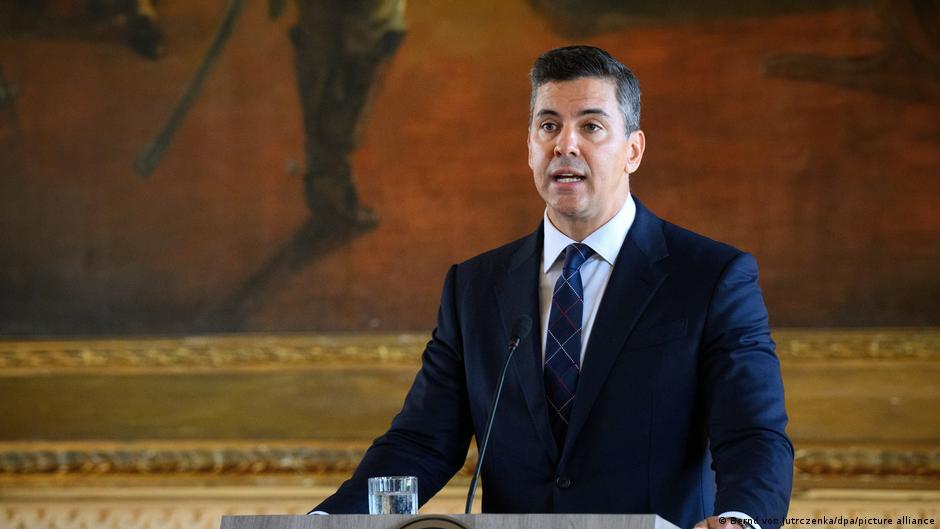
Ueno Bank scandal plunges Paraguay into political crisis
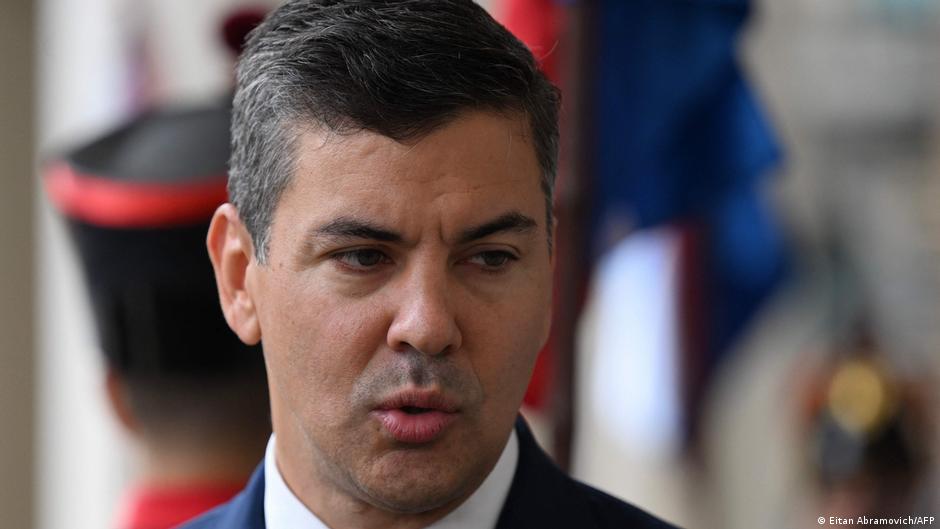
Suspected financial fraud, public money at risk and millions of customers affected: Paraguay is in serious crisis following the sudden collapse of Ueno Bank. President Santiago Pena is facing impeachment.
The Ueno Bank collapse is turning into one of the biggest financial and political scandals in the history of Paraguay. At issue are suspected banking irregularities, hundreds of millions of dollars in public funds, and business ties between the bank and the country's president, Santiago Pena.
The crisis was triggered on November 3, when the Paraguayan central bank (BCP) initiated resolution procedures against Ueno after determining that it had breached minimum solvency requirements. The public prosecutor has since announced three investigations into suspected financial crimes. 27 individuals have already been formally charged.
Pressure on President Pena intensified. On November 5, he tendered his resignation, but the Paraguayan Congress did not accept it. Instead, the Chamber of Deputies voted unanimously to impeach him. A joint session of both legislative chambers was called to consider the resignation, but the session was not quorate, so no decision could be taken. Pena remains in office for now, and the Senate has opened impeachment proceedings.
Ueno Bank is a Paraguayan digital bank belonging to the Grupo Vazquez, a big Paraguayan conglomerate. Launched in 2021, it expanded remarkably fast: It recently had around three million customers, almost half the population of Paraguay. At the same time, there were warnings that the bank might have extended excessive loans to companies associated with its owners.
On November 3, 2026, the Paraguayan Central Bank (BCP) intervened, having determined that the bank had breached minimum solvency requirements: It no longer had sufficient capital to provide security for risks it had incurred. Business operations were abruptly suspended, leaving millions of customers unable to access their accounts.
Investigations are primarily focused on three potential problems.
First, Ueno Bank is believed to have extended credit to other companies from the same group, and these may have exceeded legal limits.
Some business dealings may also have served to conceal the lack of capital, and make the bank's financial situation appear better than it actually was.
There is also the question of why the Central Bank didn't intervene sooner, despite indications that there were problems.
Ueno Bank held huge deposits of public money. Its most important investors include the Instituto de Prevision Social (IPS), the Paraguayan social security agency responsible for pensions and social welfare payments. According to media reports, Ueno Bank administers public funds totalling as much as 800 to 850 million US dollars.
Not only is the size of the amount problematic, so is the concentration of public funds in a single financial institution — one that has had to be placed under state control. Other state institutions are also said to have continued to deposit funds with the bank.
This raises questions about how state institutions make their investment decisions, and the risks to which they have exposed public funds.
There is Pena's business relationship with Grupo Vazquez, to which the Ueno Bank belongs. The Paraguayan president maintained business connections with the conglomerate until March 2025, long after his election as head of state. However, he denies having had any direct involvement with the bank.
On the other hand, Pena's appointment of Carlos Carvallo as president of the Central Bank in 2023 has come under scrutiny. The decision is controversial because until then Carvallo was the chair of the finance company that became Ueno Bank, Financiero Ueno. It raises questions about possible conflict of interest, and the independence of banking supervision.
Carvallo resigned on November 3, at Pena's request.
On November 4, the public prosecutor's office formally charged 27 people: eight Ueno Bank executives, and 19 others with connections to companies associated with the bank.
The investigations are looking into suspected breach of trust, attempted fraud, breach of duty in crisis situations, and violation of the legal obligation to keep records.
On November 5, a judge remanded several former bank executives in custody, including Federico Miguel Vazquez Villasanti, the president of Grupo Vazquez. Two other accused were placed under house arrest.
The Central Bank has initiated winding-up proceedings against Ueno Bank. Deposits of sums up to the equivalent of 37,600 US dollars per customer are protected by law. A law has also been passed that will enable around 20,000 US dollars per saver to be paid out early. However, it is still not clear when the affected customers will actually get their money back, or what will happen to deposits greater than the legally protected maximum.
The political situation is more complicated. Santiago Pena tendered his resignation, but remains in office. A joint session of the two chambers of Congress could not decide whether or not to accept his resignation as the meeting was not quorate. The Senate has now initiated impeachment proceedings on charges of serious breaches of duty. Pena has announced that he will face the proceedings and exercise his right to defend himself.
What is at stake here is political immunity. If Pena leaves office in a regular way – by resigning — he will automatically become a senator for life, and this will give him parliamentary immunity from prosecution. If he is impeached, he loses this status, and can be prosecuted.
Should Pena leave office, the constitution decrees that his vice-president, Pedro Alliana, would take over as president. Congress would then have to elect a new vice-president. The current term of office runs until August 2028.
This article has been translated from German.
- ueno
- bank
- paraguay
- crisis
- scandal
- fraud
- money
- risk