Albania’s restored stone houses throw open the doors to visitors
A project to convert the country’s traditional kulla houses into guesthouses offers a true flavour of ancient hospitality in a part of the country almost untouched by tourism Sunlight pours through a tiny stone window, causing the wooden floorboards to creak as they warm up. I’m staying in a kulla, one of the traditional stone tower houses that are found throughout northern Albania, Montenegro and North Macedonia.
A project to convert the country’s traditional kulla houses into guesthouses offers a true flavour of ancient hospitality in a part of the country almost untouched by tourism
Sunlight pours through a tiny stone window, causing the wooden floorboards to creak as they warm up. The sound of sheep’s bells filters in from a passing flock. The scent of baking bread mingles with smoke from the previous evening’s fire. I wake up feeling I’ve been transported back to another time – but in reality I’m in modern-day Albania.
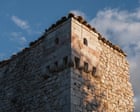
I’m staying in a kulla, one of the traditional stone tower houses that are found throughout northern Albania, Montenegro and North Macedonia. They once protected families during times of conflict and sheltered weary travellers on trade routes, before mostly falling into disrepair in the 20th century. A new long-distance trail developed by the Albanian Agritourism Association aims to return some of them to their former glory and give visitors a chance to discover a part of Albania almost untouched by tourism.
The Tower Trail passes through some of the least visited areas of north-eastern Albania, with stops in the Mirdita, Mat, Bulqiza and Dibra regions. Designed to be walked with a guide over nine days, the journey spans more than 100 miles through traditional villages, high plains, forests and river valleys, with future plans for cycling and 4x4 routes. Some stages of the trail are long, and can easily be broken up into two days, or shortened with a car transfer. Opportunities to stay in guesthouses, farms and kullas help connect travellers with the cultural heritage of the region, in a way that is becoming increasingly difficult in more popular parts of the country.
The kulla, in its many forms, is the central feature of the trail. Traditionally constructed from limestone and wood from the surrounding mountains, kullas follow a regular architectural structure, but also represent the character of the families who commissioned them. Built by highly skilled craftsmen, early versions were made to withstand the region’s harsh weather conditions and even harsher historical realities, including the 15th-century Ottoman invasion and frequent tribal disputes. Many more were built in the 18th and 19th centuries, but under Albania’s communist regime, from 1944 until 1991, many families had their kullas confiscated, only to find them in disrepair when they reclaimed them. Today, many sit empty after a mass exodus from rural Albania to the cities in the 1990s and 2000s.
“We are losing traditions because people aren’t staying here,” Nik Nikolli tells me as we walk through the hilltop village of Lufaj on the trail’s first stage. Nikolli is the director of Infokulla, a small museum and cultural centre in the nearby town of Rubik, which provides free hiking maps and historical information about the region. He explains that many of the villages along the route have just one or two families remaining. Introducing the idea of tourism has been slow because the concept of accepting money from a guest goes against highly established traditions of hospitality. He hopes the trail will encourage local people to open their kullas or farms as guesthouses, providing unique experiences to visitors while earning a bit of extra income for their families.
Walking the trail, it’s easy to see what Nikolli means about the lack of people in the villages and the hospitality of those who remain. On several days, our journey takes longer than expected as my guide and I are regularly invited to sit for a coffee and served a bounty of freshly harvested grapes, plums and walnuts. Agriculture is the mainstay of life in these areas, and people are hard at work in the fields from dawn until dusk. Yet they always seem eager to take a break, entertain visitors and share tales from the past.
Much of the Tower Trail is centred on old roads through hilly karst terrain dotted with caves, chestnut trees and cornfields. Trail markings are still sporadic and some bushwhacking is required, but the route allows travellers to walk the paths still used by villagers today, with plenty of opportunities for interactions. At the end of my second day on the trail, in the village of Derjan, 91-year-old Hajrija Qerimi is beaming as she tells me about growing up in a large kulla nearby. Her father was a successful farmer, still remembered for his generosity, and the family regularly hosted travellers. She tells me there were never fewer than 10 people at the dinner table. “My father advised me early on that everyone who comes to the house is offered food and drink, and he taught me what and how to serve,” she says, proudly. “The important thing was that nobody left without receiving the absolute best hospitality.”
One of the highlights of the trail is the chance for travellers to experience that traditional hospitality while staying in restored kullas. On day four, in the hillside village of Dushaj, I stay at Kulla Hupi, which opened as a guesthouse in 2021. The owner, Luli Hupi, spent years working in a nearby mine, saving to restore the house room by room. “When you come here, there’s a family waiting for you, and you feel you’re at home,” he says.
Running more than just a business venture, Hupi is keen to support the local community. He works with more than 10 families who provide all of the restaurant’s meat, cheese, honey, bread and other produce, while also serving as guides for hiking, horseback riding excursions and cooking classes. He keeps his guest numbers low, and has no interest in the trend towards mass tourism in Albania. “People say I’m stupid for not having 50 tables at the restaurant,” he laughs, as we sit next to a roaring fire in the oda, the traditional sitting room, after a simple dinner of warm corn bread, fig jam, pickled salads, goat’s cheese and gjizë, a type of cottage cheese. “But I don’t want 50 tables, I want 10, and I want people to have to reserve a month in advance.”
Hupi’s influence can clearly be felt in the surrounding area, where many kullas are undergoing restoration, and the idea of a slower form of tourism is being embraced. On my penultimate night, I stay at Butterfly Camping, a small site situated in a canyon on the banks of the Black Drin River. The owner, Labinot Murrja, lights an open fire, pours me a glass of local grape brandy, and tells me how he and his father cleared and levelled the land along the riverbank themselves.
They kept things simple, building three small cabins, leaving room to erect some tents, tables and a shed with a basic kitchen. Murrja says he’s not interested in casting a wide net for tourists, but is targeting people with an adventurous side, an interest in nature and a desire to experience life in the nearby village, where he still lives with his family. He tells me local people were sceptical when he started, wondering why anyone would have an interest in coming to the middle of nowhere. Yet when they saw guests arrive, they were convinced, and Murrja says similar businesses are now popping up in the wider region. Like Hupi, Murrja emphasises that he’s interested in providing a unique experience for visitors, rather than making a big profit. “I love this job,” he says with a grin. “It doesn’t make you rich, I’m just doing it for passion.”
Albania’s tourism industry has been booming in recent years. However, ongoing protests, sparked by the planned construction of a luxury resort in a protected coastal area, have seen locals voice their frustration at the pace and unsustainable nature of development in the country. With so much of Albania’s tourism concentrated on the coast and northern Alps, rural inland areas have been left struggling to find what they have to offer visitors. In embracing the kulla and their strong tradition of hospitality, they may just have found it.
The trip was supported by Deutsche Gesellschaft für Internationale Zusammenarbeit (GIZ). For more information, visit the Albanian Agritourism Association. A double room in a kulla costs from about £35 a night
- albania
- stone
- house
- visitor
- country
- kulla
- tourism
- time