crimeUnder review

TrafficTech, although good, is not backed by law – Lawyer

TrafficTech, although good, is not backed by law – Lawyer

Legal practitioner Albert Gyamfi says the newly implemented TraffiTech-GH system is illegal, saying that it lacks the necessary legal backing and unfairly imposes traffic fines on vehicle owners rather than the actual offenders. It’s illegal,” the Head of Chambers at Gyamfi Legal PRUC in Kumasi said.

Legal practitioner Albert Gyamfi says the newly implemented TraffiTech-GH system is illegal, saying that it lacks the necessary legal backing and unfairly imposes traffic fines on vehicle owners rather than the actual offenders. Speaking on JoyNews’ Newsfile on Saturday, November 7, he acknowledged that the technology-driven traffic enforcement initiative was a good idea but insisted that its current implementation raises fundamental legal concerns.

“So, I think TraffiTech, although good, currently is illegal. That’s my main position. It’s illegal,” the Head of Chambers at Gyamfi Legal PRUC in Kumasi said. Mr Gyamfi explained that his position was based on two main concerns: the absence of specific legal provisions supporting the system and the manner in which penalties are imposed. He said that the system targets registered vehicle owners with fines instead of identifying and holding accountable the individuals who actually commit the traffic offences.

“The means by which charges are imposed are also illegal because it imposes fines on the wrong person; that is, it imposes fines on the owners of the vehicle instead of the actual perpetrators of the offence,” he stated. He called for changes to the system, insisting that its current framework must be reviewed to address the legal concerns. “These are my two reasons why I feel TraffiTech currently needs to change,” he added.

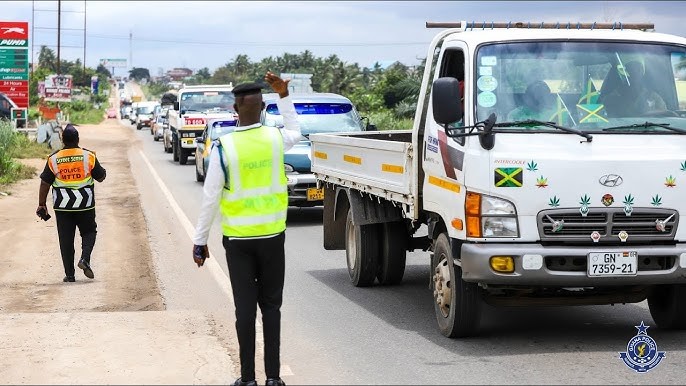
Background TraffiTech-GH is an automated traffic enforcement initiative developed by the Ghana Police Service to improve road safety through technology-driven monitoring and detection of traffic offences. The idea dates back to around 2008, when efforts began to introduce camera-based systems to identify traffic offenders and issue spot fines. However, the initiative faced several delays before gaining momentum.

In 2016, an agreement was reached to deploy the system in 2017, but the rollout did not materialise as planned. A public-private partnership agreement was eventually signed on December 23, 2022, for an 11-year period. Public education and the issuance of electronic caution notices began in June 2024, with the Police reportedly sending about 120,000 notices by the end of 2025.

MyJoyOnline The Interior Ministry formally announced the initiative on August 24, 2026, explaining that it would use fixed cameras, mobile cameras, handheld devices and radar systems to capture traffic violations. The Police initially scheduled full implementation for October 1, 2026, but subsequently postponed the enforcement date by a month following concerns about public sensitisation.

The system finally became operational on November 1, 2026, initially targeting speeding offences. Motorists detected exceeding prescribed speed limits receive electronic notices, with 14 days to pay the applicable fines or contest the alleged violations in court. MyJoyOnline+3 The introduction has, however, generated opposition from commercial transport operators, who have questioned the fairness of enforcing traffic regulations while some designated bus stops and pedestrian walkways remain occupied by traders.

  • system
  • traffic
  • fine
  • traffitech
  • initiative
  • concern
  • offence
  • gyamfi

Summaries and tags are generated automatically. Stay informed with VidiaNews.

Related news

Traffitech must not become government revenue tool at motorists’ expense – Fiifi Boafo
business

Traffitech must not become government revenue tool at motorists’ expense – Fiifi Boafo

Former Head of Public Affairs at the Ghana Cocoa Board (COCOBOD), Fiifi Boafo, has questioned the financial motive behind the introduction of the new automated traffic enforcement system, Traffitech, warning that it must not become a revenue-generating venture for the government rather than a road safety intervention. Speaking on JoyNews’ Newsfile on Saturday, November 7, Mr Boafo said authorities needed to clarify whether Traffitech was intended to punish traffic offenders, deter motorists from violating road regulations and prevent accidents, or generate revenue for the government.

Read →
Fine-based revenue model under TraffiTech-GH could influence enforcement fairness – Bright Simons
business

Fine-based revenue model under TraffiTech-GH could influence enforcement fairness – Bright Simons

Policy analyst Bright Simons has raised concerns about the revenue-sharing arrangement under Ghana’s automated traffic enforcement system, TraffiTech-GH, warning that making a private operator’s earnings dependent on traffic fines could create incentives that undermine fairness in enforcement. Mr Simons identified the revenue-sharing structure as a particular area of concern, explaining that Nationwide Traffic Management and Enforcement Limited (NTMEL), the private partner operating the system, is entitled to 40 per cent of revenue generated, while the government receives the remaining 60 per…

Read →
Victoria Bright welcomes automated traffic enforcement system, says it is long overdue
technology

Victoria Bright welcomes automated traffic enforcement system, says it is long overdue

Private legal practitioner Victoria Bright has welcomed the introduction of the new automated traffic enforcement system, describing it as a necessary and long-overdue intervention to help save lives on Ghana’s roads. Her comments follow the introduction of the automated traffic enforcement system, which is aimed at strengthening traffic law enforcement through technology.

Read →
Good intentions not enough to guarantee success of TraffiTech-GH – Bright Simons
politics

Good intentions not enough to guarantee success of TraffiTech-GH – Bright Simons

The Honorary Vice President of IMANI Africa, Bright Simons, says the success of the TraffiTech-GH initiative should be judged by how effectively it is implemented rather than the good intentions behind its introduction. Mr Simons explained that the assessment of public initiatives should distinguish between politics and policy, explaining that while the political argument behind TraffiTech-GH was difficult to fault, the policy and implementation processes required closer examination.

Read →
TraffiTech-GH: Viewing enforcement as revenue tool derails road safety efforts – Sharif Khalid
business

TraffiTech-GH: Viewing enforcement as revenue tool derails road safety efforts – Sharif Khalid

Economic Advisor to the Office of the Vice President, Sharif Mahmud Khalid, has cautioned against viewing the TraffiTech-GH automated traffic enforcement system primarily as a revenue-generating initiative, arguing that such an approach could undermine its road safety objectives. Speaking on JoyNews’ Newsfile on Saturday, November 7, Mr Khalid said focusing on the financial returns from the system could distract from the government’s objective of reducing dangerous driving and improving safety on the roads.

Read →
MTTD addressing complaints over trade plates, vehicle ownership, data under new traffic system – ACP Alexander Obeng
business

MTTD addressing complaints over trade plates, vehicle ownership, data under new traffic system – ACP Alexander Obeng

The Police Motor Traffic and Transport Department (MTTD) says it is addressing complaints received within the first seven days of implementing the new automated traffic enforcement system, including concerns over trade licence plates, untransferred vehicle ownership and data discrepancies. The Director of Education, Research and Training at the MTTD, Assistant Commissioner of Police (ACP) Alexander Kwaku Obeng, said authorities were handling all the complaints submitted so far.

Read →