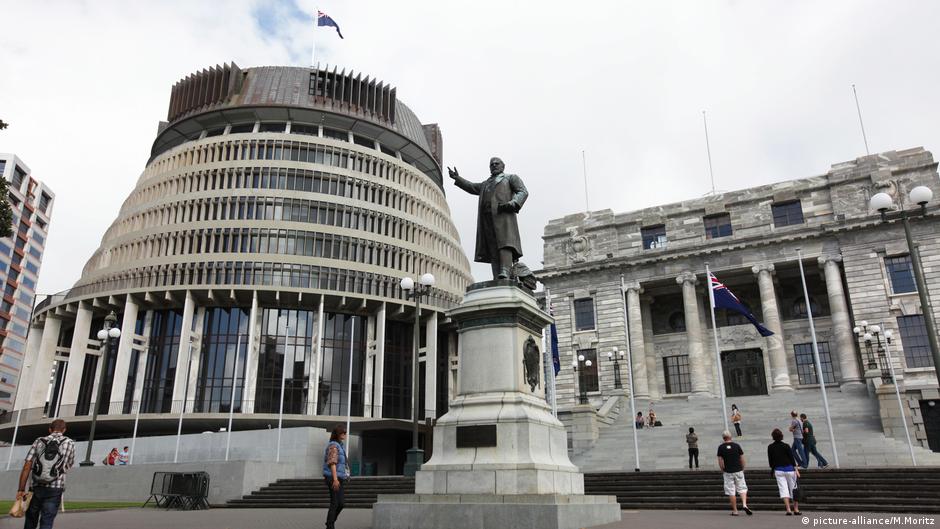
New Zealand election too close to call with over 95% of votes counted
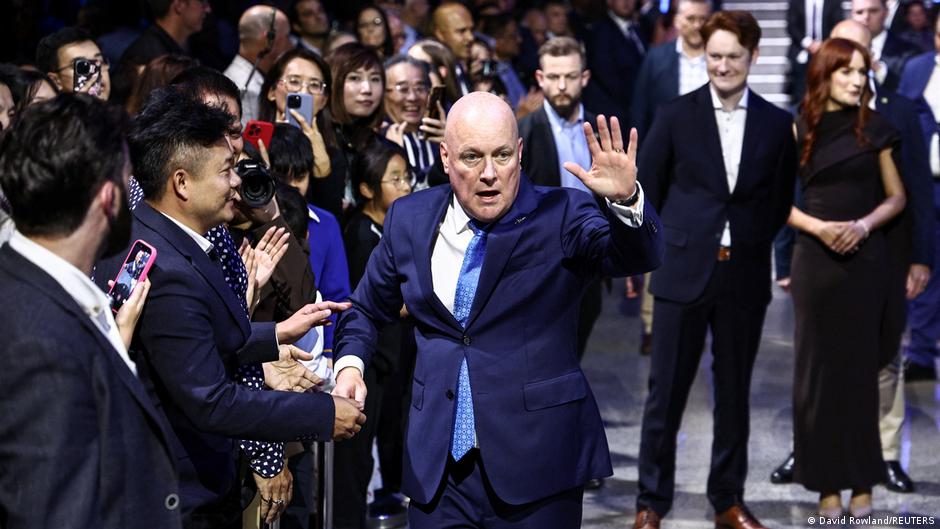
Initial results in New Zealand show the two main parties neck-and-neck with fewer than 4,000 votes separating them. Official results aren't expected until later this month once special votes have been counted.
The two main parties were effectively deadlocked in New Zealand's close-fought general elections on Saturday, with the rising cost of living and general economic problems the main issues at stake.
Results with 95% votes counted showed the ruling center-right National Party and the opposition Labour Party neck-and-neck with just under 30% of the vote.
The National Party held a slim lead of about 3,500 votes more than Labour late on Saturday night.
Incumbent Prime Minister Cristopher Luxon, who heads the National Party, said that his party "is once again the largest party in parliament, and we have a pathway to forming the next government."
The National Party currently governs in coalition with the pro-business ACT and the right-wing populist New Zealand First. According to preliminary results, the three parties are set to net a total 67 seats in parliament, amounting to a wafer-thin majority.
Labour leader Chris Hipkins said that New Zealand's politicians would need to find "common ground" after the results showed neither his party nor the ruling National Party were likely to form a governing majority on their own.
"New Zealand has spoken. It may take us a little bit longer to figure out exactly what it is that you've said," Hipkins told supporters.
"Our next parliament is going to require all of us to compromise, to work together, and to find common ground."
Special votes, including those cast from people overseas, are to be counted over the next three weeks. The votes typically benefit left-leaning parties and have shifted preliminary election results over the last three elections.
Final results are expected to be released on November 27.
If the right-wing bloc fails to hold on to its slim majority, the centrist Opportunity Party could act as a kingmaker. The party is projected to get seven seats, putting it past the 5% threshold to enter parliament for the first time since it was founded in 2017.
Luxon has previously ruled out cooperating with the Opportunity Party.
New Zealand has a mixed-member proportional system that requires voters to tick two options: a party and a local electoral candidate.
Electorate winners earn a seat in parliament, which typically has 120 seats, unless a so-called "overhang" leads to more lawmakers being returned to parliament, along with the highest-ranked members of the party based on their national party vote.
Preliminary results on Saturday showed that parliament is set to expand to 130 seats because of the overhang, making it the largest parliament in New Zealand history.
The vote took against a backdrop of high prices for basic goods and the highest unemployment in more than a decade.
The voting took place under New Zealand's strict laws banning media reporting and political campaigning on the final day.
New Zealanders have, however, been able to cast their votes since October 26, with almost 1.7 million of the country's 3.8 million eligible voters already casting their ballots by Thursday, according to the electoral commission.
- zealand
- vote
- election
- result
- neck
- party
- month