They have gone 10 weeks without answers. Will these families ever know what happened to loved ones missing after Nepal’s floods?
From Sydney to South Africa, they text loved ones with no reply and respond to questions they can’t answer. But some still hold hope Get our breaking news email, free app or daily news podcast Every day, Nikhila Agastya answers more questions from her two children: has she heard anything about their father?
From Sydney to South Africa, they text loved ones with no reply and respond to questions they can’t answer. But some still hold hope
Get our breaking news email, free app or daily news podcast
Every day, Nikhila Agastya answers more questions from her two children: has she heard anything about their father? Is he with anyone? Is it snowing in Kathmandu? Is he cold, and does he have warm clothing? Will he come home? The answer is: probably not.
“They know that [their] father is missing,” Nikhila says. “And they are still looking for him. They always wait; every day they wait for him. They won’t give up, they think he will come home.”
Her husband, Gopi Agastya, had travelled from Sydney to Nepal to go on a pilgrimage with the Isha Foundation when a flood hit on 26 August. He did not return home.
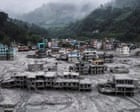
It has been 10 weeks since the catastrophic floods wiped away whole villages, reaching settlements as high as 82 metres above the river level.
The number of dead has risen to 1,459. Another 5,285 people are unaccounted for. More than 700 of them are foreigners – including 34 Australians – with families who have had no answers for 10 long weeks.
Nikhila last spoke to her husband the morning of the floods, before he entered the immigration centre at the border with Tibet. Gopi was excited about coming home – he missed their two girls, aged 13 and 7, and wanted to eat a home-cooked meal with them. The two parents planned to take the children on a cruise when he returned.
The days that followed are now a blur to Nikhila. She travelled to India to be with family, while a friend whose husband was also missing went to Nepal and filtered any small pieces of information back: the border was still inaccessible; the Isha Foundation was trying to get in; families were putting up posters of loved ones on hospital walls in a desperate hope they would be found.
Nikhila sent images to Australia’s department of foreign affairs – of the shoes he would be wearing, his jacket, beanie, sun goggles – anything that could help identify him.
“He’s a very lovable person. Everyone likes him. He had good friends. I recently spoke to a friend of his, and he said Gopi is not just his name; Gopi is a brand.”
He was also the sole breadwinner of the family. The pair married 15 years ago and moved to Australia: he worked in IT for a major supermarket chain and she focused on their children. But Nikhila is now looking for work, with a government parenting payment nowhere near what Gopi was earning.
Amid these pressures, she can’t help but hope Gopi might come home.
Every morning for the last 10 weeks, Linda Govender has sent a WhatsApp message to her daughter. And every day, she receives no reply.
Her daughter, Terricia, was in an immigration centre when the floods hit. Now her mother is running a global campaign on behalf of the families of missing foreigners.
“The uncertainty is unbearable,” Govender says from South Africa. “You wake up every morning hoping for news, checking your phone, reading messages and wondering whether today will finally be the day somebody has an answer.”
Govender travelled to the flood zone in the days after, hiring a helicopter with other families to search by air. She returned home to Isipingo Beach, south of Durban, with no answers.
Realising many others were in the same situation, she then set up Global Voices for the Missing – an online community where families can share information and advocate. She says they want Nepal’s government to keep searching to find the whereabouts of the deceased and to maintain regular communication with affected families.
“We understand that difficult decisions have to be made following a natural disaster,” she says. “But families deserve to know that every reasonable avenue has been explored.
“For the families, the disaster does not end. We are still waking up every morning wondering where our loved ones are. We are still waiting for information.”
Soon after the floods, the government of Nepal sought to help speed up that information and set up DNA testing that could match families with the remains of their loved ones.
More than 2,000 people have given their DNA. At the start of October, only 112 bodies were transferred back to families. The process is slow and the backlog is large.
Governments around the world have also been working with their Nepali and Tibetan counterparts to begin the official process of issuing death certificates.
In the days after the floods, families from around the world rushed to Kathmandu. They hired 4WDs to take them as far as they could into the flood zones, they spoke to embassy officials and politicians, they visited the hospitals, sticking images of their loved ones up on the walls.
Last month, Nepal officially ended the search-and-rescue operation, moving into the “search-and-rehabilitation phase”, according to Phanindra Paudel, the chief of the National Emergency Operation Centre.
Authorities would no longer actively search for bodies but would recover any remains, property or other valuables found during the rehabilitation process, he said.
For hundreds of families around the world, waiting for any news, it was a blow.
Those who took it upon themselves to search for loved ones have not found it easy. Nepal’s government is still trying to clear debris to get up to the border with China, with many roads still closed. Nepal has said rebuilding will cost close to US$4.78bn (A$6.93bn) and has called for greater support for that mammoth undertaking, which will take years.
Thousands were displaced – now living in centres, tents, monasteries, or with extended family. They do not know when they will be able to return home.
Sagar Pandey is the chief executive of the Himalayan Glacier Company. His company had 47 people – including 15 Australians – in tour groups in Nepal’s north when the floods hit. His brother was guiding one of them.
“It was scary, it was bad,” Pandey says. “But now, people are trying to overcome; people are trying to continue their lives in a new way.
“It’s been really hard; they can’t forget, but also people don’t have a choice.”
Nepal has been reeling from the floods, which hit during one of the country’s peak tourist times. Adding to the impact is the fact that overseas visitors are no longer coming. Last year, the country welcomed more than 1.1 million visitors, contributing about 6.7% to the gross domestic product (GDP): now, the number has dropped off. Pandey has lost almost 80% of his usual bookings for this time of year.
“We have the missing guides’ children we have to support, to pay for the future for their schools. So we keep continuing.”
Anita Cook is among that small group of visitors returning to Nepal. She owns iNeeta cafe, a world away from the Himalayas, and one of the few shops in the small Australian town of Moyhu, Victoria. She has been to Nepal twice, and is now taking her two boys to hike the Annapurna circuit.
“Once you’ve been there, it just really leaves a really strong impact on you,” she says. “The way these people live, they’ve got nothing, but they’re the happiest people on the earth and they would do anything, anything to help you.”
Her cafe is full of plants she is selling to raise funds, while the local pub is contributing $1 for every parma sold. She is taking $12,000 the small community has raised and putting it straight into the hands of the guides she knows well – they’ve lost families, are connected to the community and she trusts they can give the money to the right people. But she says the best thing she can do is get on a plane and trek.
“[When it happened] I would have jumped on a plane and went straight away. But we are going now, because trekking in the mountains is the bread and butter of all these people.”
For people who went missing at the border, the process has been harder – determining which country they were in when the flood hit has been difficult.
The family of Renee Spry, a woman from the Sunshine Coast, have been waiting while this process happens along with the 49 other families from her group.
“There was some confusion about where they were lost,” Renee’s sister Jacinta says.
“But at the end of it, Nepal agreed that they were on the Nepalese side, and they would be the ones who would be trying to issue death certificates.”
A fortnight after the flood, Renee’s husband and two daughters travelled to Nepal. They could not get to the border area, but provided DNA samples, put pictures of her up and visited the temples she had gone to before her pilgrimage. They raised the money to travel through GoFundMe and donated $10,000 to the Emergency Action Alliance.
“They were prepared they might go there and not really get any answers,” she says. “I still think it was a therapeutic thing that they did it.”
Jacinta says “it is a funny kind of grief”: to lose someone and have no answers, no physical representation that they are gone. “The uncertainty has probably been the hardest bit,” she says. “Feeling just a bit hopeless about it, feeling removed and a long way away.”
The family want people to keep paying attention to Nepal – on the redevelopment and also the increasing disasters the climate crisis is causing in the small country.
“If you were talking to Renee, she would say there are all these people still trying to live there,” Spry says. “In this ongoing danger, in this evolving climate catastrophe.
“She would be worried about them. She would be like, ‘what’s everyone doing about this?’”
For many families, like Nikhila’s, the lack of information has not extinguished their hope that, one day, their loved ones will be found.
“I always feel like that,” she says. “I just hope, still, something, he might be there, somewhere. I just hope.”
- answer
- nepal
- question
- news
- nikhila
- father
- family
- flood