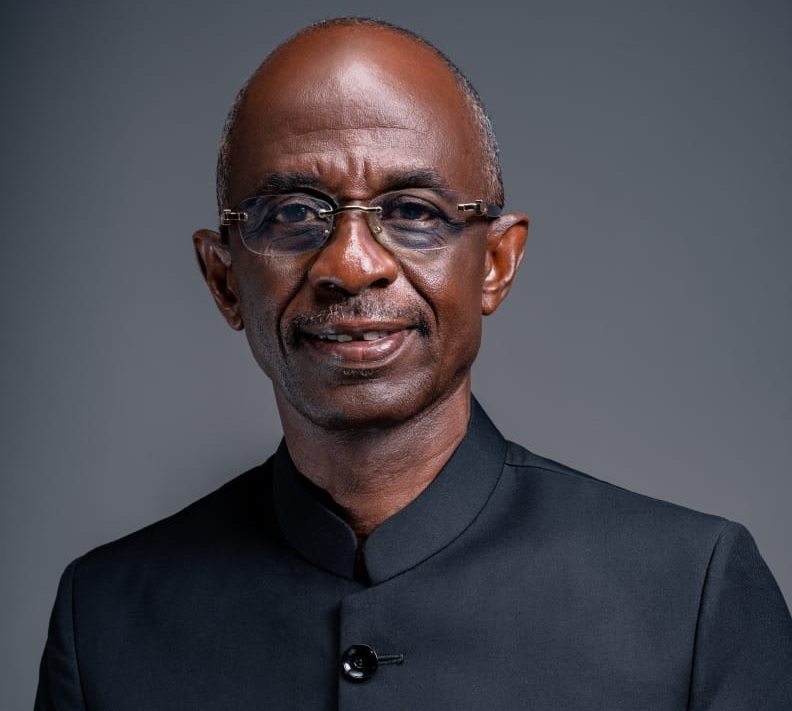
Asiedu Nketiah urges African parties to look beyond elections, build institutions for 2040

By Isaac Yeboah The National Democratic Congress (NDC) Chairman Johnson Asiedu Nketiah has called on African political parties to strengthen their institutional capacity and prepare leaders capable of addressing the continent’s long-term development challenges. Mr Asiedu Nketiah made the call in an acceptance address after assuming office as the inaugural Chair of the African Political Parties Initiative (APPI) at the African Political Parties Summit 2026 in Addis Ababa, Ethiopia, on Saturday, November 7.
The National Democratic Congress (NDC) Chairman Johnson Asiedu Nketiah has called on African political parties to strengthen their institutional capacity and prepare leaders capable of addressing the continent’s long-term development challenges.
He said political parties must look beyond winning elections and invest in the knowledge, expertise and structures needed to govern effectively.
Mr Asiedu Nketiah made the call in an acceptance address after assuming office as the inaugural Chair of the African Political Parties Initiative (APPI) at the African Political Parties Summit 2026 in Addis Ababa, Ethiopia, on Saturday, November 7.
He said the quality of governance depended partly on how political parties prepared their members for public office, arguing that the standards and values cultivated within parties eventually influenced the conduct of the state.
“A political party is not merely an organisation for winning elections. It is one of the places in which future government is formed,” he said.
According to him, political parties must develop a long-term understanding of their responsibilities because power changes hands, and parties in opposition today could become the next custodians of state institutions.
Mr Asiedu Nketiah said Africa faced significant challenges that required political leadership to rethink traditional approaches to governance and development.
He cited the continent’s growing population, youth unemployment, limited industrial capacity and inadequate access to electricity as some of the issues requiring urgent attention.
He said between 10 million and 12 million young Africans entered the labour market annually, while only about three million formal jobs were created.
He also noted that Africa accounted for approximately two per cent of global manufacturing value added, despite its substantial natural resources and growing markets.
He argued that the continent needed to move beyond relying on its population size and natural resources as measures of economic strength and instead develop the capacity to produce, finance, innovate and build sustainable industries.
“Our minerals must support African industry. Our agricultural wealth must support processing and productive enterprise. Our markets must provide scale for African businesses,” he said.
The NDC Chairman said political parties seeking to govern must understand the economies and institutions they intend to manage and develop expertise in areas including industry, agriculture, trade, energy, technology and public finance.
“Electoral victory gives authority. The ability to govern well has to be built before victory comes,” he stated.
He also urged African governments to maintain policy and institutional continuity across political transitions, warning that frequent changes in government should not lead to the abandonment of useful investments, expertise and functioning institutions.
While acknowledging that new administrations had the right to change policies they considered ineffective, he said political maturity required the ability to distinguish between what needed reform and what should be preserved.
Mr Asiedu Nketiah said the proposed APPI Agenda 2040 would provide a common framework for African political parties to consider the institutions, leadership and capabilities needed to prepare the continent for the future.
He called for greater investment in party schools, policy institutes, research institutions and systems for preserving institutional memory.
He further urged political parties to give women and young people greater roles in policy development, resource allocation and decision-making, rather than limiting their participation largely to mobilisation activities.
“The continent cannot afford to leave large reserves of talent outside the rooms in which its future is decided,” he said.
Mr Asiedu Nketiah said the leadership of APPI would work with participating political parties, regional vice-chairs, the Africa Governance Centre and the initiative’s secretariat to advance consultations on the Agenda 2040.
He also called for continued engagement with political parties and institutions outside Africa, while stressing that the continent had valuable political experience to contribute to global discussions.
He cited Africa’s history of liberation movements, democratic transitions, conflict resolution, reconstruction and constitutional change as sources of knowledge that should inform the initiative’s work.
Mr Asiedu Nketiah said Africa’s growing demographic, economic and strategic importance would not automatically translate into prosperity and global influence unless the continent developed strong political institutions.
He said APPI Agenda 2040 must therefore look beyond immediate electoral contests and focus on preparing institutions for the demands of a larger, more urbanised and interconnected Africa.
“The generation that will lead that Africa is already among us. Our responsibility is to ensure that when its moment comes, it inherits institutions equal to the demands it will face,” he said.
He accepted the chairmanship on behalf of the initiative’s inaugural leadership, expressing gratitude to participating political parties and acknowledging the Africa Governance Centre for establishing APPI and bringing political parties across the continent together.
- asiedu
- nketiah
- party
- institution
- continent
- african
- parties
- policy