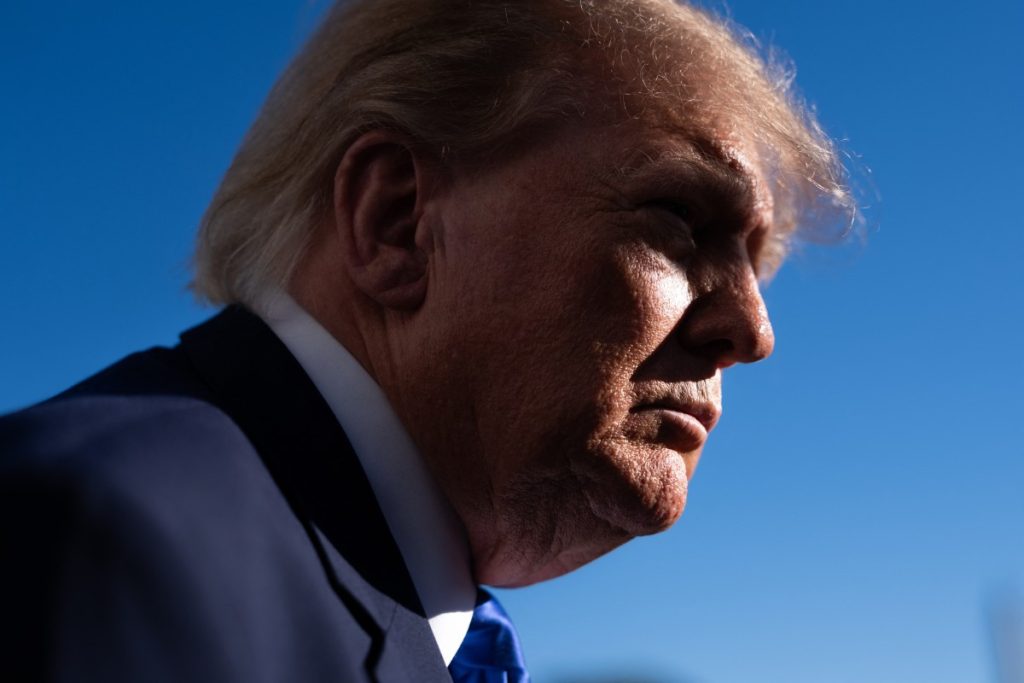
AMERICA IS NOT NIGERIA: Why Trump’s midterm defeat cannot predict Tinubu’s 2027 fortunes
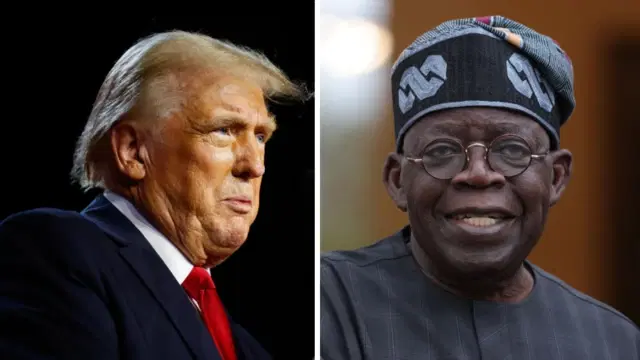
The sweeping defeat suffered by President Donald Trump’s Republican Party in the November 3 American midterm elections has predictably provided fresh ammunition for Nigeria’s opposition politicians, who are already attempting to draw parallels between the political fortunes of the American president and those of President Bola Ahmed Tinubu ahead of Nigeria’s 2027 general elections. The question, therefore, is why Nigeria’s opposition should expect the political consequences of Trump’s decision to engage Iran to automatically translate into an electoral liability for Tinubu.
By Kayode Akinmade The sweeping defeat suffered by President Donald Trump’s Republican Party in the November 3 American midterm elections has predictably provided fresh ammunition for Nigeria’s opposition politicians, who are already attempting to draw parallels between the political fortunes of the American president and those of President Bola Ahmed Tinubu ahead of Nigeria’s 2027 general elections.
While the comparison may offer an attractive political talking point, it is, at best, superficial and, at worst, a deliberate attempt to transplant the political circumstances of one country into another. There is no doubt that the Republican defeat represents a significant setback for Trump. Democrats secured control of both chambers of Congress, delivering a powerful electoral rebuke to the Republican administration and signalling widespread dissatisfaction with some of its policies.
The result has opened a new chapter in American politics and raised questions about the direction of Trump’s presidency. However, the critical question is whether the circumstances that produced this outcome in the United States are sufficiently comparable to Nigeria’s political and economic realities to justify the conclusion that Tinubu is destined for a similar electoral fate in 2027.
The answer is no. America is not Nigeria. Trump is not Tinubu. And the political dynamics of the United States cannot be mechanically imported into Nigeria’s electoral calculations. Indeed, one of the most important factors behind the Republican Party’s defeat was the controversial war involving the United States and Iran, a foreign policy decision that has generated enormous economic, diplomatic and security consequences for the Trump administration.
The conflict, which has lasted several months, has heightened concerns about American military involvement abroad, increased pressure on energy markets and contributed to rising fuel prices. For American households already grappling with the cost of living, the war became another source of economic anxiety. Its financial implications, military casualties and uncertain strategic objectives also generated questions about the wisdom of the administration’s foreign policy choices.
Iran conflict Significantly, the political consequences were acknowledged by the highest levels of the American government. Trump admitted that the Iran conflict contributed to his party’s electoral difficulties, although he maintained that the military action was necessary. His Vice President, JD Vance, was considerably more direct, declaring that “the reason we lost is the war.” That admission is particularly instructive.
It establishes that the Republican defeat was not simply an abstract expression of public dissatisfaction with a sitting president. It was substantially connected to identifiable policy decisions and their consequences for American voters. The question, therefore, is why Nigeria’s opposition should expect the political consequences of Trump’s decision to engage Iran to automatically translate into an electoral liability for Tinubu.
Nigeria did not initiate the conflict. Tinubu did not authorise American military operations against Iran. He does not determine American foreign policy, the direction of Trump’s trade tariffs or the domestic political calculations of the Republican Party. To suggest that the electoral consequences of these decisions constitute a direct verdict on Nigeria’s president is to stretch political analogy beyond its reasonable limits.
Of course, the opposition is entitled to draw lessons from developments elsewhere. Political parties routinely study elections in other countries, particularly when they reveal the relationship between public expectations, government performance and electoral accountability. But learning from another country’s political experience is fundamentally different from assuming that its electoral outcome must be replicated elsewhere.
There is an even more important distinction that deserves attention: the American midterm elections are not presidential elections. The midterms are held halfway through the president’s four-year tenure and determine the composition of Congress. They frequently become a referendum on the sitting president and his party, as voters use the opportunity to express satisfaction or dissatisfaction with the administration.
Historically, the party controlling the White House has often faced considerable losses during midterm elections. Nigeria’s 2027 general election, by contrast, will be a presidential contest in which voters will choose the individual and political party they believe are best equipped to govern the country for another four years. The candidates will have to present their records, programmes, leadership credentials and policy alternatives before the Nigerian electorate.
The difference is fundamental. A congressional election in the United States, influenced by a controversial foreign war, cannot automatically become a relia
- nigeria
- trump
- tinubu
- defeat
- president
- party
- policy
- iran