OPINION: How opposition divisions could hand Ruto an overwhelming 2027 victory
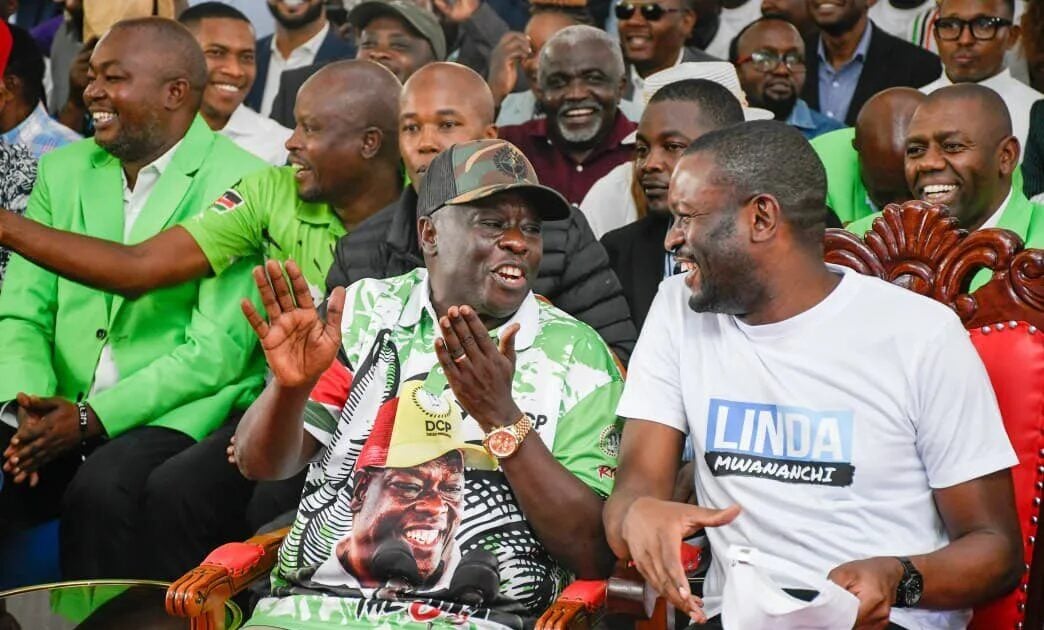
On Friday afternoon, Edwin Sifuna unveiled the newly rebranded Linda Mwananchi Party’s “dream team”, naming Godfrey Osotsi as chairperson, with Kawira Mwangaza and Faith Odhiambo as deputies. Its proposed leadership draws from Vihiga through Osotsi, Meru through Kawira Mwangaza, Nairobi through Babu Owino and civil society through Faith Odhiambo.
The past few weeks have seen four political parties file notices with the Registrar of Political Parties seeking to change their names, symbols and colours. On Friday afternoon, Edwin Sifuna unveiled the newly rebranded Linda Mwananchi Party’s “dream team”, naming Godfrey Osotsi as chairperson, with Kawira Mwangaza and Faith Odhiambo as deputies. He promised a party with a presence in all 47 counties by November 30.
At almost the same hour, Kalonzo Musyoka was being heckled in Lavington, with some of his Ukambani allies accused of opening the door for President William Ruto.
These events capture the contradiction within Kenya’s opposition. While leaders talk about removing Ruto from power, their political activities increasingly appear designed to undermine one another. Opposition rallies are being held across the country, but with competing messages and little evidence of a coordinated national strategy. The apparent beneficiary is the President.
As ODM MP Peter Kaluma bluntly declared on X, “ODM has the capacity to give Ruto an 80% win.” Was he bluffing, or was he making a point about political arithmetic?
Kenya’s presidential election is effectively a winner-takes-all contest, provided the winning candidate secures more than 50 per cent of valid votes cast and meets the constitutional geographical distribution threshold. A candidate does not need 80 per cent of Kenyans to support him. He needs his opponents to divide their support.
That is the danger facing the opposition. What should be coalition building has increasingly become an exercise in weaponising crowds against rival leaders. This is not coalition building. It is coalition demolition.
Kaluma’s statement may sound exaggerated, but the arithmetic behind it deserves attention. Even if opposition leaders eventually agree on one presidential candidate, the agreement itself will be difficult. Those who lose the contest for the ticket may seek alternative political arrangements. That explains why several leaders are strengthening their own parties instead of investing in a common opposition platform.
In 2022, Ruto secured approximately 7.18 million votes, while Raila Odinga received about 6.94 million. Raila was the principal opposition candidate backed by a broad coalition. Today, that political constituency is increasingly fragmented.
The emerging opposition landscape has at least four competing blocs. The first is the ODM faction aligned with the broad-based government, led by Dr Oburu Oginga and supported by figures including Junet Mohamed and Gladys Wanga.
The second is the rebel faction associated with Sifuna, Babu Owino and James Orengo, which has found a new political home in Linda Mwananchi. Its proposed leadership draws from Vihiga through Osotsi, Meru through Kawira Mwangaza, Nairobi through Babu Owino and civil society through Faith Odhiambo. This is an attempt to project a national movement spanning Western Kenya, Mt Kenya East, Nairobi and the reform constituency.
But a national-looking leadership team is not the same as a national electoral base. Linda Mwananchi must demonstrate that its prominent figures can translate their individual profiles into votes beyond political rallies and social media enthusiasm.
The third bloc is Kalonzo Musyoka’s Wiper Party, which is fighting to retain its Ukambani base while projecting national ambition. His heckling in Lavington exposed the cost of political ambiguity. When a leader appears to court both government and opposition, his own supporters can begin questioning his loyalties.
The fourth is the DCP-Gachagua axis and Jubilee remnants, whose mobilisation is anchored largely in Mt Kenya grievances. Their combined political potential is considerable, but their ability to translate it into a unified national strategy remains uncertain.
These competing formations are drawing from overlapping constituencies. ODM’s broad-based government faction retains influence in Homa Bay, Kisumu, Siaya and Migori, while Wiper has an established regional foundation in Ukambani. Linda Mwananchi is seeking to attract younger, urban and reform-minded voters, while Gachagua is consolidating support in Mt Kenya.
If these blocs retain separate identities and compete for the same voters, the opposition could struggle to assemble the numbers needed to defeat Ruto. New voter registration, particularly among younger Kenyans, could alter the electoral map, but those voters are not automatically guaranteed to support any particular opposition formation.
Ruto won with 50.49 per cent in 2022 despite facing a largely consolidated opposition. If his support remains substantial and his challengers divide the opposition vote, his path to victory becomes considerably easier. An 80 per cent share would require more than fragmentation alone, but a decisive victory is possible if the opposition fails to organise itself.
Sifuna, in particular, is getting several things right tactically but risks getting the bigger strategy wrong. Linda Mwananchi has demonstrated an ability to mobilise supporters, attract attention and present itself as a fresh political alternative. Recruiting high-profile figures and setting a firm date for a National Delegates Convention are calculated moves to create momentum.
However, political momentum is not the same as electoral organisation. Sifuna risks replicating the early UDA model without the time or established national political network that Ruto had built before the 2022 election. Ruto had roughly 18 months between leaving Jubilee and the election. Sifuna has a much shorter window and a fractured opposition to contend with.
There is also a danger in building a movement around personal loyalty. A political formation that treats criticism or disagreement as disloyalty risks alienating potential coalition partners. The opposition cannot claim to be building a national alternative while its supporters heckle leaders with whom it may eventually need to negotiate.
More fundamentally, Linda Mwananchi does not resolve the opposition’s coalition problem. It could deepen it by redistributing existing opposition votes among more candidates rather than expanding the opposition’s electoral reach.
The question is not whether Sifuna can build a party, Kalonzo can retain Ukambani or Gachagua can consolidate Mt Kenya. It is whether these leaders can put their collective electoral interests ahead of individual ambition.
Without that agreement, the opposition may discover too late that its greatest obstacle in 2027 was never Ruto. It was its inability to organise itself into a credible alternative.
Dr Hesbon Hansen Owilla is a Media and Political Communications Expert based in Nairobi, Kenya.
- opposition
- ruto
- party
- kenya
- leader
- odm
- candidate
- coalition