After the midterms, where does the Republican Party stand?

GOP suffered a loss, but it is hardly a historic one. A party in power has always been held to account in the midterms.
Republican strategist, TV host and writer.
On Tuesday, the United States held midterm elections. Every one of the 435 seats in the US House of Representatives was up for election and 35 of the 100 US Senate seats were on the ballot.
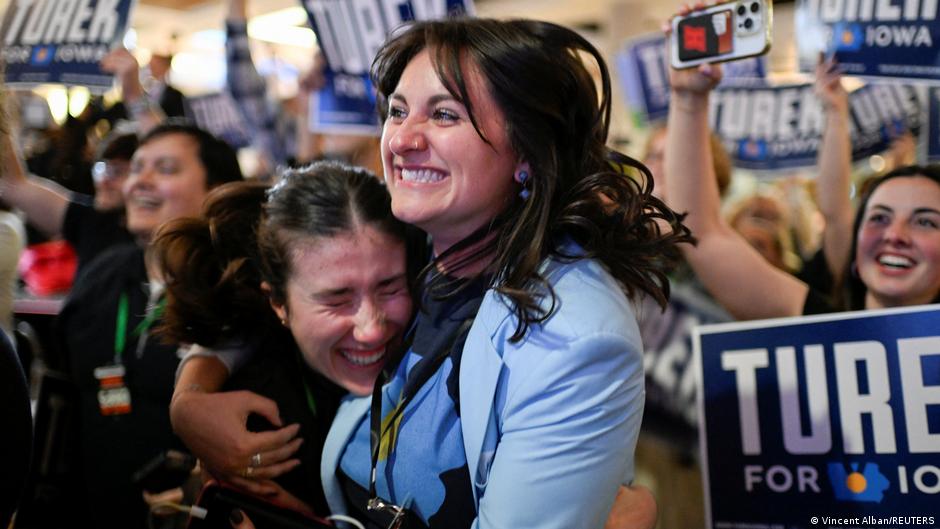
The result of the elections was overwhelmingly in favour of the Democratic Party, or the blue team, as the US media has taken to referring to them. It was a blue wave. A blue tsunami. Democrats flipped at least 40 House seats and seven Senate seats. It was a clear message to Washington that much of the US is unhappy with the direction the country is headed.
Texas had not elected a Democrat in a statewide race for more than 30 years. Democrats dominated in Texas. Kansas hadn’t sent a Democrat to the Senate since 1932. Come the first week of January, there will be one representing it. Susan Collins, the powerful Republican chair of the Senate Committee on Appropriations and the most bipartisan voting Republican in the US Senate had been Maine’s senator for 30 years. She was voted out. The depth and breadth of the Democratic victory stunned many.
The war with Iran clearly had an impact. It wasn’t the conflict itself nearly as much as the economic impact it has had on the average American. Virtually every American uses an automobile and the price of petrol has skyrocketed during the war. The high fuel prices have impacted every other segment of the economy because nearly every product, especially food and grocery items, is delivered using the roadway system, which, of course, means petrol and diesel prices add to their cost.
The Democrats taking control of both the House and the Senate will dramatically change the next two years in Washington. They will restore the oversight functions of Congress and will investigate Trump and his team for countless violations, real or imagined. Congressional priorities will change. Impeachment will be a word that is commonly used again. If a vacancy occurs on the Supreme Court, the president will have a much more difficult time filling it. The impact of the elections is very real.
Losing seats to the opposition party is actually quite common in the midterms. Dozens of House races are still being counted, so the final tally may yet grow, but since World War II there have been at least seven midterm elections with seat losses comparable to or larger than what the Republicans have experienced so far in 2026: 1946, 1958, 1966, 1974, 1994, 2010 and 2018 when President Donald Trump’s party lost about 40 House seats in his first midterm.
The largest midterm loss belongs to President Barack Obama’s party in 2010. The Democrats lost 63 House seats and six seats in the Senate. The Democrats would then lose nine seats in the US Senate in the midterm elections held during Obama’s second term.
The Democrats under President Bill Clinton also took a beating in 1994 when the opposition Republicans gained 54 seats in the House, taking a majority for the first time in a generation, and flipping eight seats in the Senate.
The pundits at the time wondered aloud if it was the end of the Democratic Party. The losses were staggering. Both presidents, however, went on to govern effectively and find ways to work with the opposition. In fact, Clinton worked with the Republican Congress to pass the first balanced budget in memory. In that case, the split in government forced them to work together and produced a benefit to the American people.
None of this is new. President Harry Truman’s Democrats lost 55 House seats and 12 Senate seats in 1946. President Dwight Eisenhower’s Republicans took it on the chin in 1958, losing 48 House seats and 13 Senate seats. Presidents Lyndon Johnson, Gerald Ford and George HW Bush all took big losses. Even Ronald Reagan lost 26 House seats in his first midterm elections.
The point is the American public has always demanded accountability from Washington. No one should be surprised that at a time when only 14 percent of Americans think Congress is doing a good job and the prices for basic necessities are increasing, Americans demand change. They have done it over and over, regardless of the party in power.
The next logical question is where do we go from here? Is Trump’s reign as leader of the GOP over? Has he lost his influence?
There will not be a great deal of time spent trying to decipher what went wrong. Both Trump and Vice President JD Vance have already acknowledged the war in Iran and its economic effects are the primary reasons for the loss. This acknowledgement will hasten the healing process within the party, as will the need to push through a number of agenda items together in the remaining weeks the Republicans have control of Congress.
Because the US Constitution limits a president to two terms, any time any president enters his final two years, he is known as a lame duck. His influence, while still enormous simply by the reality of the office, begins to wane. The closer it gets to the end of his final term the less influence he has, particularly on the domestic agenda. Many presidents spend the majority of their time near the end of their term on foreign policy.
As of January 3, Democrats will set the agenda on Capitol Hill. They will control every committee. They will control virtually every vote. Congress controls the purse strings, so their impact is large, but don’t count Trump out yet.
His personality and his outward embrace of even the most difficult conflicts are unique. Whether in business, in election wins and losses, in courtroom clashes or in international affairs, Trump doesn’t back down. Admittedly this sometimes works to his detriment, but it is a trait that will likely serve him well as he battles with a Democratic-controlled Congress.
The president has veto authority over any legislation Congress passes. Rather than sign the legislation, he can reject it. If he rejects it, two-thirds of both the House and the Senate must vote to override his veto or else the legislation does not become law.
If Trump feels the Democrats are pushing an agenda too radical or too far left, he will wield the veto pen with great regularity.
Ideally the two sides understand the power each holds, and they will work together, as did a Republican-dominated Congress and Democratic President Clinton. If they do work together, all Americans will benefit. If each side digs in and refuses to compromise, it will be a long, unproductive two years.
Speaking of two years, 2028 is the next presidential election, and the question of who will be the nominee for each party is already being kicked around – and, in particular, how these midterm elections will impact the potential Republican candidates like Vance or Secretary of State Marco Rubio.
The stark reality is that two years is an eternity in politics. Anything can happen, despite the Republican defeat on Tuesday. The biggest question is whether the American public will be feeling “Trump fatigue” during the 2028 presidential election season.
If the public has grown weary of team Trump, anyone affiliated with his administration may be tainted goods and face a bigger challenge getting the party’s nomination. Vance, Rubio and others directly tied to him have the greatest name recognition right now, but that may prove to be baggage rather than an advantage.
Outsiders such as a state governor or a past political figure may generate public enthusiasm for a different direction. The list is long. Even Trump has said his party has a deep bench, and it’s true.
Trying to predict the 2028 nominee now, in such a volatile political time and with two years to go, while entertaining, is a fool’s errand.
Some in the media have begun to write the Republican Party’s obituary after Tuesday’s losses. The final numbers are not yet in, and in the Senate, the seven seats already lost exceed the six Obama’s party gave up in 2010.
Still, history shows that parties and presidents have come back from setbacks of this scale before, as Obama and Clinton both did. Trump and the Republicans can do the same.
The views expressed in this article are the author’s own and do not necessarily reflect Al Jazeera’s editorial stance.
- party
- midterm
- republican
- gop
- loss
- power