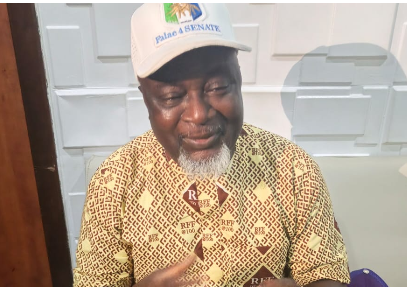
2027: Nigeria needs reset, not reforms — Makinde

Nigeria needs reset, not reforms — Makinde. By Golok Nanmwa, Jos Oyo State Governor and presidential candidate of the Allied Peoples’ Movement (APM), Seyi Makinde, has said Nigeria needs a fundamental reset rather than mere reforms to address its economic, security and governance challenges ahead of the 2027 general elections.
By Golok Nanmwa, Jos Oyo State Governor and presidential candidate of the Allied Peoples’ Movement (APM), Seyi Makinde, has said Nigeria needs a fundamental reset rather than mere reforms to address its economic, security and governance challenges ahead of the 2027 general elections. Makinde spoke on Sunday during a live political programme on Jay FM 101.9 in Jos, Plateau State, ahead of the party’s presidential campaign flag-off scheduled for Monday in the city.
Explaining his position, the governor argued that reforms were insufficient where the problems in a system outweighed its strengths. “When you talk about reform, it means that there is something good in the system that you want to improve upon. But when the bad outweighs the good, you need to take a different course of action. “If what you have in the system is only about 20 per cent of what you expected, you don’t need to continue tweaking it.
You need to press the reset button, shut it down and reboot it. That is what Nigeria needs at this point. Reform will not work in the present environment,” he said. The governor said he did not initially intend to become a politician but was motivated by concerns about the country’s future. “I am not a career politician. I came into politics because I believe that the future of millions of Nigerians is at stake.
We have the potential to become the greatest Black nation on the face of the earth, but we must make the right decisions to achieve that destiny,” he said. On the economy, Makinde identified it as the foremost priority of his proposed Reset Agenda, arguing that economic performance should be measured by improvements in the living conditions of ordinary Nigerians.
“The economy must work for everybody. We should not just be talking about foreign reserves, World Bank figures or inflation statistics. What matters is whether ordinary Nigerians can afford to feed themselves and meet their basic needs,” he said. He added that economic progress should be assessed by its impact on households rather than statistical indicators alone.
“If the people on the streets are not feeling any improvement, then we cannot say that the economy is doing well. The real test of economic performance is the condition of the people,” he said. The APM candidate said his proposed administration would prioritise skills acquisition, entrepreneurship, education and production, while creating an enabling environment for businesses to grow and generate employment.
“We must encourage our people to acquire skills and become entrepreneurs. We must invest in education and move towards intensive production. Government must provide an environment where businesses can thrive and young people can find meaningful employment,” he said. On insecurity, Makinde advocated decentralising Nigeria’s security architecture through the establishment of state police, arguing that states should be allowed to adopt the arrangement when they are ready and necessary safeguards are in place.
“I believe that we need to decentralise our security architecture. State police is one of the ways to achieve this, but it must be properly structured. States that are ready should be allowed to establish their own police formations, while others can come on board when they are prepared,” he said. Recalling his engagement with former President Muhammadu Buhari on the issue in 2019, Makinde said the former president had expressed concerns about the ability of some states to finance their own police formations.
“When we approached President Buhari in 2019, one of the concerns he raised was that some states could not even pay workers’ salaries. He questioned how such states would be able to fund state police,” he said. He explained that governors in the South-West subsequently adopted the Western Nigeria Security Network, popularly known as Amotekun, as an alternative arrangement to strengthen security in the region.
“We decided to find a middle ground through Amotekun. The operatives gather intelligence and work with the federal security agencies. It has helped to improve security coordination in the region,” he said. Makinde acknowledged concerns that state police could be abused by governors to intimidate political opponents and ordinary citizens but insisted that appropriate safeguards could address such risks.
“We must not pretend that there are no concerns. Some people are worried that governors could use state police to oppress their opponents or intimidate citizens. Those concerns are valid, and we must put safeguards in place. “But the fact that something can be abused does not mean we should not do it. We must design a system that ensures accountability and protects the rights of the people,” he said.
On Nigeria’s growing population, the governor warned that failure to provide opportunities for young people could worsen insecurity and social instability. He said the country could have a population of more than 300 million, with over 70 per cent below the age of 34, s
- makinde
- nigeria
- state
- reset
- reform
- security
- police
- governor