Economy: Food warehouses now split wholesale bags as retailers battle inflation
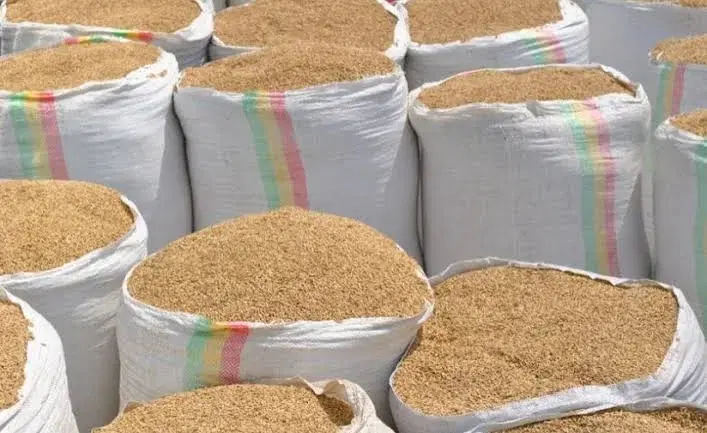
By Elizabeth Adegbesan A quiet transformation is reshaping how branded food items and cooking oils move from distribution warehouses to neighborhood shops, across major wholesale food markets in Nigeria. Dr. Amina Yahaya, an Agricultural Economist, said: “What we are seeing is a classic market adaptation to liquidity constraints.
By Elizabeth Adegbesan A quiet transformation is reshaping how branded food items and cooking oils move from distribution warehouses to neighborhood shops, across major wholesale food markets in Nigeria. Read Also: Can 142m Nigerian youths change 2027 elections narrative? Faced with persistent inflation, tight liquidity, and shrinking consumer purchasing power, Economy&Lifestyle findings show that bulk food warehouses are increasingly breaking down standard 50-kilogram sacks and full cartons into half-measures for small-scale retailers.
Traditionally, wholesale depots in major distribution centers across the country operated on strict minimum-order volumes. Retailers were required to purchase full 50kg bags of rice, beans, or garri, full cartons of noodles, or 25-liter kegs of vegetable oil. However, as wholesale prices are consistently rising over the past two years, many corner-shop owners and market stall traders are finding it difficult to raise the capital needed to restock full units across multiple product lines.
In response, warehouse operators and major distributors have adapted their inventory models, introducing official ‘half-bag’ and ‘split-carton’ wholesale tiers. Instead of turning away undercapitalised buyers, depot managers now employ dedicated staff to weigh, re-bag, and seal 25kg portions of grains and split bulk cartons of packaged foods at wholesale rates.
Alhaji Musa Danjuma, a bulk grain distributor, said: “If we insist on selling only full bags, our goods will sit in the warehouse until they spoil or expire. “A retailer, who used to buy 10 full bags of local parboiled rice can barely afford three today. “By splitting bags into halves and quarters at wholesale margins, we keep our stock moving and help small traders keep their shelves stocked.” The shift has provided immediate relief for micro-retailers who form the backbone of Nigeria’s informal food distribution network.
For traders operating on thin daily margins, tying up scarce capital in a single full sack of beans or sugar often meant leaving customers without other essentials like pasta, seasoning cubes, or vegetable oil. “Before now, buying one full bag of brown beans took almost all my weekly capital,” said Mrs. Ngozi Okafor, a provision store owner. “Now, the warehouse allows me to pick half a bag of beans, half a bag of rice, and half a carton of spaghetti.
“My shop looks full again, and my customers do not have to walk away empty-handed because I ran out of one items.” Market analysts note that while this fractional wholesale model keeps supply chains active, it introduces minor operational costs for warehouses, including extra packaging materials, labor for re-weighing, and heightened vigilance against weight discrepancies.
To maintain trust, several wholesale associations have introduced standardised digital scales at loading bays so retailers can verify weights before payment. Consumer advocates have also weighed in on the development, noting that while the practice prevents total stockouts in low-income neighborhoods, end-consumers still face high unit prices due to the added handling costs.
Public, industry reactions The evolving trade practice has sparked lively discussion among traders, economists, and everyday shoppers across the country: Fatima Aliyu, a retail trader, said: “This is the most practical adjustment wholesalers have made through the years. “Many of us were on the verge of locking up our shops because bank loans are too expensive and suppliers stopped giving credit.
“Sharing bags in half has saved my business.” Dr. Amina Yahaya, an Agricultural Economist, said: “What we are seeing is a classic market adaptation to liquidity constraints. “When purchasing power drops, supply chains naturally fragment into smaller units to maintain velocity.” Mr. Tunde Adeyemi, a warehouse supervisor, noted: “At first, we worried that splitting cartons and sacks would slow down our loading operations and create a mess in the depot.
“Today, half-bag orders account for nearly 40 percent of our daily turnover. You either adapt to the reality of the market or you close down.”
- food
- bag
- warehouse
- retailer
- carton
- trader
- inflation
- shop