Berlin Dialogue 2026: Nigeria seeks increased intra-African trade, sustainable infrastructure financing
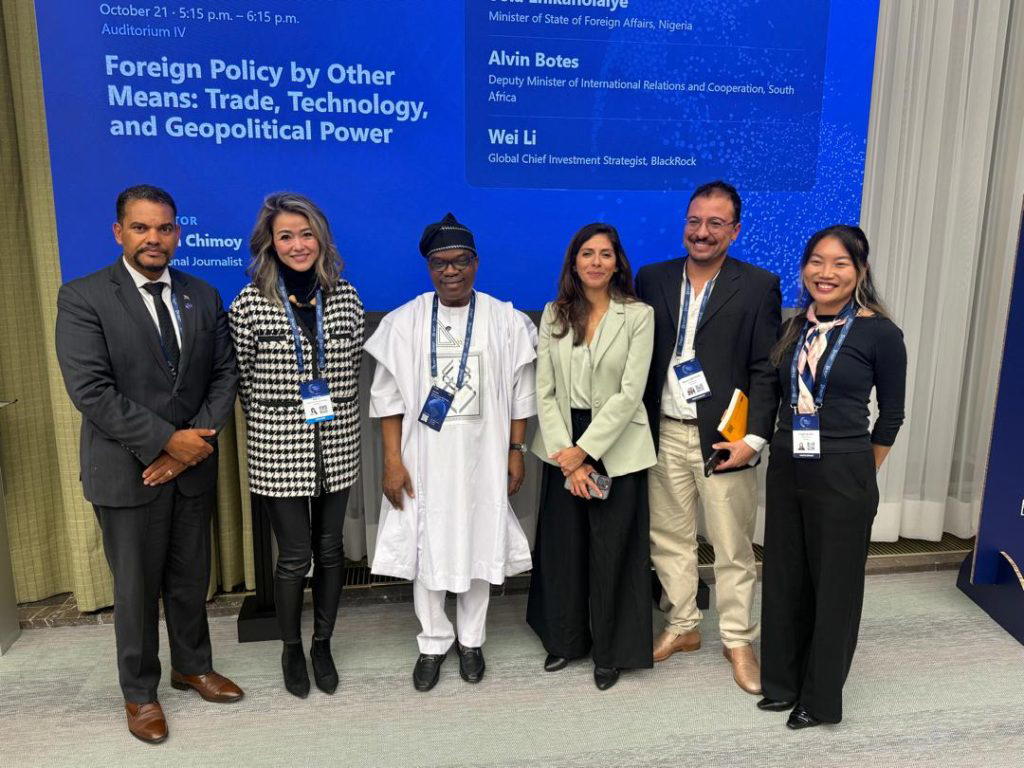
Nigeria seeks increased intra-African trade, sustainable infrastructure financing. In a statement signed on Saturday, by the Special Assistant on Digital Media and Public Diplomacy, Raphael Oni, to the Minister of State for Foreign Affairs, Sola Enikanolaiye, the minister made the call at the Berlin Global Dialogue 2026 in Germany, where he outlined Nigeria’s position on trade, technology, foreign policy and infrastructure investment.
By Favour Ulebor, Abuja Nigeria has called for increased trade among African countries and sustainable infrastructure financing to boost economic growth, attract investment and create opportunities for the continent’s growing population. In a statement signed on Saturday, by the Special Assistant on Digital Media and Public Diplomacy, Raphael Oni, to the Minister of State for Foreign Affairs, Sola Enikanolaiye, the minister made the call at the Berlin Global Dialogue 2026 in Germany, where he outlined Nigeria’s position on trade, technology, foreign policy and infrastructure investment.
Speaking at a high-level panel on “Foreign Policy by Other Means: Trade, Technology, and Geopolitical Power” and a policy lab on infrastructure and investment, Enikanolaiye said Africa needed partnerships based on national sovereignty, mutual respect and shared prosperity. He said the continent had significant resources and economic opportunities but must take greater responsibility for its development by mobilising domestic resources and strengthening economic cooperation.
The minister stressed that foreign capital should complement, rather than replace, resources generated within African countries. Referring to Nigerian industrialist Aliko Dangote’s investment activities, he said domestic investment remained important to Africa’s development. He said; “Africa has come to this conversation with great assets, substantial opportunities and a determination to shape its own development based on partnership with the rest of the world.
“Foreign capital can only complement but cannot replace the kind of resources that we need,” he said. On Nigeria’s foreign policy, Enikanolaiye said the country was pursuing strategic autonomy, which allows it to engage with different global powers based on its national interests rather than their ideological or political differences. He explained that government had a responsibility to create an enabling environment for private businesses to grow, citing Nigeria’s peacekeeping role in Liberia and Sierra Leone through the Economic Community of West African States Monitoring Group, which helped create conditions for Nigerian businesses, including banks, to expand across the region.
On mineral resources, the minister called for a shift from exporting raw materials to processing them locally to create jobs and retain more economic value within African countries. He said the Federal Government was requiring investors in the extractive sector to establish local processing industries while strengthening measures to protect the environment and communities where minerals were found.
On infrastructure, Enikanolaiye identified reliable electricity, efficient transportation systems and wider digital connectivity as essential to increasing production and supporting economic growth. He said Africa needed sustained investment in these areas to create opportunities for its young population, adding that reliable electricity was also necessary for the continent to benefit from advances in artificial intelligence.
The minister identified metering and improved revenue collection in the power sector as additional opportunities for investment. He said African governments had introduced reforms to improve their business environments but stressed that investors needed well-prepared projects, predictable regulations, transparent procurement processes and credible risk-sharing arrangements.
Enikanolaiye identified the African Export-Import Bank, African Development Bank and ECOWAS Bank for Investment and Development as institutions that could support infrastructure projects through guarantees and blended financing. He also called for reforms to the international credit rating system and welcomed the establishment of an African Credit Rating Agency in Mauritius, saying improved financing arrangements were important to attracting long-term capital.
On regional trade, the minister said African countries needed to increase commerce among themselves to strengthen their economies and develop competitive industries. He cited the African Continental Free Trade Area, Nigeria’s single window system and the Pan-African Payment and Settlement System as initiatives that could support trade and economic integration across the continent.
He said intra-African trade, which he put at about 16 per cent, needed to increase, while noting that Africa’s average economic growth of 4.3 per cent should rise towards the continent’s ambition of seven per cent. The minister also highlighted the need to review technical education curricula and improve skills development to meet the demands of infrastructure projects.
He urged African countries to make better use of diaspora remittances amid declining official development assistance, while reaffirming Nigeria’s commitment to fiscal discipline, transparency, democracy and the rule of law. Meanwhile, Nigeria’s delegation to the dialogue held bilateral engagements in Berlin on behalf of President Bola Tin
- infrastructure
- nigeria
- trade
- financing
- investment
- opportunity
- minister
- enikanolaiye