Why Stanley Matthews’ Ballon d’Or triumph echoes down the years for Harry Kane
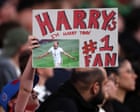
In 1956, the Blackpool great was recognised for his force of individual will, the very thing that makes the Bayern and England striker the standout candiate Systems football began in 1963 – on the hallowed turf of Wembley – with the impact of a cynical foul by Gino Pivatelli. At that moment in the European Cup final, when the hard-working Milan forward, brought in to combat Benfica’s Mário Coluna, caught the great playmaker, football of the individual came to an end.
In 1956, the Blackpool great was recognised for his force of individual will, the very thing that makes the Bayern and England striker the standout candiate
Systems football began in 1963 – on the hallowed turf of Wembley – with the impact of a cynical foul by Gino Pivatelli.
At that moment in the European Cup final, when the hard-working Milan forward, brought in to combat Benfica’s Mário Coluna, caught the great playmaker, football of the individual came to an end. The foul not only checked a promising break, but broke a bone in Coluna’s foot. Without substitutes, he hobbled on, diminished, and Milan won 2-1 to lift the trophy and register the first victory for a team that prioritised the system over the individual. Modern football was born.
There are degrees, of course. The success of Zinedine Zidane’s Real Madrid was far more predicated on individuals than that of, say, Thomas Tuchel’s Chelsea or Pep Guardiola’s Manchester City. But, fundamentally, since that first success for catenaccio, football has been resolutely a team game.
Which is what always makes individual awards in the game such an oddity. Even in successful teams there is often a tension between the individual and the collective. That can be productive – sparks of friction are often creative. In sides that disappoint, though, the issue, whether the result of his own ego or the shortcomings of his teammates, is often an overreliance on one individual.
When the Ballon d’Or launched in 1956, that paradox was less pronounced. If the decision back then was less contentious than Monday’s award will assuredly be, though, it can only have been because there was no social media on which the furious could vent.
That the Hungarian vote was split between Ferenc Puskás, József Bozsik and Sándor Kocsis immediately highlighted a problem that successful teams still face, although given the award was made a month after the uprising was crushed by and Soviet tanks entering Budapest, with two of the three players in the process of defecting, it was probably just as well for the magazine France Football that none of the Hungarians did triumph.
Still, the choice of Stanley Matthews, from today’s perspective, looks odd. While it is true Blackpool had finished second in the First Division in 1956, but they were 11 points behind Manchester United and had gone out of the FA Cup in the third round. Was there not a case for Duncan Edwards or Tommy Taylor? Or for Bert Trautmann, the goalkeeper who won the Football Writers’ player of the year in 1956 after playing on with a broken neck in the final as Manchester City lifted the Cup?
Looking beyond England, what of Alfredo Di Stéfano, who had inspired Real Madrid to the inaugural European Cup? Or one of the Athletic Bilbao players who had just won La Liga? Or Pivatelli, who had been top-scorer in Serie A? Or Giuliano Sarti, the goalkeeper who had won the Scudetto with Fiorentina? Or Nikita Simonyan, whose goals had powered Spartak Moscow to the Soviet title? Matthews was 38, and there’s a clear sense that the inaugural Ballon d’Or was something of a lifetime achievement award.
Perhaps that is fine. Maybe the award should recognise longevity. What, after all, is it for? It’s certainly not just about how much a player wins in a given year. If it were, Fabián Ruiz would be a hot favourite on Monday, having won the World Cup, the Champions League and Ligue 1 this season.
Yet fine player though the midfielder undoubtedly is, he would be neither Paris Saint-Germain nor Spain’s player of the season. Besides, an award for winning lots of other awards is the definition of gilding the lily. There’s perhaps even an argument that individual awards represent an opportunity to acknowledge those who strive and delight but rarely win medals.
According to its website, the Ballon d’Or is “awarded based on three essential pillars … individual performance, team achievements, and class combined with fair play.” The “complete” winner will be defined by a “combination of talent, sportsmanship and competitive excellence”.
Team achievement is perhaps easiest to isolate. PSG have largely ditched their egos as Luis Enrique has led them to back-to-back Champions Leagues, but how do you tease out which of their exceptional front three has been the most important? Ousmane Dembélé won that battle last year. Khvicha Kvaratskhelia was arguably the standout this year, but, in a World Cup year, can a player whose country didn’t qualify be regarded as the best individual? And neither Dembélé nor the other member of the trio, Desiré Doué, had an especially notable World Cup.
Given the relative level of the French league and the fact PSG can rest players for domestic games to keep them fresh for Europe, it’s arguable the greatest achievement by a European club last season came from Arsenal, as they won the Premier League and reached the Champions League final. But their strength is the collective, and only three of the 30-man shortlist are Arsenal players, but none of Gabriel, William Saliba or Declan Rice had stellar World Cups.
What then of Spain? They too are a team short on star quality, certainly when Lamine Yamal is carrying an injury as he did for the first few months of this year. They won the World Cup, ultimately, because of the collective strength of their midfield. Rodri is the embodiment of their approach, but his involvement at Manchester City in the second half of last season was restricted.
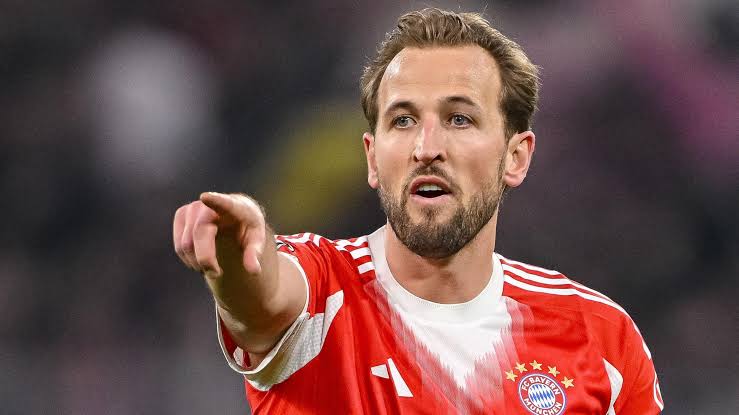
Real Madrid have just endured one of only five trophyless seasons this century, which weakens the claims of Kylian Mbappé and Jude Bellingham and Vinícius. Lionel Messi had great moments at the World Cup but playing in MLS reduces his chances. Which perhaps means it’s time again to reward somebody who has had a good year, even if he went out of the World Cup in the semis and the Champions League in the quarters: Harry Kane.
Goals in the Bundesliga may not quite have the currency they did when Karl-Heinz Rummenigge was scoring them, but 61 in 51 club games last season represents a remarkable record, and he also got six at the World Cup, winning the game against the Democratic Republic of the Congo almost by force of individual will.
In a season without an obvious outstanding candidate, there seems a strong possibility that the panel, just as it did in 1956, will reward consistency and longevity.
- football
- stanley
- matthews
- ballon
- triumph
- harry
- kane
- milan