The 10 best bean-to-cup coffee machines in the UK, tried and tested
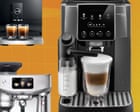
Our expert put 14 to the test, including fully automatic and assisted models • The best coffee machine for your home Laziness is akin to godliness. I know this for a fact because, every morning, my kitchen hosts a dishevelled re-enactment of Michelangelo’s famed fresco, the Creazione di Adamo (Creation of Adam).
Fancy an at-home coffee maker that can grind beans and make tasty espresso? Our expert put 14 to the test, including fully automatic and assisted models
Laziness is akin to godliness. I know this for a fact because, every morning, my kitchen hosts a dishevelled re-enactment of Michelangelo’s famed fresco, the Creazione di Adamo (Creation of Adam). An outstretched arm extends a single finger, and lo – a bean-to-cup machine stirs, a grinder whirs, the smell of freshly ground coffee wafts, coffee drips and milk froths. Hopefully, my cup does not runneth over, for all the big mugs are in the dishwasher.
At its simplest, this is the appeal of a fully automatic bean-to-cup coffee machine. Turn it on, place a cup on the drip tray and lazily prod a button. The machine then freshly grinds the beans, brews the coffee and – if it has an automatic milk frother – optionally adds a layer of hot frothy milk to your beverage. Your role in the process is simple: decide whether you want an espresso, lungo, americano, cappuccino, macchiato, latte or cortado. Decisions, decisions.
In this roundup, I’ve collected the best bean-to-cup coffee machines that have passed through my kitchen in recent months (or in some cases, years), and tested them alongside a handful of less familiar models that have also earned their automatic barista accreditations. Think of this as a work in progress: I’ll be adding new models as and when they arrive in my kitchen – and prove themselves capable of making delicious coffee.
Note, there are different kinds of bean-to-cup machines, which require different levels of input to achieve different results. If you need a refresher, I go into the details at the end of the article.
I’ve been reviewing tech and gadgets of all shapes and sizes for more than two decades, and I branched out into testing coffee machines about eight years ago. Whether it’s cafetières or capsule machines, manual espresso or fully automatic bean-to-cups, I’ve put hundreds of hours and – most probably – hundreds of kilograms of coffee into the pursuit of a pleasing caffeine hit. And yes, I’ve drunk a lot of the stuff too. At the time of writing, far, far too much. I’ll be going for a very long walk after I’ve finished writing this.
There’s a lot to consider with an automatic bean-to-cup coffee machine, so everything goes under the microscope. Some aspects are subjective (the ease of use, coffee quality and the overall design), while others can be measured – coffee temperature, noise, and how long the machines take to heat up.
I tested 14 models, taste-testing side by side against their nearest competitors to see how they performed for espresso, black coffee and milk-based drinks. Noise levels for grinding, brewing and milk frothing were measured with the Decibel X app on my iPhone to test comparative noise levels in A-weighted decibels (dBA), and my trusty Thermapen handles the temperature testing side of things.
For more, read our full De’Longhi Magnifica Start coffee machine review
Well, there are lots. The tricky bit for buyers is that, rather unhelpfully, manufacturers have a broad definition of bean-to-cup, and they apply the term to a range of machines with a varied array of abilities. One thing they do all have in common is a bean hopper up top, which can be filled with coffee beans. Yes, they all brew coffee, but while some serve a milk-based coffee with a single press of a button, others require more effort.
Below, I’ve summarised the pros and cons of the three main types of bean-to-cup machines on the market in 2026, and given insight as to what they do differently.
Pros: Easiest to use Cons: Can be expensive
If you can see a milk carafe – or a milk tube – poking out of the side of a machine, then it’s almost certainly a superautomatic. As long as you keep the water tank, milk carafe and bean hopper topped up, one prod of a finger will summon a milk-based coffee – such as a cappuccino or flat white. Pricier models may provide more preset drink recipes (including cold brew), adjustable milk froth levels or the ability to swap between two types of coffee beans.
Pros: Normally cheaper; milk foam can be better Cons: More hassle
Semi-automatic bean-to-cup machines (confusingly referred to as automatic sometimes) require you to steam your milk manually with a steam wand. They serve espresso – and often long blacks or americanos – at the press of a button, but you’ll need to hold a steel jug of milk under the steam wand to create hot milk. Up your budget, and models with “pro” wands will create cafe-quality microfoam – if, that is, you have good technique. Most, however, use auto-frothing wands, which create a looser, more bubbly foam with minimal effort.
Pros: Best coffee and superior milk texture Cons: Require more effort
You’ll see manufacturers call these bean-to-cup machines, but they’re more involved than their semi- and fully automatic cousins. The more you spend, the more assistance you’ll get. Top-flight models hold your hand tightly: put the portafilter under the grinder, and they’ll grind the coffee and press it down, leaving you to move the portafilter to the brew group and press a button. If the grind is too coarse or too fine, they’ll prompt you to adjust it. Similarly, they froth milk to perfection: just put a jug of cold milk under the steam wand. For coffee quality, they trounce their automatic rivals, but effortless they are not.
For more: The best coffee machines for your home – tested How to make your coffee machine last longer The best espresso machines
Sasha Muller is a tech and consumer journalist, avid coffee drinker and craft beer enthusiast with more than two decades of experience in testing products and avoiding deadlines. If he’s not exploring the local woods with his kids, boring people talking about mountain-bike tyres or spending ill-advised amounts on classic drum’n’bass vinyl, he’s probably to be found somewhere swearing at an inanimate object
- coffee
- bean
- cup
- machine
- milk
- home
- espresso
- drip