Sudan: Refugees allegedly turned into prisoners of war after being forcibly recruited into al-Burhan’s Army
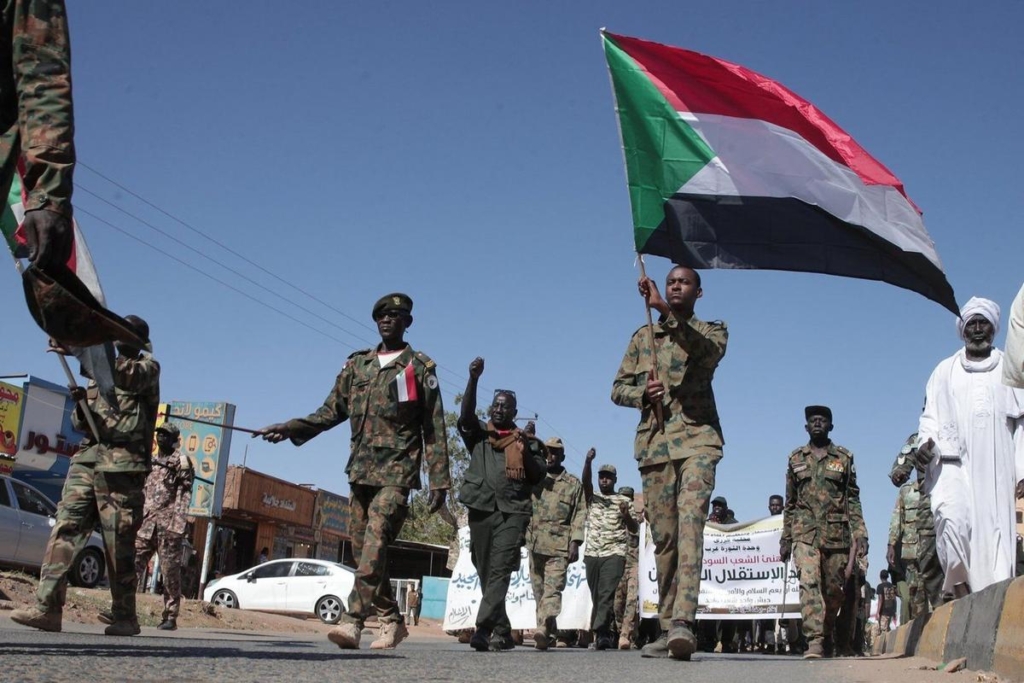
This was an exploitation by the Port Sudan authorities of the Tigrayan refugees’ desperate need for any form of financial compensation, as well as protection and asylum on Sudanese territory, leaving thousands with little choice but to enlist in Abdel Fattah al-Burhan’s army. Missions Inside Sudan Local websites, including Sudan Peace Tracker, reported that forces arriving from Tigray had received military orders from al-Burhan’s army in Port Sudan to carry out special military missions inside Sudan, most notably in Al Jazirah and Sennar.
As the war that erupted in Sudan in mid-April 2023 continues to drag on, the army in Port Sudan is stepping up efforts to secure military support in all its forms. These efforts include bolstering its forces and fighters on the ground by recruiting foreign combatants from other countries, as well as refugees residing on Sudanese territory.
Videos have circulated on social media in recent days, subsequently carried by local and international newspapers, showing Tigrayan fighters from Ethiopia who were recruited into the ranks of the Sudanese army, either forcibly or in exchange for financial promises. Some were later captured by forces affiliated with the Founding Alliance and questioned to establish the circumstances surrounding their involvement in fueling a war that has inflicted severe damage on Sudan and its population.
The Sudanese army relied on Tigrayan refugees who had sought asylum and entered Sudanese territory during the Tigray War. Some of its commanders were tasked with selecting and recruiting those with military experience, sending them to Eritrea for training before deploying them in combat operations inside Sudan.
Local Sudanese newspapers published detailed accounts of the prisoners captured by forces of the Founding Alliance, led by the Rapid Support Forces. The prisoners belong to what is known as the “70th Army,” which comprises thousands of Tigrayan fighters and officers. They had previously served in the Ethiopian armed forces before seeking refuge in Sudan or fleeing into Sudanese territory with the facilitation of the Port Sudan authorities, led by Abdel Fattah al-Burhan, chairman of the Sovereignty Council and commander of the armed forces there.
Videos circulating online documenting the testimonies of prisoners whose forces were defeated following battles at the Qadam garrison in the Bakuri area, east of Kurmuk, revealed the presence of formations from the Ethiopian Tigray People's Liberation Front and the 70th Army. Some prisoners admitted to having been recruited into the Sudanese army in exchange for a meagre salary of $200 a month, transferred into bank accounts without being paid in cash. This was an exploitation by the Port Sudan authorities of the Tigrayan refugees’ desperate need for any form of financial compensation, as well as protection and asylum on Sudanese territory, leaving thousands with little choice but to enlist in Abdel Fattah al-Burhan’s army.
In a report published by Sudan War Monitor, testimonies from the prisoners were released, with some appearing to be very young. The footage sparked outrage in Ethiopia, where some activists on social media accused al-Burhan’s army of recruiting minors and children from among the refugees on Sudanese territory, in addition to selecting experienced fighters who had served in other military positions in Tigray.
Ethiopian newspapers focused on the refugees who had become prisoners, particularly teenagers and minors who should, by now, have been pursuing their education in their homeland or country of asylum. Instead, they were exploited by al-Burhan’s army and forced to pay a heavy price as a result of forced recruitment campaigns and the political and military conflicts in Sudan and its neighbouring countries.
Local websites, including Sudan Peace Tracker, reported that forces arriving from Tigray had received military orders from al-Burhan’s army in Port Sudan to carry out special military missions inside Sudan, most notably in Al Jazirah and Sennar. The International Crisis Group reported that several thousand Tigrayans had carried out military operations under duress after becoming stranded in eastern Sudan as a result of the Tigray War.
Al-Burhan’s army selected individuals who had previously taken part in military and combat operations in Tigray before fleeing and seeking refuge in Sudan during the war, which ended with the 2022 Pretoria Agreement. The report stated that hundreds of them had already served in United Nations peacekeeping forces in Abyei before abandoning their positions and joining the Sudanese army and its allied militias. Among the most prominent of these is the al-Baraa ibn Malik Battalion, affiliated with the terrorist Muslim Brotherhood organisation, which comprises tens of thousands of fighters.
In a report published last September, Sudan War Monitor also documented the deployment of Tigrayan fighters at the forefront of Sudanese army military units during battles at Jabal Qadam in the Bakuri area, east of Kurmuk. The battles ended in victory for the Rapid Support Forces, which succeeded in capturing several Tigrayan soldiers and interrogating them to uncover details of their recruitment into the army to threaten Sudanese civilians and cities.
According to the International Crisis Group’s report, thousands of Tigrayan fighters took part in the war in Sudan after National Umma Party leader Sadiq al-Mahdi worked to recruit them into the ranks of the army and its allied militias. Media reports indicated that their numbers had exceeded 30,000 Tigrayan fighters.
In June last year, Eagle Intelligence Reports revealed that foreign Tigrayan fighters serving in the Sudanese army had also been promised citizenship or permanent residency, rather than merely political asylum, in exchange for enlistment and participation in the war, in pursuit of al-Burhan’s army’s objectives in the conflict.
The Ethio Negrai website confirmed that Tigrayan fighting groups had carried out large-scale military operations in Sudan, relying on elite fighters from the Tigray 70th Army and the Tigray People's Liberation Front. Their operations covered key fronts, including Khartoum, Al Jazirah, Wad Madani, Kordofan, Blue Nile, White Nile and West Kordofan. Efforts to reinforce Tigrayan forces through recruitment from refugee camps, including Um Rakuba in Gedaref and elsewhere, have continued, with some ultimately ending up as prisoners or being killed, without receiving anything in return.
- sudan
- army
- war
- prisoner
- burhan
- force
- refugee
- tigray