Tinubu’s fresh Ibom Deep Seaport approval raises questions over Buhari’s 2020 clearance, financing

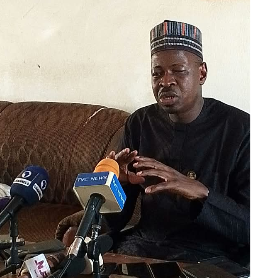
Governor Umo Eno says Tinubu’s latest approval will enable a sovereign guarantee for Ibom Deep Seaport investors, but questions remain over who the investor is, the terms, potential taxpayer liabilities, and whether the FEC has approved the guarantee as required by law.
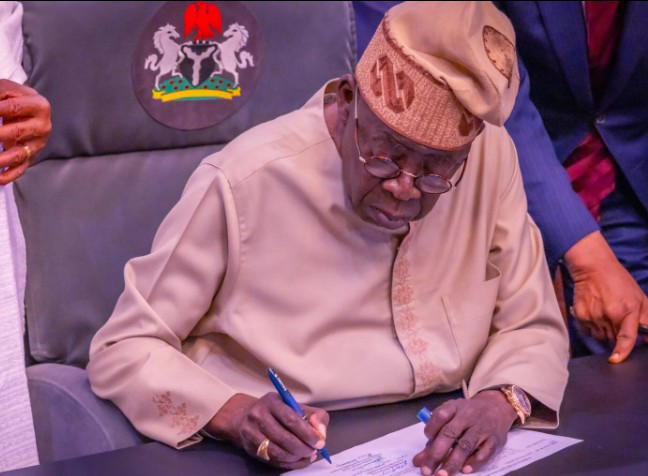
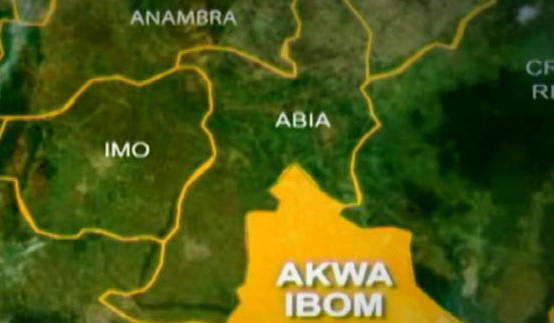
President Bola Tinubu’s latest declaration that he has approved the Ibom Deep Seaport project in Akwa Ibom State has raised questions about what exactly has changed since the Federal Executive Council (FEC), under the late President Muhammadu Buhari, approved the project’s first phase in December 2020.
While Governor Umo Eno has described Mr Tinubu’s intervention as a landmark approval of the project’s financing arrangement, sources involved in the project’s technical engagements across two administrations suggest the state may not have needed another federal approval to proceed with its original investment structure.
This is because the 2020 approval reportedly authorised Akwa Ibom State to seek private investors and implement the project under a 60:40 financing arrangement, with investors expected to provide 60 per cent of the funding and the state government the remaining 40 per cent.
But Mr Eno has offered a different explanation for the latest presidential intervention, saying it would enable the Federal Government to provide a sovereign guarantee to attract investors.
The governor’s explanation has, however, raised further questions about whether a new financing arrangement has been negotiated, whether an investor has formally requested a sovereign guarantee and whether the Federal Executive Council has approved the proposed guarantee.
The questions are particularly important because Mr Tinubu promised Akwa Ibom residents during his 30 January 2023 presidential campaign rally in Uyo that his administration would build the seaport.
The Ibom Deep Seaport project is not a new proposal awaiting its first federal clearance.
On 16 December 2020, the Buhari administration’s FEC approved the implementation of its first phase, estimated to cost $2.016 billion.
The approval was subsequently listed by the Infrastructure Concession Regulatory Commission (ICRC) among federal government-approved public-private partnership projects. The commission’s record identified the Federal Ministry of Transportation and Akwa Ibom State Government as the relevant public institutions.
The then Commissioner for Economic Development and Ibom Deep Seaport, Akan Okon, said in December 2020 that the project would be funded under a 60:40 arrangement, with private investors providing 60 per cent and the public sector contributing 40 per cent.
Mr Okon put the cost of the first phase at $2.016 billion, out of an estimated $4.6 billion for the entire project. He said the seaport would be developed in phases. The ICRC list also confirms the amount.
Sources familiar with the project’s technical engagements under the administrations of former Governor Udom Emmanuel and Mr Eno told PREMIUM TIMES that the 2020 approval had already provided the necessary federal authorisation for the state to seek investors and proceed with the project.
The sources, who requested anonymity due to the politically sensitive nature of the matter, questioned why the state government continued to pursue investors if the original clearance was insufficient.
“If the project needed more approval from the Federal Government, as was given by President Tinubu, why did Governor Umo Eno go to Paris to meet an investor?” one of the sources asked.
According to another source, the original federal approval was based on the understanding that the Nigerian Ports Authority, as the authorised port manager, would manage the facility, while Akwa Ibom State would source investors and work with them to develop it.
“We made a presentation to the Federal Executive Council, and it was approved. No other approval is required again,” the source said.
The source said the Federal Government had made it clear from the beginning that it would not contribute to the project’s financing.
“The Federal Government has said it was not investing, and there is a letter to that effect that it is 60/40 per cent in investment. Sixty for the investor and 40 for the state government. The port is to have four terminals. But we said lets develop one terminal first.
“It was the place of Akwa Ibom State to look for an investor. The understanding was for the state government to approach some of the neighbouring states to buy into it and fund the project for the 40 per cent of the state.”
The source said the state government and its prospective investor had spent money on geophysical and geotechnical studies in preparation for the project.
The source also said the state could still bring in other state governments and private companies to help finance its share of the project.
Despite the 2020 approval, the project has yet to reach construction.
The previous administration of Mr Emmanuel sought investors but later complained that it had lost its preferred investor after petitions against the project over a revised location.
Under Mr Eno, the government has continued efforts to advance the project.
In April, the governor received the feasibility report from a technical committee led by Mfon Usoro, a former director-general of the Nigerian Maritime Administration and Safety Agency.
Mr Eno said his administration had funded feasibility studies, prepared investor documents, conducted geophysical and geotechnical assessments and established a project office.
The committee also reported progress on financial modelling, due diligence and international bidding, with preferred bidders emerging.
In June, the governor held discussions with prospective project partners in Paris to seek clearer implementation timelines and investment commitments.
The state government also announced a high-level technical engagement with Africa Global Logistics Group in Paris on 5 June 2026.
These engagements followed earlier technical work involving the consultant port master planner, Dar Al-Handasah, with the Technical Committee on the Actualisation of Ibom Deep Sea Port, which met the firm to finalise technical requirements for the proposed City Gate and Sales Centre groundbreaking in May 2025.
Mr Eno has repeatedly described the seaport as a long-term project requiring careful planning and sustainable investment.
However, the latest presidential announcement has brought the project’s financing arrangements into sharper focus.
Eno says Tinubu approved a sovereign guarantee.
At a thanksgiving service on Sunday, the governor gave a more detailed explanation of what he said the president had approved.
Speaking initially in Ibibio, Mr Eno narrated how the President came to address the seaport issue during Friday’s event.
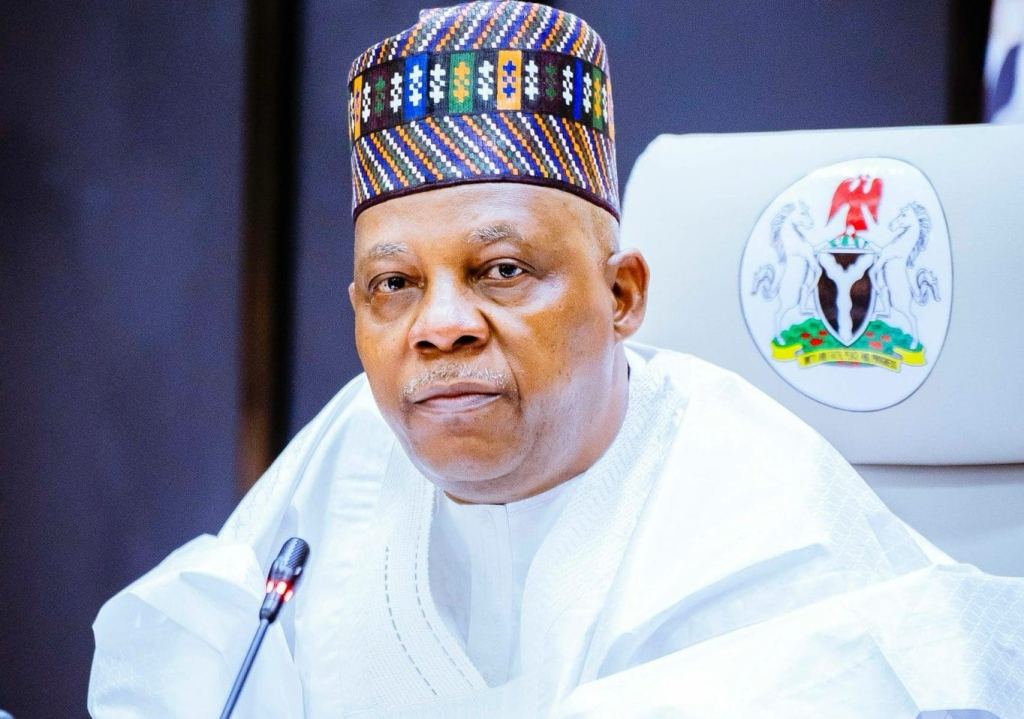
He said some youths had shouted about the seaport, prompting the president to intervene. He also said Vice-President Kashim Shettima had written a note to the President, drawing his attention to the request.
Explaining the approval in English, the governor said investors required a sovereign guarantee from the Federal Government before committing funds to the project.
“There are many things that make a seaport. Investors want a sovereign guarantee. Investors want to know how long we will manage this seaport before we turn it back to government. We put our money, how do we get back our money? These are all things that culminated in bringing in an investor,” he said.
Mr Eno said the state government submitted memoranda to the President Tinubu on the issues and that the latest approval was for the Federal Government to provide the sovereign guarantee.
“It is these things that we wrote, and when the President said approved, it is approval to the memos that had gone before him, that he knows that the Federal Government can give you a sovereign guarantee for investors to now decide to bring in their money.
“Without a sovereign guarantee, no investor would put one dime into the project,” he said.
The governor, however, cautioned that the presidential declaration did not mean construction would begin immediately.
“Approval is not approval to start. I have said it from day one, I did not deceive anybody. No state government can build a seaport. Don’t let anybody deceive you,” he said.
Mr Eno’s explanation suggests that the latest approval concerns a federal guarantee intended to reassure prospective investors, rather than a fresh approval for the construction of the seaport itself.
That raises questions about the nature of the proposed guarantee, the investor seeking it and the financial exposure it could create for the Federal Government.
A review of the Infrastructure Concession Regulatory Commission Act raises questions about the process for granting such a guarantee.
Section 3 of the Act provides that no federal ministry, agency, corporation or government body shall give any guarantee, letter of comfort or undertaking in respect of a concession agreement made under the Act without the approval of the Federal Executive Council.
The provision requires FEC approval for guarantees connected to concession agreements.
However, the provision alone does not prove whether the latest presidential declaration constitutes the required FEC approval or whether a separate approval has already been obtained.
PREMIUM TIMES’ checks of publicly available federal government announcements and media reports on the latest presidential declaration did not identify an FEC decision approving a sovereign guarantee for the Ibom Deep Seaport investor.
Neither did the President’s public announcement at the rally mention a sovereign guarantee, nor did the Presidency specify the financial institution or consortium expected to provide funding, the amount to be guaranteed, or the government’s potential liabilities.
These details matter because a sovereign guarantee could expose the Federal Government to financial obligations if the state or project company fails to meet commitments under the financing agreement.
It is also unclear whether the proposed guarantee would cover the entire project cost, the investor’s capital, debt repayment or particular obligations of the state government.
PREMIUM TIMES contacted Ms Usoro, the chairman of the technical committee, to find out whether the state required additional federal approval after the 2020 FEC clearance and what the president’s latest declaration meant.
She declined to comment, saying the technical committee dealt with the state government and investors. She asked the newspaper to direct its enquiries to the government.
The Commissioner for Finance, Emem Bob, who supervises the Ministry of Special Duties and Ibom Deep Seaport, said PREMIUM TIMES would be invited for further clarification.
“Let us explore more engagement on the seaport before I can give you the information you need,” he said.
Calls to the Commissioner for Information, Aniekan Umanah’s mobile telephone line did not connect.
In a subsequent media enquiry sent to Mr Umanah on Sunday through text messages, WhatsApp and Facebook Messenger, PREMIUM TIMES asked whether the governor’s description of the president’s approval as one concerning the financing arrangement meant that the original 60:40 financing structure had changed.
The newspaper specifically requested details of the new financing arrangement but had not received a response at the time of filing this report.
The newspaper also sought clarification on the proposed sovereign guarantee, asking whether an investor had formally requested it, the investor’s identity, and the financial institution or consortium providing the financing.
Other questions included whether the guarantee was a condition for releasing a loan or merely additional security, the specific risks the investor wanted the Federal Government to assume, and whether the guarantee would cover the entire project cost or only particular government obligations.
PREMIUM TIMES also asked whether the FEC had approved the guarantee and what potential financial liabilities it would impose on Nigerian taxpayers.
Mr Umanah did not respond to the questions.
PREMIUM TIMES also contacted Bayo Onanuga, special adviser to President Tinubu on information and strategy, seeking clarification on the president’s declaration.
This newspaper asked whether Mr Tinubu was announcing a fresh federal approval, reaffirming the December 2020 FEC approval or committing the Federal Government to a specific implementation decision.
It also asked what concrete steps his administration had taken to fulfil his January 2023 campaign promise to build the seaport, and the timeline for implementation.
The newspaper further sought an explanation for the president’s decision to link his declaration to the crowd’s support for his re-election, given that he had made a similar promise during his 2023 campaign.
On Monday, PREMIUM TIMES sent a further enquiry to Mr Onanuga, specifically referencing the governor’s explanation that the latest presidential approval concerned a sovereign guarantee.
The newspaper asked when the FEC approved the guarantee, who the beneficiary is, and the terms of the proposed arrangement, in line with Section 3 of the ICRC Act.
Mr Onanuga had not yet responded to the enquiries at the time of filing this report.
The unanswered questions leave a key issue surrounding the long-delayed project: whether the latest presidential declaration has resolved a financing obstacle that emerged after the 2020 approval or whether it represents another political commitment to a project that has yet to move into construction.
- tinubu
- ibom
- deep
- seaport
- approval
- question
- buhari
- clearance