business

Ghana’s traditional economic model has failed to deliver – Ato Forson

Ghana’s traditional economic model has failed to deliver – Ato Forson

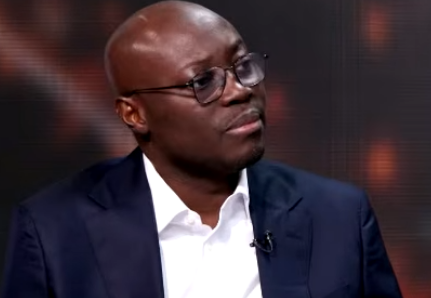
Finance Minister Dr Cassiel Ato Forson has described Ghana’s traditional economic model as unsuccessful in delivering the desired development outcomes for citizens over the past 69 years, calling for a fundamental shift towards sustainable economic growth and job creation. The Finance Minister said temporary employment interventions such as the National Builders Corps (NABCO) and the Youth Employment Agency (YEA) could provide immediate relief but were not sustainable solutions to the country’s unemployment challenge.

Finance Minister Dr Cassiel Ato Forson has described Ghana’s traditional economic model as unsuccessful in delivering the desired development outcomes for citizens over the past 69 years, calling for a fundamental shift towards sustainable economic growth and job creation.

He said the government's proposed New Economy initiative was designed to transform the country's economic structure, create sustainable employment and provide better opportunities for the growing number of young people entering the labour market.

Dr Forson made the remarks when he addressed the National House of Chiefs ahead of the presentation of the 2027 Budget to Parliament on Thursday, November 12, 2026.

He urged traditional leaders to support the government's economic agenda, arguing that Ghana could no longer depend on approaches that had failed to generate sufficient jobs and improve living standards.

The Finance Minister said temporary employment interventions such as the National Builders Corps (NABCO) and the Youth Employment Agency (YEA) could provide immediate relief but were not sustainable solutions to the country's unemployment challenge.

“The temporary models may offer immediate relief and experience to our people, but our young people need dependable livelihoods beyond the end of the placement of these temporary models. Their future cannot depend on moving from one temporary opportunity to the next,” he said.

Dr Forson said the government was instead seeking to build an economy capable of generating lasting employment and expanding opportunities for young Ghanaians.

He also called for a shift from the export of raw materials towards domestic processing and value addition, saying the approach would help create jobs, strengthen local industries and increase the economic benefits derived from Ghana's natural resources.

He further assured the chiefs that the government would maintain fiscal discipline and ensure prudent management of public funds.

He said value for money would remain a key consideration in government spending as part of efforts to support the country's economic transformation.

Dr Forson appealed to the National House of Chiefs and other stakeholders to support the New Economy initiative as the government prepares to present its 2027 Budget.

  • forson
  • ghana
  • model
  • government
  • ato
  • employment
  • job
  • economy

Summaries and tags are generated automatically. Stay informed with VidiaNews.

Related news

Gov’t to unveil plan for new economy to create youth jobs – Ato Forson
business

Gov’t to unveil plan for new economy to create youth jobs – Ato Forson

Finance Minister Dr Cassiel Ato Forson says the government is pursuing a new economic direction aimed at creating sustainable employment opportunities for young people, insisting that temporary job programmes cannot provide the long-term livelihood security Ghana’s youth need. Finance Minister Dr Cassiel Ato Forson has announced that the government is working towards transforming Ghana’s economy to create more sustainable and dependable employment opportunities for young people.

Read →
Ato Forson says New Economy will help Ghana attain an investment-grade rating
business

Ato Forson says New Economy will help Ghana attain an investment-grade rating

Ghana is seeking to secure an investment-grade credit rating through its New Economy programme, a move Finance Minister Dr Cassiel Ato Forson says will help reduce borrowing costs and improve access to long-term financing for local businesses. Speaking at a New Economy engagement in Accra, Dr Forson said the government was focused on strengthening the country’s economic fundamentals to restore investor confidence and improve Ghana’s standing in international financial markets.

Read →
Government to unveil four-year ‘New Economy’ plan in 2027 Budget – Kwakye Ofosu
business

Government to unveil four-year ‘New Economy’ plan in 2027 Budget – Kwakye Ofosu

Minister of State in charge of Government Communications, Felix Kwakye Ofosu, says the government will introduce a comprehensive four-year economic transformation plan, dubbed the New Economy, through the 2027 Budget Statement and Economic Policy. The plan will be presented by Finance Minister Dr Cassiel Ato Forson when he delivers the 2027 Budget to Parliament on Thursday, November 12, 2026.

Read →
Ghana targets investment-grade rating to unlock cheaper long-term financing
business

Ghana targets investment-grade rating to unlock cheaper long-term financing

Speaking at a New Economy engagement in Accra, he said Ghana’s 2022 debt default and the subsequent Domestic Debt Exchange Programme (DDEP) had severely weakened the domestic bond market and limited local banks’ access to international financing. He said the New Economy programme was designed to rebuild the economic fundamentals and confidence needed to strengthen Ghana’s standing in international financial markets and encourage private-sector investment.

Read →
Ghana’s 2027 Budget: Three important policy questions about the New Economy
business

Ghana’s 2027 Budget: Three important policy questions about the New Economy

Introduction On November 12, 2026, Ghana’s Minister for Finance, Dr. Cassiel Ato Forson, is expected to present the 2027 Budget, which the government is promoting as the beginning of a New Economy. The critical question is whether the forthcoming budget will deliver an increase of this magnitude or whether the New Economy will largely incorporate projects already included under the Big Push Infrastructure Programme, the 24-Hour Economy initiative and other existing commitments.

Read →