ANALYSIS: COP31: Nine Key issues to shape talks as UN climate talks open in Türkiye

This year’s summit will be conducted under an unusual shared leadership arrangement, with Türkiye hosting the conference while Australia leads the negotiations.
World leaders, government representatives, delegates, civil society groups, researchers and scientists are converging in Antalya, Türkiye, for the 31st session of the United Nations Climate Change Conference of the Parties (COP31), amid growing calls for countries to translate their climate commitments into concrete action.
The conference, scheduled for 9 through 20 November, is expected to focus on accelerating the implementation of climate pledges, notably efforts to limit global warming to 1.5°C above pre-industrial levels, in line with the Paris Agreement.
This year’s summit will be conducted under an unusual shared leadership arrangement, with Türkiye hosting the conference, while Australia leads negotiations. Its overarching slogan, “Where Dialogue Becomes Global Action”, reflects the ambition to move beyond climate pledges towards practical implementation.
Beyond the proposed agenda, the African Group of Negotiators (AGN), which includes Nigeria, will push for developed countries to fulfil their existing climate finance obligations under the Paris Agreement.
The African negotiating bloc plans to push for increased support to help developing countries implement their climate commitments, strengthen resilience, and tackle the growing impacts of climate change.
According to the UN Climate Change secretariat, three major reports published ahead of COP31 indicate that governments are increasingly adopting whole-of-economy and whole-of-society approaches to climate policymaking.
Yet, the reports warn that overall progress remains substantially insufficient, highlighting persistent barriers to speeding up climate action and implementing national targets and pledges.
Mandated under the UN climate process, the reports include the 2026 Nationally Determined Contributions (NDC) Synthesis Report, the Biennial Transparency Report (BTR) Synthesis Report and the National Adaptation Plans (NAPs) Progress Report.
Together, they assess countries’ progress in translating climate commitments into policies, tracking emissions reductions, strengthening adaptation, and mobilising the resources required to deliver climate action.
Consequently, COP31 hopes to offer an important opportunity for countries to advance negotiations on practical measures to address these implementation gaps.
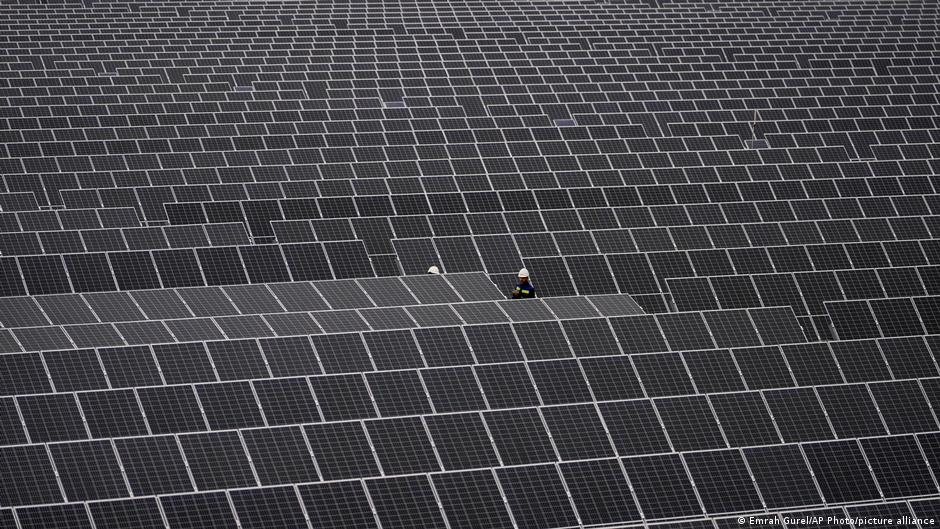
Alongside the formal negotiations, the Global Climate Action Agenda will provide opportunities to boost electrification, improve access to climate finance and cut waste and emissions of super-pollutants such as methane.
In a statement ahead of the conference, UN Climate Change’s executive secretary, Simon Stiell, said the reports showed that more governments are integrating climate action into their economic planning.
“These reports show more governments are taking climate action right across their economies, to bank the vast benefits of clean energy and climate resilience,” he said.
Mr Stiell noted that climate action is increasingly being recognised as a driver of economic growth, job creation and affordable, secure energy.
That said, he warned that global progress remains too slow to meet the goals of the Paris Agreement.
“However, this year’s reports demonstrate again that collective progress remains clearly insufficient, that global transitions are very uneven, and that many countries face substantial barriers to delivering their targets and pledges,” he said.
He said COP31 could help close some of the gaps through ambitious outcomes on mitigation, adaptation, climate finance and just transitions.
Mr Stiell also highlighted the significance of accelerating electrification, curbing methane emissions and advancing zero-waste initiatives.
“By building the support, agreements, and partnerships needed to help convert more pledges into real-world results, COP31 can also bring the vast benefits of climate resilience and cheap, secure clean energy to more people around the world,” he added.
According to the United Nations, the 2026 Nationally Determined Contributions Synthesis Report assesses how countries are turning their commitments under the Paris Agreement into concrete policies and actions, while identifying existing challenges.
Between 1 January 2024 and 31 August 2026, the UN said it recorded 127 new NDCs from 154 Parties to the Paris Agreement in the NDC registry. Together, they cover approximately 70 per cent of global greenhouse gas emissions.
The UN observed that the report shows the latest generation of NDCs is more comprehensive, increasingly incorporating different components of the Paris Agreement, including mitigation, adaptation, climate finance, technology transfer, capacity-building, loss and damage, response measures and just transition.
It also highlights the growing involvement of local and regional authorities, civil society organisations and the private sector in planning, implementing and monitoring climate action.
Reflecting this whole-of-society approach, the report noted that 98 per cent of Parties reported engaging different stakeholders in implementing their NDCs, compared with 70 per cent in previous submissions.
The report further notes that 90 per cent of parties weighed the outcomes of the first global stocktake in preparing their latest NDCs, while 65 per cent highlighted the contribution of clean energy to energy security.
Despite these developments, projected emissions reductions remain far below the levels science requires to achieve the Paris Agreement’s temperature goals.
Current pledges are expected to reduce global emissions by about six per cent by 2035, compared with 2019 levels.
Even with full implementation of all current pledges, emissions could decline by only around nine per cent by 2035, underscoring the need for stronger international cooperation, financial support, and coordinated action across governments, businesses, and other sectors.
The 2026 National Adaptation Plan Progress Report marks a shift from tracking the formulation of national adaptation plans to assessing their implementation.
As of 20 October, 146 countries had initiated or launched the National Adaptation Plan process.
Much as 81 developing countries, including 29 least developed countries (LDCs) and 17 small island developing states (SIDS), have submitted their national adaptation plans, significant barriers remain, particularly in accessing finance.
The report highlights the gulf between countries developing adaptation strategies and their ability to translate those plans into practical interventions.
It identifies challenges in preparing project proposals, securing approval and ensuring that approved funding reaches the countries and communities that need it most.
The report also points to the limited number of accredited entities and difficulties in advancing funding proposals through approval processes.
It warns that approval does not necessarily translate into access to finance, as lengthy processing procedures and delays in disbursing funds continue to impede countries from implementing approved projects.
The findings are expected to reinforce developing countries’ calls for simplified access to adaptation finance and more predictable funding to address growing climate vulnerabilities.
The 2026 Biennial Transparency Report Synthesis Report assesses progress in implementing nationally determined contributions during the reporting period covered by the first round of BTRs (2020–2022).
It indicates that climate policymaking is increasingly integrated into national development strategies, with policies and actions covering wider sections of the economy and involving different segments of society.
For instance, 80 per cent of Parties reported involving non-Party stakeholders in climate action, while 92 per cent linked their climate policies to Sustainable Development Goals.
Since the publication of the inaugural BTR Synthesis Report last year, over 30 additional reports have been submitted, bringing the total number of Parties that have submitted BTRs to 137. These reports now cover approximately 85 per cent of global emissions.
Between 2020 and 2022, 61 Parties, representing about 66 per cent of global emissions in 2020, made progress towards their NDC targets.
The latest report also highlights the growing significance of adaptation in countries’ climate reporting.
Although reporting on adaptation is not mandatory under the framework, 92 per cent of Parties included an adaptation component in their BTRs.
The findings underscore the growing role of transparency and accountability in tracking countries’ climate commitments and assessing implementation progress.
Climate finance is expected to feature among the most contentious issues at COP31, as developing countries continue to demand greater financial support from developed nations to combat climate change.
Two new reports from the Standing Committee on Finance (SCF), a constituted body under the UN climate process, examine progress in mobilising climate finance and the challenges of ensuring that funding reaches developing countries.
The Third Report on Progress Towards Achieving the $100 Billion Goal assesses progress in the commitment by developed countries to mobilise $100 billion annually to back developing countries’ mitigation action and transparency.
The report finds that climate finance provided and mobilised by developed countries for developing countries increased between 2020 and 2024, according to different sources.
One source indicated that the $100 billion annual target was achieved in 2022, 2023 and 2024.
The report, however, highlights divergence in how progress is measured and persistent challenges relating to access, affordability and the ability of developing countries to secure the funding required to meet their climate needs.
Similarly, the Seventh Biennial Assessment and Overview of Climate Finance Flows evaluates global public and private climate finance, including financial flows from developed to developing countries.
It finds that global climate finance surged 32 per cent to an annual average of $1.9 trillion in 2023 and 2024, alongside improvements in reporting.
Despite this growth, significant disparities exist in the distribution of investments, with developing countries continuing to face barriers to accessing finance and persistent shortfalls in adaptation funding.
The assessment calls for increased investment, improved access and affordability, and stronger alignment of climate finance with countries’ priorities and the objectives of the Paris Agreement.
These findings are expected to strengthen demands at COP31 for developed countries to fulfil their financial obligations and ensure that climate funding is accessible, predictable and affordable.
Beyond the findings of the reports, several critical issues are expected to shape negotiations and political discussions at COP31.
The 1.5°C temperature threshold is central to international climate negotiations, as global warming approaches the limit established under the Paris Agreement.
With the world facing the prospect of temporarily exceeding this threshold, discussions are anticipated to centre on how countries can step up mitigation efforts, accelerate emissions reductions and limit the duration and scale of any temperature overshoot.
This will require stronger national climate commitments, accelerated transitions to cleaner energy sources and more ambitious policies to pare down greenhouse gas emissions.
The conference is expected to place greater emphasis on expanding electricity access, strengthening clean energy systems and reducing dependence on fossil fuels.
A proposed target of meeting 35 per cent of final global energy demand through electricity by 2035 is also expected to feature in discussions around the presidency’s implementation agenda.
The broader focus is on moving beyond high-level commitments towards practical roadmaps for clean power generation, green industrialisation, improved electricity grids and energy efficiency across buildings and other sectors.
Climate finance remains a major point of contention between developed and developing countries.
Developing nations argue that existing financial commitments must translate into actual funding, rather than relying largely on anticipated private-sector investments and other financing arrangements that may not bear fruit.
They are also demanding simpler procedures for accessing concessional finance, particularly for adaptation projects and programmes addressing the impacts of climate change.
As climate-related disasters intensify, developing countries are expected to demand higher adaptation finance and stronger support for vulnerable communities.
A key issue is the call to scale up adaptation finance to at least $120 billion annually by 2035, alongside efforts to address the funding needs of countries experiencing climate-related losses and damage.
For African countries grappling with huge climate vulnerabilities despite contributing relatively little to global emissions, access to adequate and predictable adaptation funding is particularly important.
The discussions are expected to focus on how countries can move from developing adaptation plans to implementing projects that protect livelihoods, boost food systems, improve infrastructure and build resilience.
Ultimately, the success of COP31 will depend not only on the agreements reached during negotiations but also on whether countries can address persistent gaps in finance, implementation and accountability that continue to undermine global climate action.
- analysis
- talk
- climate
- türkiye
- issue
- summit
- leadership
- arrangement