The Guardian view on the British Library: don’t privatise the reading rooms
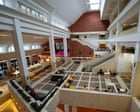
It has the sole surviving manuscript of the Anglo-Saxon epic Beowulf and notebooks by some of the most beloved authors in the English language: Jane Austen, William Blake, Virginia Woolf. Also in the British Library’s red-brick London building is the original, illustrated version of Alice’s Adventures in Wonderland – given as an early Christmas gift to Alice Liddell in 1864.
Cybercriminals are to blame for the current crisis. But renting out study space will not lead to recovery
It holds two copies of Magna Carta, the charter that set limits on royal power in 1215. It has the sole surviving manuscript of the Anglo-Saxon epic Beowulf and notebooks by some of the most beloved authors in the English language: Jane Austen, William Blake, Virginia Woolf. Also in the British Library’s red-brick London building is the original, illustrated version of Alice’s Adventures in Wonderland – given as an early Christmas gift to Alice Liddell in 1864. On handwritten drafts of Wilfred Owen’s tragic poem Dulce et Decorum est, visitors can see suggestions made by his friend Siegfried Sassoon.
But neither display cases filled with treasures such as these nor vast digital archives, basement storage rooms, six cafes and a shop have been sufficient to arm the library against a sea of troubles that first threatened it three years ago, when hackers raided its computers for personal data and demanded a £600,000 ransom. Its long-serving chief executive, Roly Keating, took the decision to step down once the worst of the cyber-attack – one of the most serious in the UK’s history – had been dealt with. His replacement, Rebecca Lawrence, lasted less than a year before resigning in the middle of a strike over pay. Now, a new row has broken out over plans to rent out three of the library’s reading rooms and outsource security.
The British Library is, of course, not alone in seeking novel ways to generate revenue from its open-access public building. Private and corporate private views are routine at blockbuster exhibitions; the early weeks of the British Museum’s Bayeux tapestry show were marred by a row about an ill-judged invitation to Peter Thiel, the tech billionaire. But reading rooms are unlike temporary exhibitions in that they are permanent. These are spaces designed for people to read and study in. Handing three of them over to a private contractor to operate commercially, as the British Library proposes, would change the character of a cherished institution.
Its new boss, Dr Paul Bate, has been in post for less than a week. He urgently needs to grip the situation and give a fuller account to staff, users and the public of what is going on. As an arm’s-length body, the library is overseen by a board. But since 84% of its £170m annual budget comes from the Department for Culture, Media and Sport, ministers too should be constructively engaged.
It is widely accepted that the damage to finances and morale caused by the hackers, following the Covid pandemic, lies behind the current woes. A report this summer from the public accounts committee of MPs blamed the government for the lack of a strategic approach to cybersecurity. Politicians must take responsibility for past mistakes and help England’s national library to avoid a protracted crisis.
As trade unions have pointed out, outsourcing the library’s security staff would be contrary to the government’s commitment to insourcing. Privatising sections would undermine a valued public space that is both open to all, and an essential component of a neglected higher‑education ecosystem. The British Library – formerly part of the British Museum – was established more than 50 years ago; the St Pancras building is approaching its 30th anniversary. As a national institution, it is a place in which everyone has a stake. The government must get behind it, and look for an alternative solution.
- library
- british
- reading
- room
- guardian
- view
- alice
- cybercriminal