2027 Politics Watch: From INEC’s 1.6m voter-register clean-up to Wike’s ₦10m pledge
INEC said it rejected more than 1.6 million invalid voter registrations and identified 54 personnel for investigation. Nyesom Wike’s ₦10 million pledge to councillors drew an APC defence, while the ruling party set ambitious Ebonyi vote targets and Atiku’s son declared support for Tinubu in Jigawa.
Nearly four in five of the 1.6 million invalid voter registrations disclosed by the Independent National Electoral Commission (INEC) on Monday had been removed before publication of the preliminary register, even as the commission acknowledged that questionable entries from earlier exercises remained unresolved ahead of Nigeria’s 2027 elections.
INEC also identified 54 registration personnel for investigation.
In Abuja, Federal Capital Territory Minister Nyesom Wike promised ₦10 million to councillors who deliver their wards for President Bola Tinubu, whose party set vote targets in Ebonyi far above the number of voters accredited there during the 2023 presidential election.
In Jigawa, Abba Atiku, a son of former Vice-President Atiku Abubakar, led his political organisation to declare support for Mr Tinubu.
Meanwhile, the African Democratic Congress (ADC) asked INEC to preserve its disputed leadership records, while 375 judges were inaugurated in Abuja for election petition duties.
INEC Chairman Joash Amupitan said the commission examined 11,088,238 records generated during the three phases of the 2025–26 Continuous Voter Registration exercise.
Of those, 1,608,660, approximately 14.5 per cent, were confirmed invalid and excluded, according to PREMIUM TIMES’ report on Monday’s briefing.
The commission’s Automated Biometric Identification System initially flagged 1,545,052 registrations for examination. INEC had excluded 1,277,052 invalid records before publishing the preliminary register in October.
Following public complaints, the commission examined another 268,000 cases, rejecting 217,722 and clearing 50,278 as valid.
Further screening identified 113,886 additional invalid entries. The two later rounds accounted for 331,608 exclusions, bringing the total to 1,608,660.
Thus, nearly 80 per cent of the rejected registrations had been excluded before Monday’s announcement, rather than newly deleted that day.
INEC separately reported removing 873 records belonging to verified deceased voters.
Although a combined total of 1,609,553 was attributed to the commission, the two stated components — 1,608,660 invalid registrations and 873 deceased-voter records — add up to 1,609,533. The unexplained difference is 20 records.
Mr Amupitan said automated flags did not automatically establish that registrations were invalid. The 50,278 cases cleared during the subsequent review illustrated the need for individual examination.
The investigation uncovered suspected multiple registrations, substituted photographs and irregular registration patterns.
INEC also found that some personnel allegedly circumvented procedures intended for exceptional registration circumstances, including assistance for persons with disabilities.
The chairman said 54 people across 10 states had been identified for disciplinary investigation, with prosecution possible where wrongdoing was established.
INEC acknowledged that questionable records from registration exercises conducted between 2011 and 2023 remained in its system.
Some suspicious names and photographs circulated online originated from those earlier exercises, Mr Amupitan said.
The commission has deferred a proposed nationwide revalidation exercise until after the elections but said it would continue examining historical irregularities through existing complaints and verification procedures.
Mr Amupitan also explained that some voters who moved without transferring their registrations re-enrolled. Their duplicate entries were rejected, while the original registrations remained at their previous locations.
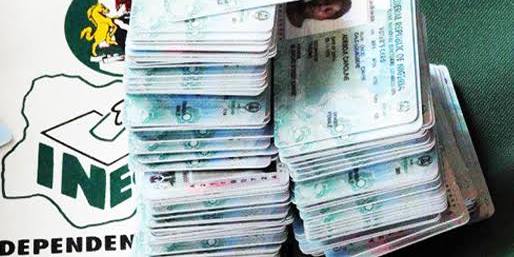
On Permanent Voter Cards (PVCs), INEC said distribution for earlier registration phases was continuing. Cards from the third phase were still being delivered, with collection at registration areas scheduled to resume on 1 December.
The decision to defer nationwide revalidation leaves the commission relying on targeted checks to address older irregularities before the January 2027 election.
Mr Wike promised ₦10 million to FCT councillors who deliver their wards for Mr Tinubu during a Rainbow Coalition stakeholders’ meeting in Kwali Area Council.
He urged them to engage community leaders, youth groups, and local associations to mobilise support.
His media aide, Lere Olayinka, subsequently confirmed the promise to TheCable.
APC National Chairman Nentawe Yilwatda defended the offer on Channels Television’s Politics Today, saying he did not consider it vote-buying.
Neither the minister’s announcement nor the defence specified who would finance the rewards, what would qualify a ward or which activities any payments would cover.
Section 125(1)(a) of the Electoral Act 2026 addresses corrupt offers or promises intended to induce a person to procure votes or secure a candidate’s election.
Subsection (3), however, excludes money paid for bona fide lawful election expenses.
Whether the pledge constitutes prohibited inducement or lawful campaign expenditure depends on its purpose and terms. The announcement alone does not establish an offence.
At an APC presidential rally in Abakaliki, campaign council director-general Abdulaziz Yari set a minimum target of 1.2 million votes for Mr Tinubu. Minister of Works David Umahi spoke of delivering 1.3 million, according to The Guardian’s account.
The targets substantially exceed the number of voters accredited in Ebonyi during the previous presidential election.
In 2023, INEC declared 42,402 votes for Mr Tinubu and 259,738 for Peter Obi, who contested on the Labour Party platform. A total of 337,887 voters were accredited statewide, while 325,351 valid presidential votes were recorded.
The APC’s minimum target is more than three times the 2023 accreditation figure, although registration, turnout and party support may change in 2027.
Vice-President Kashim Shettima, who represented Mr Tinubu at the rally, cited federal infrastructure projects and appointments as evidence of the administration’s commitment to Ebonyi and the South-East.
In Jigawa, another declaration of support came from within the family of the former vice-president whose ADC nomination is under legal challenge.
Abba Atiku led members of his Haske political organisation to the state ahead of Mr Tinubu’s scheduled Tuesday visit.
PREMIUM TIMES reported that Abba announced plans to incorporate the organisation’s state structure into the APC in support of the president’s re-election.
The group’s director-general, Usman Meyari, said Haske was established in 2019 to support Atiku Abubakar but had since resolved to back Mr Tinubu.
He cited an informal understanding about rotating presidential power between northern and southern Nigeria.
Jigawa Governor Umar Namadi welcomed the delegation and pledged cooperation.
The announcement establishes the organisation’s declared alignment, not its membership strength or how individual supporters intend to vote. Abba Atiku’s decision also does not represent his father’s political position.
The question of who may act on behalf of a political organisation also confronted INEC on Monday, when Rauf Aregbesola asked the commission to preserve the ADC’s leadership records pending his appeal against the 5 November Federal High Court judgement.
Mr Aregbesola, national secretary of the David Mark-led leadership, requested his lawyer, Mohammed Sheriff, a senior advocate of Nigeria.
The letter referred to an earlier judgement delivered on 2 July by Justice Musa Liman, which, according to the lawyer, affirmed the leadership transition involving former ADC Chairman Ralph Nwosu and Messrs Mark and Aregbesola.
Justice Peter Lifu’s later judgement invalidated the disputed leadership arrangements and nominations arising from them, including Mr Atiku’s presidential ticket.
Mr Sheriff asked INEC’s legal department to examine both judgements and pending court processes before making discretionary administrative changes, according to a News Agency of Nigeria report carried by THISDAY.
The request could not overturn the later judgement. Filing an appeal or applying for a stay of execution also does not automatically suspend a court order.
In a separate development, the ADC Presidential Campaign Council alleged that lawyers representing affected parties had applied and paid for certified copies of Justice Lifu’s judgement on 5 and 6 November but had not received them by Monday.
Its director of strategic communication, Phrank Shaibu, demanded the release of the judgement and an explanation for the reported delay, according to The Guardian.
The court registry had not provided a response in the published reporting reviewed.
Section 294(1) of the Constitution requires courts to furnish parties with authenticated copies of decisions withinn seven days of delivery. Four days had elapsed since the judgement, so the complaint did not establish that the constitutional deadline had been breached.
Mr Amupitan also said on Monday that INEC had not received a certified copy and would not act merely on media accounts of a court decision.
The dispute could affect the ADC’s ability to submit polling-agent details before INEC’s 10 December deadline.
The commission’s electronic polling-agent platform provides for access codes to be issued through recognised national party chairmen.
By Monday’s reporting cut-off, the available reports had not confirmed any change to INEC’s ADC leadership records or denial of the party’s access to the portal.
Allied Peoples Movement (APM) presidential candidate Seyi Makinde took his campaign to Jos on Monday, presenting his Reset Nigeria programme during a visit to the Gbong Gwom Jos, Da Jacob Gyang Buba, and other traditional rulers.
The Oyo State governor, accompanied by his running mate, Lawal Daura, emphasised security, honesty and accountable governance, according to Peoples Daily.
His campaign has published wider security and governance proposals, although the account of Monday’s visit did not specify a Plateau-focused timetable or implementation arrangements.
Meanwhile, a group of Nigeria Democratic Congress (NDC) officials, aspirants and members in Oyo State announced the removal of state chairman Oyeronke Bolajoko and named Akeem Aderogba as her replacement.
Ms Bolajoko rejected the announcement, disputing the authority of those responsible, according to The Guardian.
The party’s national leadership had not publicly resolved the competing claims in the reports reviewed by Monday’s cut-off.
The President of the Court of Appeal, Monica Dongban-Mensem, inaugurated 375 judges in Abuja on Monday for election petition duties.
She said 138 had previously served on election tribunals, while 237 were first-time appointees.
The inauguration at the Body of Benchers complex formed part of a three-day workshop that included the launch of the Judicial Electoral Manual 2026.
The judges await assignment to particular tribunals. Their responsibility will differ from the pre-election disputes currently confronting parties such as the ADC.
Pre-election litigation concerns matters arising before polling, including candidate nominations. Election petitions challenge elections or declared returns after voting.
Under Section 239 of the Constitution, the Court of Appeal has original jurisdiction over presidential election petitions. Other petitions are heard by the relevant tribunals, subject to applicable appeal procedures.
A separate Federal High Court judgment on Monday illustrated how filing deadlines can determine a nomination challenge before polling.
In Damaturu, Justice Fatima Murtala Amin dismissed a suit challenging Baba Malam Wali’s emergence as the APC governorship candidate in Yobe State.
According to Vanguard’s report, the court held that the action brought by Mustapha Maihaja was filed outside the prescribed period and that his allegation of over-voting had not been established.
The decision left Mr Wali’s nomination undisturbed at the trial-court level, subject to any appeal.
- inec
- wike
- pledge
- politics
- watch
- voter
- register
- registration