Are walking pads worth it? We put the best under-desk treadmills to the test
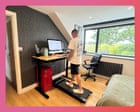
Are walking pads worth it? In fact, the NHS encourages a slightly more manageable target of just 10 minutes of brisk walking daily to introduce more moderate-intensity physical activity and reduce your risk of early death by up to 15%.
Want to get your steps in while working or watching TV? Our expert puts walking pads through their paces to find the best for comfort, noise and ease of storage
You don’t necessarily need to walk 10,000 steps a day to improve your health and wellbeing. In fact, the NHS encourages a slightly more manageable target of just 10 minutes of brisk walking daily to introduce more moderate-intensity physical activity and reduce your risk of early death by up to 15%.
However, even squeezing in “brisk walks” can be a chore, with busy schedules and increasingly desk-bound jobs forcing more of us to remain sedentary for long periods. That is where walking pads come in, being lighter, smaller and often easier to store than bulky and tricky-to-manoeuvre running treadmills.
When coupled with a standing desk, walking pads can be used while working – or when watching TV in the evening. Just a couple of 30-minute sessions add thousands of steps to your daily tally. In fact, a 60-minute walk at an easy 3km an hour can burn between 200 and 300 additional calories.
Walking pads are often cheaper than full-size treadmills, simple to use and relatively easy to store, and they’re perfect for adding more movement to your life without having to give up the day job.
I’m a keen fitness fan who does everything from gym-based strength training and kickboxing classes to outdoor trail runs and cold-water surfing. As a result, I’ve often been tasked with testing fitness technology for industry magazines, and I’m always keen to get stuck in.
I strongly believe that you need to live with new tech for a bit to grasp how it fits into daily life, so I aim to test products for as long as possible and in the right environment. With walking pads, that meant strolling along, racking up the steps and burning calories – even while I wrote up this feature.
There was only one way to properly trial the eight walking treadmills selected for this test, and that was to mimic the customer journey by ordering, taking delivery, unboxing, setting them up and then using them day to day.
The best walking treadmills – or walking pads – aren’t quite as bulky as regular running treadmills, so I could have multiple models on the go at home at once: one under my desk, one in front of the television and one in my wife’s office upstairs, testing each for at least three days.
The testing process involved a lot of additional steps and – in some cases at least – a whining soundtrack that drowned out whatever Netflix series the family was watching. Besides general observations on the heft, ease of storage and operation, quietness and build quality, I tested any additional features such as incline and speed adjustments, as well as any remote controls or apps.
To get a good idea of energy consumption and the overall cost of running a walking treadmill, I plugged each unit into a power meter to calculate the cost based on the October energy price cap.
Here are the four best walking pads you can buy now.
Prefer to sit while you work? We’ve also reviewed the best office chairs
The biggest difference between walking pads, aside from overall build quality, is their top speed. Most max out at about 6km/h, which is ideal for walking while working at a standing desk or a brisk stroll in front of the TV. If you’re hoping to jog as well, look for models that reach 8-10km/h – although be aware that you’ll generally sacrifice some stability and comfort compared with a full-size treadmill.
Next comes incline. Premium models tend to offer a motorised incline function that can be adjusted at the touch of a button, while cheaper alternatives rely on manually extending support feet for a fixed gradient. Even a small incline can noticeably increase calorie burn and make walks feel more challenging.
Also pay attention to the size of the walking deck. A longer, wider belt will feel far more comfortable and safer, particularly if you’re tall or have a long stride. Finally, think about practicalities such as noise, storage, transport wheels, companion apps and maximum user weight. If you plan to use your walking pad for several hours a day while working from home, spending a little more on a quieter, sturdier model is usually money well spent.
Prices vary when it comes to walking pads, with the most affordable costing about £90. Anything less than that is unlikely to be long-lasting. From my testing, the sweet spot seems to be about £250, where you can get a good blend of value and decent build quality. Some of the best I tested were, predictably, among the most expensive. These high-end models typically cost about £500.
If you’ve got good clearance underneath a bed or sofa, most walking pads will happily slide underneath without the need to fold them up. Imagine a slimmed-down treadmill without the safety handle, and you’re basically there.
Models such as the BodyMax WP60 fold in half, which drastically reduces the length (or height, depending on how you store it), making them much easier to slide into more compact spaces such as a cupboard or wardrobe. But bear in mind they can weigh up to 30kg, so they can be tricky to move without help.
Most walking pads come with a small bottle of silicone oil. This is used to lubricate the underside of the walking belt every couple of months to ensure smooth movement, depending on use. Most manufacturers also supply the required hex key so you can adjust the belt if it’s slipping or has moved slightly off-centre.
Quickly check the belt alignment and any moving parts every couple of months, and it should be enough to keep a walking pad running smoothly for years.
Some walking pad speeds are capped at about 6km/h, which makes running on them tricky. A plodding jog is a better description. A few of the walking pads I tested did reach much higher speeds, and most of these came with a folding safety handle that extends to allow them to safely reach those speeds, giving the runner something to hang on to should the worst happen. These also came with a separate safety system: a small magnetic tag that attaches to clothing. If this becomes detached, the machine shuts off.
The general build and robustness of walking pads aren’t up there with their running-focused counterparts, though. That means they can be noisy, shift around underfoot and generally feel a bit flimsy during faster and longer runs. On top of this, those without handles don’t always have the automatic shut-off functionality, which can make them more dangerous, particularly when using them at higher speeds.
In summary, running treadmills are better suited to those wanting to move at higher speeds. They feature more underfoot cushioning or built-in suspension systems, which make longer, faster sessions more comfortable and easier on the joints.
In most cases, yes, but it depends on both the walking pad and the type of carpet. Most manufacturers recommend using a walking pad on a hard, level surface as this provides the best stability and allows air to circulate around the motor. Thick, plush carpets can restrict airflow, increasing the risk of overheating, while also making the machine less stable underfoot.
If carpet is your only option, a low-pile carpet is usually fine, especially with a treadmill mat underneath. This helps spread the load more evenly, protects the carpet from compression and reduces vibration travelling through the floor.
Regardless of the surface, ensure enough clearance around the machine for safe use and so that the belt runs freely without rubbing. It’s also worth checking underneath every so often to remove dust and fluff, especially if you have pets, as debris can build up around the motor and rollers over time.
Maximum user weight isn’t just about whether a walking pad can physically support you – it’s also an indication of how robust the frame, motor and deck are. Choosing a model with a higher weight capacity can often mean a more stable, longer-lasting machine.
Beyond that, look for an emergency stop function or safety key if you intend to jog. Some walking pads automatically stop the belt if they detect you’ve stepped off, while others continue running until you turn them off manually. As I found during testing, not every budget model includes this feature, so check before you buy.
A wide, grippy walking surface also improves confidence, particularly if you’re working at a standing desk, while decent shock absorption can reduce fatigue during longer sessions. Finally, ensure the walking pad has non-slip feet and is sitting securely before every use, as even slight movement can become distracting or unsafe – not to mention damaging to expensive wooden floors.
Although they look similar, walking pads and treadmills are designed for different purposes. Walking pads prioritise compact size, low noise and easy storage, with many slim enough to slide under a sofa or bed. They’re primarily designed for walking rather than running, making them ideal for staying active while you work or watch TV.
Traditional treadmills are larger, heavier and more versatile. They typically offer higher top speeds, wider and longer running decks, better cushioning and features such as adjustable incline, heart rate monitoring and structured workout programmes. Their larger belts also make them far better suited to regular running.
The trade-off is space. If your goal is simply to increase your daily step count or stay active while working from home, a walking pad is usually the more practical choice. But for race training or more serious fitness goals, a conventional treadmill remains the better investment.
For more: The best exercise bikes – tested The best running watches to hit your fitness goals The best cross trainers
Leon Poultney has been traversing the worlds of consumer technology and automotive for some of the biggest lifestyle websites and magazines for longer than he cares to divulge. A lifelong fitness enthusiast, he can often be found trying not to injure himself on a mountain bike/surfboard/other extreme thing, often at the request of an editor. Whether it is getting to know the latest connected kettlebells or partaking in CrossFit sessions, Leon is always willing to put his body on the line for great editorial
- pad
- treadmill
- desk
- test
- step
- walking
- expert
- pace