Cities and businesses drive global climate action, but major gaps remain

Climate action led by cities, regional governments, businesses and civil society organisations is making progress in translating global climate commitments into practical action, although significant gaps remain in efforts to address the climate crisis, according to a new report by the United Nations Framework Convention on Climate Change (UNFCCC). The 2026 Yearbook of Global Climate Action, launched by UN Climate Change on the opening day of the 31st UN Climate Change Conference (COP31) in Antalya, Türkiye, highlights progress across 44 global indicators aligned with the outcomes of the…
Climate action led by cities, regional governments, businesses and civil society organisations is making progress in translating global climate commitments into practical action, although significant gaps remain in efforts to address the climate crisis, according to a new report by the United Nations Framework Convention on Climate Change (UNFCCC).
The 2026 Yearbook of Global Climate Action, launched by UN Climate Change on the opening day of the 31st UN Climate Change Conference (COP31) in Antalya, Türkiye, highlights progress across 44 global indicators aligned with the outcomes of the first Global Stocktake under the Paris Agreement.
The report points to growing renewable energy capacity, slowing deforestation and increased implementation of various adaptation measures as evidence of momentum in global climate action.
However, it identifies persistent gaps, particularly in reducing methane emissions from the oil and gas sector and addressing food loss. It also highlights the absence of global indicators across some important areas as a limitation to tracking progress and strengthening accountability.
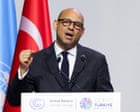
UN Climate Change Executive Secretary Simon Stiell said the report demonstrates how climate commitments are increasingly translating into tangible outcomes for communities and economies.
“This Yearbook shows how businesses, cities, communities, and more are turning global commitments into change that people are seeing, feeling and benefiting from,” he said.
Stiell stressed that the pace and scale of implementation must increase, urging countries and stakeholders to use COP31 to expand existing solutions, mobilise climate finance and extend the benefits of climate action to more people.
He said the world could and must go much further and faster, adding that COP31 should help scale up solutions, mobilise finance and ensure more people benefit from climate action.
Businesses and communities demonstrate growing climate action
The 2026 Yearbook presents the latest available data and trends across 96 global socio-economic indicators aligned with the first Global Stocktake.
Structured around the six thematic priorities of the COP31 Action Agenda, it examines developments in climate action while highlighting initiatives by businesses, sub-national governments and other non-Party stakeholders.
The indicators are intended to strengthen transparency and make it easier to compare progress over time, while identifying areas where implementation is advancing and where additional efforts are needed.
The report also draws on a record number of progress reports submitted through the UNFCCC's Non-State Actor Zone for Climate Action (NAZCA), an online platform that tracks climate initiatives undertaken by businesses, organisations, cities, regions and other sub-national governments.
A total of 83 Cooperative Climate Initiatives (CCIs) submitted reports detailing more than 200 actions.
According to the Yearbook, these self-reported activities demonstrate how collaborative initiatives can measure and showcase concrete results, strengthen transparency and support the wider implementation of climate action.
The findings also indicate progress under the Action Agenda's Plans to Accelerate Solutions (PAS), which are multi-stakeholder workplans outlining key actions and voluntary commitments to speed up implementation.
After one year of implementation, 84 per cent of the reported PAS initiatives indicated progress, suggesting that the Action Agenda is beginning to translate commitments into implementation.
The release of the 2026 Yearbook coincides with the 10th anniversary of the Marrakech Partnership for Global Climate Action, established in 2016 to strengthen collaboration between governments and non-Party stakeholders.
The partnership operates under the leadership of the Climate High-Level Champions and provides a platform for governments, cities, regions, businesses and investors to work together on climate action.
The initiative builds on the recognition, during the adoption of the Paris Agreement in 2015, of the important contributions that non-Party stakeholders can make towards addressing climate change.
At COP29, the mandate of the Climate High-Level Champions was renewed until 2030. A five-year vision covering 2026–2030 was subsequently launched at COP30 to guide their work and accelerate climate action implementation.
The partnership is expected to remain an important component of efforts to advance climate solutions alongside formal negotiations between governments.
Yearbook to be updated with COP31 outcomes
COP31, taking place from 9 to 20 November 2026 in Antalya, Türkiye, is expected to place strong emphasis on accelerating real-economy climate action through the Global Climate Action Agenda.
The agenda is designed to complement the formal negotiation process by supporting practical implementation among governments and non-Party stakeholders.
Unlike previous editions, the 2026 Yearbook has been launched in a new online format. UN Climate Change says the publication will be updated to reflect key outcomes on Global Climate Action emerging from COP31.
Published annually, the Yearbook provides an assessment of progress and gaps in global climate action, while documenting concrete initiatives by non-Party stakeholders to encourage wider participation and raise ambition.
- climate
- action
- global
- implementation
- business
- progress
- report
- government