Omtatah questions World Bank’s silence on Kenya’s hidden borrowing and public funds
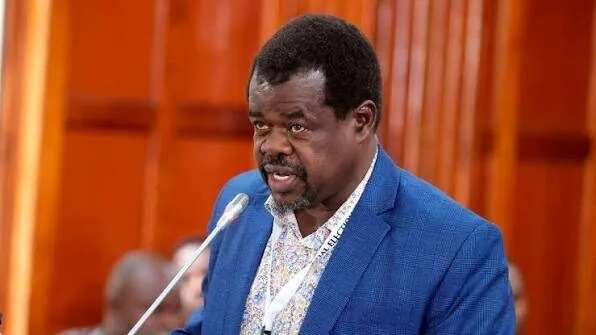
NAIROBI, Kenya, Nov 10 – Busia Senator Okiya Omtatah has challenged the World Bank’s latest assessment of corruption in Kenya, accusing the international lender of focusing on procurement irregularities while ignoring what he describes as a deeper problem involving government borrowing and the management of public funds. In a statement titled Sen. Omtatah’s Musings on the World Bank’s Recent Misleading ‘Expose’ on Corruption in Kenya, the senator argued that corruption through public expenditure was only part of the problem, claiming that questionable borrowing arrangements had created…
NAIROBI, Kenya, Nov 10 – Busia Senator Okiya Omtatah has challenged the World Bank’s latest assessment of corruption in Kenya, accusing the international lender of focusing on procurement irregularities while ignoring what he describes as a deeper problem involving government borrowing and the management of public funds.
In a statement titled Sen. Omtatah’s Musings on the World Bank’s Recent Misleading ‘Expose’ on Corruption in Kenya, the senator argued that corruption through public expenditure was only part of the problem, claiming that questionable borrowing arrangements had created opportunities for billions of shillings to be accessed and spent outside Parliament’s effective oversight.
Omtatah questioned the World Bank’s position on corruption, arguing that its focus on procurement allowed the institution to avoid scrutiny over its own lending arrangements with the Kenyan government.
“Though most welcome, the World Bank’s sea of crocodile tears, on the opportunity cost of corruption on Kenyans, is inviting us to look only at the lesser evil – procurement – which is theft on the expenditure side of the equation where the institution plays absolutely no role, allowing the bank, which is totally complicit in the heist, to hide in open view,” he said.
The senator maintained that the more significant concern was the revenue side of public finance, particularly loans allegedly contracted without corresponding expenditure provisions in the Appropriations Acts passed by Parliament.
He argued that such arrangements had weakened legislative oversight over public borrowing and created avenues through which public resources could be accessed without following the ordinary constitutional budgetary controls.
Omtatah specifically questioned the application of the Bretton Woods Agreements Act, Cap 464, arguing that Sections 3, 4 and 5 had created a framework that allowed the National Treasury and the World Bank to bypass important parliamentary and public finance accountability procedures.
He singled out Section 4, which provides for certain payments to the International Monetary Fund and World Bank to be charged on the Consolidated Fund without further appropriation, as well as provisions allowing the government to issue financial obligations and borrow to meet specified payments.
According to the senator, the cumulative effect of these provisions had created what he described as a closed system of financial governance in which substantial borrowing and disbursements could take place without adequate parliamentary scrutiny.
He also questioned the legal protections enjoyed by the World Bank under Article VII of its Articles of Agreement, which provides for immunities relating to legal proceedings, its assets and archives.
Omtatah argued that these protections, combined with the domestic legislation governing Kenya’s relationship with the Bretton Woods institutions, had made it difficult to hold the lender accountable for the way funds were advanced to the government.
The senator further questioned the role of the Cabinet Secretary for the National Treasury under Section 49 of the Public Finance Management Act, which provides the framework for government borrowing.
He argued that the provision gave the Treasury Cabinet Secretary significant discretion to contract domestic and external loans based on fiscal responsibility principles and financial objectives contained in the most recent Budget Policy Statement.
Omtatah said the Budget Policy Statement, although approved by Parliament, was intended to guide preparation of the national budget and should not be treated as a substitute for legislative approval of government borrowing.
He urged Kenyans to compare the annual Appropriations Acts with the Treasury’s monthly publications on actual revenue and expenditure, arguing that discrepancies would expose loans that were not tied to projects approved by Parliament.
“Just compare any year’s Appropriations Act with copies of the National Treasury’s monthly online publication called Statement of Actual Revenue and Net Expenditure Issues issued in the same year, and the looting of public funds through hidden loans not tied to any projects approved by Parliament will hit you in the face,” he said.
The Busia senator also raised concerns over foreign loans that are budgeted for but whose proceeds, he claimed, are retained in offshore accounts and spent outside Kenya without sufficient parliamentary and Controller of Budget oversight.
He cited Section 50(7) of the Public Finance Management Act, arguing that its provisions on external borrowing and the management of loan proceeds were inconsistent with Article 206 of the Constitution.
Article 206 establishes the Consolidated Fund as the principal repository for national government revenue and provides that withdrawals must be authorised through parliamentary appropriation, constitutional provisions or other lawful charges. It also requires the Controller of Budget to approve withdrawals from the Consolidated Fund.
The senator further criticised the use of securitisation arrangements involving future tax revenues, arguing that funds established under such arrangements risk operating like parallel national treasuries.
He claimed that some of these structures had executive-appointed boards with powers to borrow and spend money without following the ordinary parliamentary borrowing, appropriation and budgetary oversight processes.
Omtatah’s intervention comes days after the World Bank released its 34th Kenya Economic Update on November 4, warning that corruption and governance weaknesses were undermining economic growth, investment and job creation.
The report estimated that corruption and collusion affecting public spending and revenue collection cost Kenya up to two percentage points of Gross Domestic Product (GDP) annually through increased fiscal deficits.
It further warned that governance weaknesses were contributing to higher borrowing requirements, rising public debt and reduced resources available for essential services.
The lender said 39 per cent of Kenyan businesses considered corruption a major constraint to their operations, while 48 per cent of medium-sized firms reported having to give gifts to get things done.
The World Bank also warned that weaknesses in public procurement, non-transparent contracts, tax administration and land management were increasing the cost of doing business.
It estimated that addressing governance constraints could raise Kenya’s GDP by up to 20 per cent by 2035 and support an additional 7.7 million better jobs.
At the launch of the report, Treasury Principal Secretary Chris Kiptoo pointed to ongoing government reforms, including the enactment of conflict-of-interest legislation, digitisation of public procurement and efforts to establish predictable payment timelines for contractors.
“Good governance is not separate to our development agenda — it is the foundation,” Kiptoo said.
The World Bank’s assessment has also reignited debate over accountability in public borrowing, with civil society organisations separately demanding the release of an IMF Governance and Anti-Corruption Diagnostic Report prepared following the 2024 Gen Z protests.
The IMF assessment was requested by the Kenyan government in September 2024, with the first version submitted in December 2025 before the final report was delivered to the government in June 2026.
The report examines governance weaknesses, corruption vulnerabilities and institutional failures affecting the management of public resources.
Civil society organisations have called for its immediate publication and formal tabling in Parliament, arguing that its findings should be available for public scrutiny.
- bank
- world
- omtatah
- borrowing
- kenya
- government
- fund
- senator