Germany news: Ilse Aigner meets parties at Bundestag
Ilse Aigner meets parties at Bundestag. Meanwhile, Chancellor Merz is set to host Hungarian Prime Minister Magyar.
Keep reading for the latest news and analysis from Germany on Tuesday, November 10, 2026:
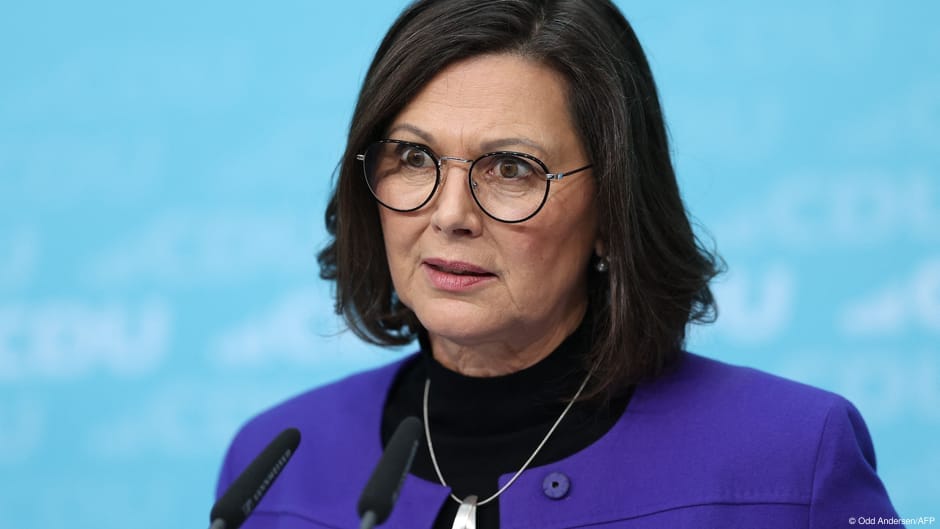
Ilse Aigner is highly likely to become Germany's first female president after securing support from the governing conservatives and Social Democrats (SPD), alongside a recommendation from the Green Party leadership.
The governing parties already hold an estimated majority of around 50 votes in the Federal Convention, which elects the president. Green backing would substantially widen that margin, making a first-round victory on January 30 highly likely.
Aigner, Bavaria's state parliament president from the conservative Christian Social Union (CSU), received standing ovations from lawmakers of her party and its sister party, the center-right Christian Democratic Union (CDU).
The SPD, which has formally endorsed her, also welcomed her with applause.
But Aigner's decision to decline an invitation from the far-right Alternative for Germany (AfD) prompted criticism from co-leader Alice Weidel.
"Apparently, we cannot expect political impartiality from Ilse Aigner," Weidel said.
Aigner's team cited AfD lawmaker Beatrix von Storch's disparaging response to her nomination as the reason for declining. Aigner herself did not address the dispute during her press statement.
The Federal Convention comprises Bundestag lawmakers and an equal number of delegates chosen by state parliaments. It will elect a successor to President Frank-Walter Steinmeier.
Germany's conservative presidential candidate Ilse Aigner has highlighted various ways she would break new ground if elected as the country's first female president.
Aigner was nominated to succeed President Frank-Walter Steinmeier in the January 30 election.
She presented herself to parliamentary groups and highlighted her route into politics through an apprenticeship and technical work rather than university as one difference from predecessors.
Aigner would also be the first president from Bavaria's conservative Christian Social Union (CSU).
"In many ways, I am something of a first — or could be," the Bavarian state parliament president said. "And I'm also single — I always mention that too."
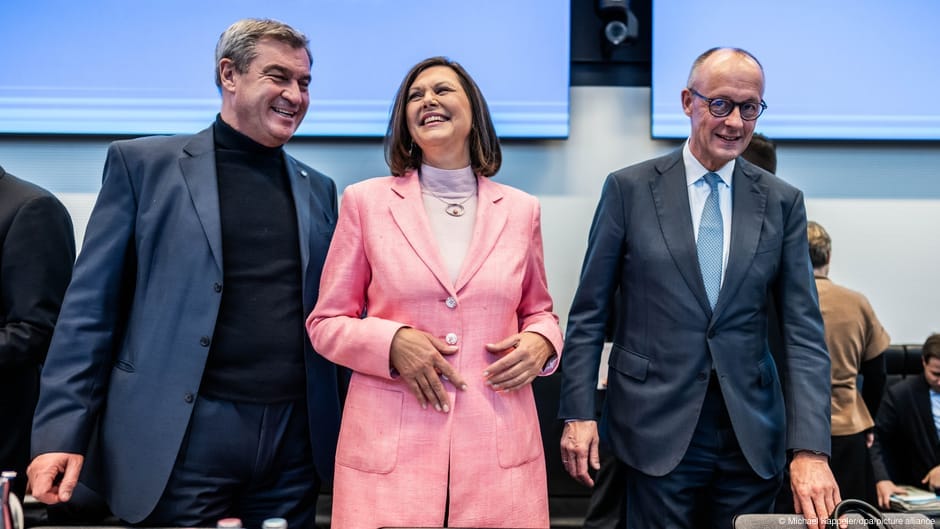
Defending democracy would be her central priority, she said during an appearance with Chancellor Friedrich Merz and CSU leader Markus Söder.
"I want to stand up for democracy — for me, that really is a mission," Aigner said, warning that democracy was under pressure "from within and from outside."
She pledged to build bridges, overcome divisions and remain close to ordinary people. "I will be one of them," she said.
The top candidate to replace Frank-Walter Steinmeier as Germany's president, Ilse Aigner, is set to visit the Bundestag, where she will meet with the center-right CDU/CSU bloc, the Social Democrats and the Greens.
She has said she will not meet with the far-right Alternative for Germany (AfD) after one of their top members called her nomination a "disgrace." She also has not received an official invitation from the Left party.
Aigner was officially nominated by the CDU/CSU bloc, also known as the Union, on Monday, practically securing her future as German president. She already has support from the SPD and Greens.
The official vote will take place on January 30. The president is chosen by the Bundestag. Despite being the highest political office in the country, it is a largely ceremonial role.
Three left-leaning parties are seeking to form a coalition government for the north-eastern state to block the far-right AfD, which won the most votes in the September election, from governing the state.
SPD state premier candidate Manuela Schwesig said the agreement followed "intensive negotiations, often late into the night."
The agreement consists of a 133-page coalition program with the title "Solidarity, Confidence, Future" (Zusammenhalt, Zuversicht, Zukunft).
The so-called Red-Red-Green coalition will be voted on by the parties' membership on Friday and Saturday, with Schwesig expecting to be voted in as state premier on Monday.
The district court in Rostock, in the northeastern state of Mecklenburg-Western Pomerania, has found a 30-year-old woman guilty of the murder of an 8-year-old boy and sentenced her to life in prison.
Gina H. had been in a relationship with the boy's father and saw the child as an obstacle to the continued relationship with the man.
According to the prosecution, in October 2025, the accused lured the boy to a nearby pond where she stabbed him to death. She then tried to burn the body to cover up the crime.
It was, in fact, Gina H. who notified police of the body after first claiming to have come across it while walking the dog. She has consistently pleaded not guilty to the crime.
Prosecutors said that despite ending the relationship ending in August last year, the defendant and the boy's father were again in a relationship, with him caring for her horses while she was in pre-trial detention.
The story garnered national attention and sparked outrage when it first broke. Long queues had formed in front of the court ahead of Tuesday's sentencing.
Following earlier reports of a shooting in Hamburg's HafenCity, police have now reported that the 68-year-old suspect shot himself in a hotel room.
"There are indications that the circumstances surrounding the crime may be related to family matters. Our homicide division has been notified and is taking over the investigation," police said on WhatsApp.
Police in southern Germany are now looking into whether the shooting in Hamburg has some connection with two bodies that were found on Tuesday morning in the town of Eningen unter Achalm, to the south of Stuttgart.
Felix Nmecha's renewed use of the "Crowns down celebration" — where a crown is pretended to be removed from someone's head and placed at Jesus' feet — has sparked a reaction from Borussia Dortmund's official supporters' group.
Read DW's full story on Nmecha's celebration and the fallout it has had.
The German chancellor has called on Germany's EU partners to contribute fairly to closing the gap in Ukraine's financing.
Merz's request came in a letter written to the president of the European Council, Antonio Costa, in which he also indirectly threatened to block other financial issues if the EU's member states refuse to heed his call.
The chancellor said an agreement on support for Ukraine was "an essential prerequisite for resolving this problem and for discussing further issues, particularly those with financial implications."
"Support for Ukraine is a matter of our indivisible European security, and this must also apply to burden-sharing in providing that support," he added, urging Costas to make the issue a top priority for the EU summit set to take place in Dublin on Friday.
Currently, some €45 billion ($50 billion) are missing to meet Ukraine's financial needs as it fends off continued Russian attacks. Ukrainian President Volodymyr Zelenskyy said in October that his country needs €70 billion, of which the EU has pledged half.
Merz is aiming to secure more financing from EU partners to share the load, with the issue likely to come up in his meeting with Hungarian Prime Minister Peter Magyar on Tuesday.
Andrea Nahles, the head of the German Federal Employment Agency, has said some 800,000 jobs could be lost to AI in the next 15 years, but added that an equal number would be created thanks to the new technology.
"We predict that over the next 15 years, about 800,000 jobs in Germany will be lost due to AI, but a similar number will also be created," Nahles told the Handelsblatt newspaper.
"Some industries will be hit harder by these job losses, such as business service providers and analytical roles at insurance companies and banks. Nevertheless, I would like to see more investment in AI in Germany — but only if it boosts productivity, not just because it's trendy."
According to media reports, heavily armed Hamburg police were deployed following reports of shots being fired in an apartment just 100 meters (around 330 feet) away from the Elbphilharmonie.
Ambulances were also deployed to the scene.
Police have not yet commented on the background of the incident, but two injured people are believed to be a man and a woman. The man had reportedly been shot in the hip while the woman was suffering from a neck wound.
The suspected shooter had not yet been apprehended, according to the Hamburger Abendblatt. However, a police spokesperson said they posed no danger to the general public.
When the Berlin Wall fell on November 9, 1989, ending East Germany's isolation from the West, the event was celebrated on both sides of the border. Yet, 37 years later, many people on both sides remain deeply skeptical of each other.
Surveys show that only a minority of respondents report feeling a strong sense of community between those from former East and West Germany, and many continue to perceive significant differences.
DW asked three artists about their thoughts on the reunification of East and West Germany. How do they perceive a shared "we" and what gives them cause for optimism?
A large number of police have been deployed to the HafenCity / Am Kaiserkai area in Hamburg, close to the famous Elbphilarmonie, according to a post by Hamburg police on X.
It wasn't immediately clear what the cause of the deployment was, but the police said two people had been injured.
German media reported that the injuries were the result of a shooting.
We will bring you more updates as they come.
German Foreign Minister Johann Wadephul has expressed doubt over Russia's willingness to genuinely enter into negotiation talks to end the war in Ukraine.
"Is Russia truly willing to negotiate?" he asked. Or, "is this just a negotiating charade intended to distract from the fact that Russia intends to continue a brutal war of aggression, particularly against the civilian population?"
His comments come as representatives from Ukraine and Russia began the first round of talks in nine months in Abu Dhabi. US and European representatives will also be present.
Russia "must finally give up its maximum demands," Wadephul added on the sidelines of a G7 foreign ministers meeting.
The main events planned in Germany today include a visit by the top candidate for the German presidency, Ilse Aigner, to the German Bundestag, or parliament, to meet with political parties.
The other is a reception by Chancellor Friedrich Merz of Hungarian Prime Minister Peter Magyar in Berlin.
These are both happening against the backdrop of the UN's COP climate conference in Turkey and talks between Russian and Ukrainian negotiating teams in Abu Dhabi.
- germany
- news
- ilse
- aigner
- bundestag
- party
- candidate
- bloc