NPP failed to monitor excavators, but things have changed under Armah-Kofi Buah – Lands Ministry spokesperson
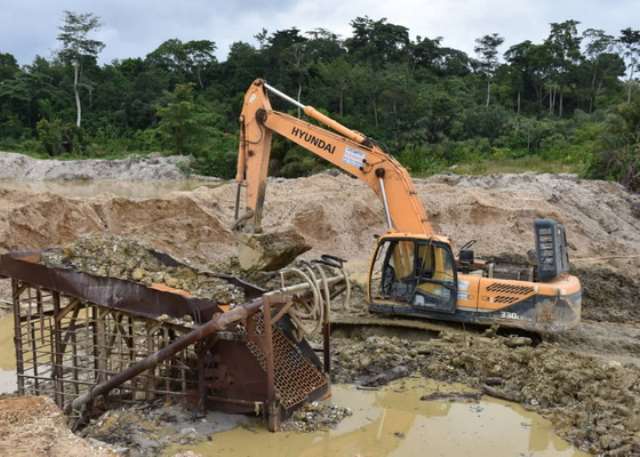
He, however, said the situation had changed under the current administration, with the Ministry of Lands and Natural Resources, led by Armah-Kofi Buah, introducing approval requirements and GPS tracking systems to monitor excavators and prevent their diversion to unauthorised mining sites. Mr Schandorf said, unlike the situation between 2017 and 2024, the current system requires anyone seeking to import an excavator for mining purposes to first obtain clearance from the Minerals Commission and the Ministry of Lands and Natural Resources.
The Ministry of Lands and Natural Resources says it has strengthened its monitoring of excavators imported into the country, introducing stricter controls to prevent their diversion into illegal mining activities following years of inadequate regulatory oversight.
According to the Ministry's Media Relations Officer, Paa Kwesi Schandorf, between 2017 and 2024, excavators could enter the country without a robust regulatory framework to supervise their importation and deployment, a situation he described as a major weakness in efforts to control the equipment used in illegal mining.
He, however, said the situation had changed under the current administration, with the Ministry of Lands and Natural Resources, led by Armah-Kofi Buah, introducing approval requirements and GPS tracking systems to monitor excavators and prevent their diversion to unauthorised mining sites.
Speaking in an interview on JoyNews on Monday, November 9, Mr Schandorf said the difference between the two administrations was evident in the measures now being used to regulate the heavy-duty equipment.
He explained that excavators were among the principal tools responsible for environmental destruction when deployed in illegal mining activities, making their regulation critical to the fight against galamsey.
“Excavators are heavy-duty equipment and, indeed, they are the principal instruments that are used for the devastation,” he said.
Comparing the situation under the NPP with the current arrangements, Mr Schandorf said there was no effective system between 2017 and 2024 to supervise the importation of excavators or monitor where they were taken after entering the country.
“This is not even to politicise the issue, but it is very interesting to note that from 2017 up to 2024, we did not have any robust regime that was supervising the importation and the deployment of excavators into mining communities,” he stated.
He said the Lands and Natural Resources Minister had often described the situation during the previous administration as a “free-for-all affair”, with excavators entering the country without adequate regulatory scrutiny.
Under the current administration, however, prospective importers are required to obtain clearance from both the Minerals Commission and the Ministry of Lands and Natural Resources before bringing excavators into the country for mining purposes.
Mr Schandorf said, unlike the situation between 2017 and 2024, the current system requires anyone seeking to import an excavator for mining purposes to first obtain clearance from the Minerals Commission and the Ministry of Lands and Natural Resources.
He explained that prospective importers must prove they are legally recognised small-scale miners and justify the purpose for which the equipment is being brought into the country before they can secure approval.
He said the measures had also been extended beyond the importation stage, with approved excavators now required to be fitted with GPS tracking devices to enable the Minerals Commission to monitor their movements and prevent them from being diverted to unauthorised mining locations.
Mr Schandorf said the introduction of GPS tracking represented a major change in how excavators were monitored, as authorities could now identify when equipment moved beyond the locations approved for its operations.
He explained that an excavator authorised to work in Swedru, for instance, would be monitored to ensure it remained within its designated area.
He disclosed that about 1,300 excavators were currently being monitored under the arrangement.
The system, he said, gives the Minerals Commission greater control over the movement of the equipment and helps prevent machines intended for legitimate mining activities from being diverted to illegal operations.
This, he suggested, was a significant departure from the situation between 2017 and 2024, when there was no comparable monitoring framework to track excavators after their importation.
Mr Schandorf also disclosed that between 5,000 and 6,000 excavators had been impounded because their owners or importers were unable to provide satisfactory justification for bringing the equipment into the country.
He said the impoundments reflected the stricter scrutiny now being applied to excavator imports, particularly where the intended use of the machines could not be established.
“For those who have not been able to justify or assign any plausible reason for importing their excavators, the last count indicated that between 5,000 and 6,000 excavators had been impounded,” he said.
He contrasted this with the previous administration's approach, arguing that without the current approval and monitoring arrangements, thousands of excavators could have entered mining communities without adequate checks.
Mr Schandorf questioned the possible environmental consequences if the 5,000 to 6,000 machines currently impounded had instead been allowed into mining areas during the period when, according to him, there was no effective monitoring system.
“Imagine if we were still operating under that system. It would mean that between 5,000 and 6,000 excavators could have entered the country and found their way into mining communities. What would have been the outcome?” he asked.
This comes amid continuing efforts to address illegal mining and its effects on water bodies, forest reserves and other natural resources.
- excavator
- lands
- ministry
- mining
- country
- equipment
- natural
- resources


