COP31: Nigeria’s shift beyond oil requires state action, economic planning – Experts

Comments come as Nigeria seeks to balance its climate commitments with the need to expand electricity access, industrialise and protect livelihoods in an economy still heavily dependent on oil and gas.
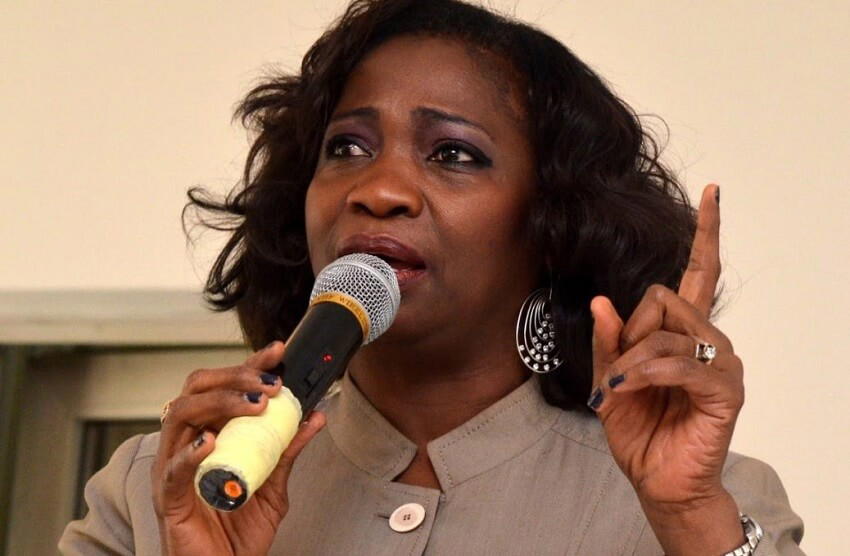
Deborah Anumenechi, Managing Director of Green Protocol Nigeria
Nigeria’s transition from fossil fuels to cleaner energy faces policy and economic hurdles, including translating federal climate commitments into action at the state level and preparing workers and communities for the economic consequences of shifting away from oil and gas, experts have said.
Deborah Anumenechi, Managing Director of Green Protocol Nigeria, said. However, the country had established a framework for climate action at the federal level; implementation needed to extend to states, where governments had different levels of capacity and progress.
In an interview with PREMIUM TIMES at the ongoing 31st United Nations Climate Change Conference (COP31) in Antalya, Türkiye, Mrs Anumenechi said the challenge was not necessarily the absence of national policies but the need to adapt them to the circumstances of individual states.
“The regulatory framework is beautiful, like works at a federal level, but I think what we need to start looking at is the state action,” she said.
She explained that federal policies needed to be translated into state-level priorities so that national climate commitments could produce practical outcomes across the country.
Her comments come as Nigeria seeks to balance its climate commitments with the need to expand electricity access, industrialise and protect livelihoods in an economy still heavily dependent on oil and gas.
Nigeria committed to achieving net-zero emissions by 2060. It subsequently developed its Energy Transition Plan, which outlines pathways to reduce emissions across the power, cooking, oil and gas, transport and industrial sectors.
The plan also recognises the need to address energy poverty and manage potential job losses as global demand for fossil fuels declines. It envisages a transition in which cleaner energy sources expand while the country addresses its development needs.
However, translating such national ambitions into action requires participation from state governments, which are responsible for important aspects of economic planning, infrastructure development and service delivery.
Mrs Anumenechi cited Nigeria’s Nationally Determined Contribution (NDC), the country’s climate commitments under the Paris Agreement, as an example of why state-level implementation matters.
While the federal government sets national emissions-reduction targets and climate priorities, she said states needed to determine what those commitments meant for their own development plans.
“The NDC essentially says this is what Nigeria is going to do by 2030. Now, we have the federal NDC; what does that mean for Lagos, what does that mean for Delta, what does that mean for those states?” she asked.
She said states needed greater financial and technical support to translate national policies into programmes that reflected their local realities.
“The Nigerian government is doing very good work. What I believe they need is more support, not just financial, but also technical, more support to achieve this aim at the grassroots,” she said.
Nigeria’s climate governance landscape illustrates the importance of the challenge.
A 2026 assessment by the Subnational Climate Governance Information System, which examined climate governance across the country’s 36 states, found differences in state governments’ performance.
Lagos, Katsina, and Kaduna emerged as the highest-ranked states in the assessment, while Zamfara and Rivers ranked among the lowest.
The assessment also found that 23 states included climate-related projects in their 2025 appropriation laws. However, including projects in state budgets does not necessarily mean they were fully funded or implemented.
Nigeria’s latest NDC also acknowledges that subnational institutions face capacity challenges in accessing international climate finance.
The document further identifies limitations in the country’s system for tracking mitigation measures, making it difficult to provide more precise assessments of emissions reductions.
Also speaking with PREMIUM TIMES at COP31, Keith Zondi, KwaZulu-Natal’s Member of the Executive Council for Economic Development, Tourism and Environmental Affairs in South Africa, said African countries needed to approach the transition away from fossil fuels pragmatically.
South Africa, whose electricity system and economy have historically depended heavily on coal, faces the challenge of reducing emissions without undermining energy supply, employment and communities dependent on the fossil fuel industry.
Mr Zondi said countries could not immediately abandon existing energy sources without considering the economic consequences.
“We are taking a pragmatic approach because we feel that we can’t immediately discard what we already have,” he said.
He argued that developed countries have a responsibility to support developing economies in financing the transition, particularly because African countries face different economic and development circumstances than wealthier nations.
He said funding would be required not only to develop renewable energy infrastructure but also to equip workers with the skills needed to participate in emerging industries.
“I’ve been speaking about not only injection of finance, but also cultivating a skill set that is going to enable the country to move away from fossil fuels into renewable sources of energy,” he said.
Mr Zondi said African countries should not be expected to follow identical transition timelines, noting that their energy needs, economic structures and development levels differed.
His comments reflect a central tension in the just transition debate: countries must reduce dependence on high-emission energy sources while ensuring that the process does not deepen poverty, unemployment or energy insecurity.
For Nigeria, the challenge is particularly complex.
The country is pursuing greater oil and gas production while also seeking to expand renewable energy and achieve its long-term net-zero target.
Mr Zondi said Nigeria needed to assess its current economic position and make deliberate investments in cleaner energy without abruptly abandoning the industries its economy depends on.
“You cannot punish immediately what the country depends on because the economy will collapse,” he said, advocating careful planning and a gradual shift towards cleaner energy.
He also called on wealthier countries, which he said bore greater responsibility for historical pollution, to provide financial support to African economies.
South Africa’s experience also illustrates how the just transition debate extends beyond replacing coal-fired electricity with renewable energy.
The country’s Just Energy Transition Partnership has attracted international financing commitments, while its government has introduced initiatives to develop the skills needed for employment in emerging green industries.
However, the availability and structure of finance remain important considerations, particularly for workers and communities that depend on coal-related economic activities.
For Nigeria, where oil and gas remain significant to public revenue and employment, a just transition would require similar attention to the economic consequences of changes in the energy sector.
It would also require states to identify the industries, communities, and workers likely to be affected and incorporate their needs into transition plans.
- nigeria
- oil
- shift
- state
- action
- planning
- expert
- comment