Vegetable farmers urge gov’t to capture Anloga tomato factory in 2027 budget
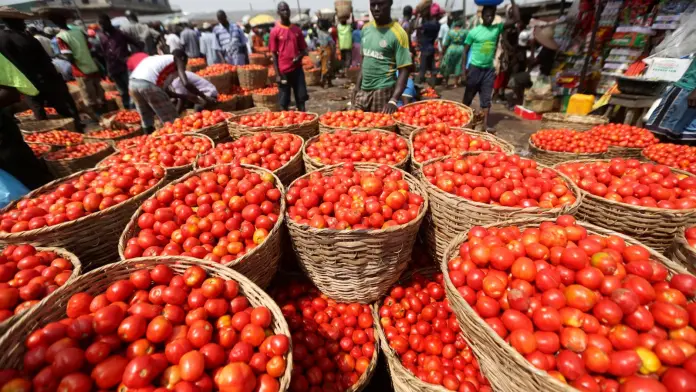
Vegetable farmers in the Anloga District of the Volta Region have appealed to the government to include provision for a tomato processing factory in the 2027 national budget to address persistent post-harvest losses and improve their livelihoods. Mr Emmanuel Gbede, a farmer, explained that tomato production remained a major economic activity in several communities in the district, including Anloga, Avume, Dzita and Anyanui, where many households depended on vegetable farming for their daily income.
Vegetable farmers in the Anloga District of the Volta Region have appealed to the government to include provision for a tomato processing factory in the 2027 national budget to address persistent post-harvest losses and improve their livelihoods.
They said the proposed factory, if included in the budget and implemented, would provide a sustainable market for locally produced tomatoes, reduce wastage during bumper harvests, and create employment opportunities, particularly for youth.
Mr Emmanuel Gbede, a farmer, explained that tomato production remained a major economic activity in several communities in the district, including Anloga, Avume, Dzita and Anyanui, where many households depended on vegetable farming for their daily income.
“The absence of a reliable processing facility continued to expose us to some significant financial losses,” he said.
He said many farmers were often compelled to sell their produce at reduced prices when tomatoes flooded the market, as the commodity's perishable nature made it difficult to store for long periods.
Mr Gbede emphasised that other farmers, unable to secure buyers on time, were forced to watch their produce rot, resulting in lost investments in seeds, fertilisers, labour, and transportation.
He noted that the establishment of a tomato factory would provide an opportunity to process excess produce into tomato paste, puree and other related products, which could be stored and distributed to markets throughout the year, and such an initiative would also reduce Ghana’s dependence on imported tomato products and strengthen the local agricultural industry.
“We are calling on the Ministry of Food and Agriculture, the Ministry of Trade, Agribusiness and Industry, and other relevant stakeholders to prioritise the project and ensure that the necessary feasibility studies, funding arrangements and implementation plans are considered in the 2027 budget.”
The farmers said the factory would benefit not only tomato farmers but also transport operators, traders, packaging companies, food processors, and other businesses along the agricultural value chain, adding that its establishment could transform Anloga into an important centre for tomato production and processing in the Volta Region.
The farmers further stressed the need for the government to complement the proposed factory with improved access to irrigation facilities, quality seedlings, affordable fertilisers, extension services, and modern farming equipment to boost productivity and ensure a consistent supply of raw materials for the facility.
They said previous discussions about the need for a tomato processing factory in the area had raised expectations among farmers, and that the inclusion of the project in the 2027 budget would demonstrate government’s commitment to addressing their long-standing challenges and promoting agro-industrial development.
The farmers appealed to the government, development partners, private investors, and traditional authorities to work together to make the project a reality, noting that Anloga could become a major tomato processing hub with the necessary investments.
They maintained that the factory should move beyond public discussions and become a funded development priority that would translate into improved incomes, reduced post-harvest losses and lasting economic opportunities for farming communities.
- tomato
- factory
- farmer
- anloga
- budget
- vegetable
- processing
- government