business

Where will the money come from? MP questions 24-hour economy funding

Where will the money come from? MP questions 24-hour economy funding

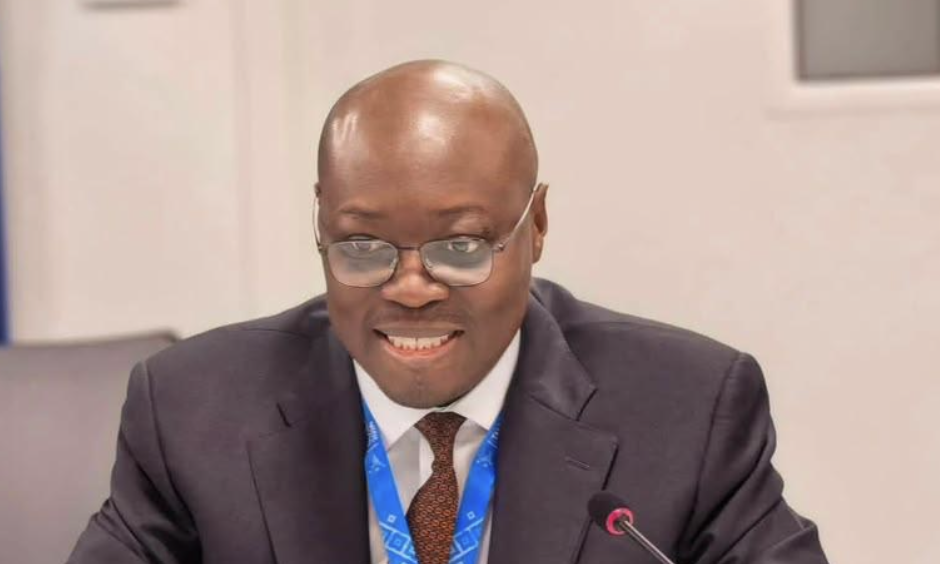
The proposed financing model for the government’s 24-hour economy programme could come under pressure in 2027 if revenue targets are not met, the MP for Manso Nkwanta, Tweneboa Kodua Fokuo, has warned. Speaking on the PM Express on Joy News on Tuesday, November 10, ahead of the presentation of the 2027 Budget by the Finance Minister, Dr Cassiel Ato Forson, Mr Fokuo said the government could struggle to finance the programme if revenue mobilisation fell short of expectations.

The proposed financing model for the government’s 24-hour economy programme could come under pressure in 2027 if revenue targets are not met, the MP for Manso Nkwanta, Tweneboa Kodua Fokuo, has warned. He said the government’s plan to create fiscal space for the programme depended heavily on revenue expected to be generated in the future, rather than funds already available.

That, he said, raised questions about the sustainability of the initiative, particularly with the economy projected to grow at a slower rate in 2027. Speaking on the PM Express on Joy News on Tuesday, November 10, ahead of the presentation of the 2027 Budget by the Finance Minister, Dr Cassiel Ato Forson, Mr Fokuo said the government could struggle to finance the programme if revenue mobilisation fell short of expectations.

“It’s not as if we have the money at hand now. No, we don’t have the money now,” he said. He explained that the financing arrangement appeared to rely on a proposed adjustment to the primary surplus target from 1.5 per cent to 0.5 per cent, creating room in the budget for spending on the programme. However, he cautioned that the anticipated fiscal space was dependent on revenue that the government was yet to collect.

Mr Fokuo said the projected slowdown in economic growth from 6.2 per cent in 2026 to 4.9 per cent in 2027 could further complicate revenue mobilisation and place the programme’s funding under strain. “If you look at revenue that has been generated this year, even when the economy is growing at 6.2 per cent, versus 2027 that we are projecting to slow down to 4.9, what it means is that we are likely to struggle in terms of revenue for 2027,” he said.

He consequently questioned where the resources to support the programme would come from if government revenue underperformed. “If we do struggle for 2027, then you ask yourself where would the funding for the new economy really come from?” he asked. Financing concerns Mr Fokuo also questioned the earlier approach to financing the 24-hour economy, saying the private sector had failed to respond as expected because the programme was announced without adequate measures to manage the risks associated with participation.

He said the absence of a clear risk-management framework had weakened private-sector appetite for the initiative, leaving government to consider a financing arrangement that placed greater responsibility on the public purse. “When the private sector did not jump on board as was expected, because it was just a slogan, it was just a pronouncement, but nothing was done to really manage the risks thereof, the private sector had no interest,” he said.

He described the current arrangement as a repackaging of the programme, with government funding expected to play a more prominent role. The MP’s comments come as attention turns to the 2027 Budget, which is expected to provide further details on the government’s economic priorities, revenue projections and financing plans. The budget will be closely watched for clarity on how the government intends to fund the 24-hour economy initiative, attract private investment and ensure that its commitments are supported by sustainable revenue sources.

  • economy
  • revenue
  • government
  • hour
  • funding
  • programme
  • money
  • cent

Summaries and tags are generated automatically. Stay informed with VidiaNews.

Related news

‘New economy is repackaged 24-hour economy’ – Manso Nkwanta MP
business

‘New economy is repackaged 24-hour economy’ – Manso Nkwanta MP

The proposed “new economy” being advanced by the government is largely a rebranding of the 24-hour economy policy, with the key difference being a shift towards public financing after efforts to attract private sector investment failed, the MP for Manso Nkwanta, Tweneboa Kodua Fokuo, has said. Speaking on Joy News’ PM Express on Tuesday, November 10, ahead of the presentation of the 2027 Budget by the Finance Minister, Dr Cassiel Ato Forson, he questioned whether the proposed new economic direction represented a fundamental departure from the earlier policy.

Read →
New Economy raises questions over delivery of 24-hour economy – IPPA
business

New Economy raises questions over delivery of 24-hour economy – IPPA

The Institute of Public Policy and Accountability (IPPA) has questioned the government’s proposed $10 billion New Economy programme, demanding clarity on how it differs from the 24-Hour Economy initiative announced earlier as a major driver of job creation and economic transformation. IPPA said the 2026 Budget provided for total expenditure of GH¢302.46 billion, including GH¢57.53 billion in capital expenditure, and committed GH¢30 billion to the flagship Big Push infrastructure programme.

Read →
No new loans for $13bn New Economy Programme – Ato Forson
business

No new loans for $13bn New Economy Programme – Ato Forson

The government plans to mobilise at least US$13 billion for its New Economy Programme over four years without contracting additional loans, Finance Minister Dr Cassiel Ato Forson has said. The Minister also dismissed suggestions that the Ghana Gold Board (GoldBod) generates revenue for the Finance Ministry or the government, explaining that the state’s main revenue sources remain direct taxes, indirect taxes and non-tax revenue.

Read →
Spend more in 2027 to boost growth – PwC to govt
business

Spend more in 2027 to boost growth – PwC to govt

The government must use the 2027 Budget to increase efficient spending and prioritise resources towards productive sectors to stimulate economic growth without undermining the gains made in stabilising the economy, the Country Senior Partner of PwC Ghana, George Arhin, has said. Mr Arhin, who took office nearly a month ago, explained that with the 2026 Budget having achieved its objective of stabilising the economy, the focus of the new budget should be on ensuring that public funds are channelled into sectors capable of generating jobs, boosting productivity and attracting private sector…

Read →
Amin Adam questions how the Mahama gov’t will raise US$10bn for the ‘New Economy’
politics

Amin Adam questions how the Mahama gov’t will raise US$10bn for the ‘New Economy’

The Minority in Parliament has expressed doubts about the government’s ability to finance its proposed US$10 billion New Economy programme, demanding a detailed funding plan ahead of the 2027 Budget. The Caucus raised the concerns through the Ranking Member on Parliament’s Finance Committee, Dr Mohammed Amin Adam, who addressed the media on its behalf on Tuesday, November 10.

Read →
Minority demands names of firms benefiting from 24-Hour Economy tax incentives
business

Minority demands names of firms benefiting from 24-Hour Economy tax incentives

The Minority in Parliament has challenged the government to account for the tax incentives announced under the 24-Hour Economy programme, demanding details of companies that have benefited and the revenue lost through the concessions. The Ranking Member on Parliament’s Finance Committee, Dr Mohammed Amin Adam, raised the concerns when he addressed the media on behalf of the Minority on Tuesday, November 10.

Read →