#EndSARS: Cry of justice for victims louder six years after
Sunday Vanguard recalls that the #EndSARS protests were a series of nationwide demonstrations that erupted in Nigeria in October 2020 against police brutality, extortion, torture, unlawful arrests and extrajudicial killings allegedly committed by the Special Anti-Robbery Squad (SARS), a unit of the Nigeria Police Force established to combat armed robbery and other violent crimes. Nigerians deserve evidence of transformation — CISLAC Speaking with Sunday Vanguard, Executive Director of the Civil Society Legislative Advocacy Centre (CISLAC), Auwal Rafsanjani, said Nigerians deserved evidence of…
By Gabriel Ewepu As Nigerians commemorated the sixth anniversary of the #EndSARS protests on Wednesday, October 20, civil society organisations (CSOs) and lawyers said the issues that triggered the protests remain unaddressed. They noted that while the core demands of the protesters remain largely unmet, commitments made by the government have also not been realised.
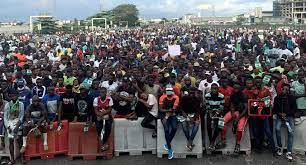
There was a consensus that sacrifices made by those affected in various ways during the protests have not translated into improved policing in the country. Sunday Vanguard recalls that the #EndSARS protests were a series of nationwide demonstrations that erupted in Nigeria in October 2020 against police brutality, extortion, torture, unlawful arrests and extrajudicial killings allegedly committed by the Special Anti-Robbery Squad (SARS), a unit of the Nigeria Police Force established to combat armed robbery and other violent crimes.
SARS Although concerns about alleged SARS abuses had persisted for years, the protests gained momentum following the circulation of a video in early October 2020 showing a police officer allegedly shooting a young man in Ughelli, Delta State. Young Nigerians mobilised through social media, particularly Twitter, using the hashtag #EndSARS to demand the disbandment of the unit, justice for victims of police brutality and comprehensive police reforms.
The demonstrations spread to Lagos, Abuja, Port Harcourt, Ibadan and other cities, attracting thousands of young people who also called for better governance, accountability and respect for human rights. On October 11, 2020, the police announced the dissolution of SARS, but protesters continued their demonstrations, insisting on concrete reforms, accountability for alleged abuses and compensation for victims.
Tragic The movement reached a tragic turning point on October 20, when soldiers opened fire on protesters gathered at the Lekki Toll Gate in Lagos, an incident that attracted international condemnation and became a defining moment in Nigeria’s recent history. Amnesty International reported that at least 12 protesters were killed at Lekki and Alausa in Lagos that day.
Widely referred to as the Lekki massacre, the incident intensified public outrage and renewed demands for justice. Although judicial panels of inquiry were established in several states to investigate allegations of police brutality, concerns over accountability and the implementation of their recommendations have persisted. To date, the protests remain a significant expression of youth activism and the struggle for police accountability and good governance in Nigeria.
Six years after, some stakeholders, including civil society groups, told Sunday Vanguard that key recommendations by the judicial panels of inquiry were yet to be fulfilled, while the immediate and underlying issues that led to the protests persisted. Nigerians deserve evidence of transformation — CISLAC Speaking with Sunday Vanguard, Executive Director of the Civil Society Legislative Advocacy Centre (CISLAC), Auwal Rafsanjani, said Nigerians deserved evidence of transformation, not another anniversary of unfulfilled commitments.
He said: “Certainly, we cannot describe a relationship built on fear, suspicion, intimidation and widespread allegations of extortion as a healthy police-civilian relationship. Six years after #EndSARS, many Nigerians, particularly young people, still see police encounters as potential threats rather than assurances of protection. “The reported use of tear gas against citizens commemorating #EndSARS at Lekki today raises further concerns about respect for peaceful assembly.
“CISLAC maintains that the greatest tragedy of October 20, 2020, is not only the lives lost and injuries suffered, but also the continued failure to establish full accountability and restore public confidence. “A police institution that citizens fear more than criminals has a serious legitimacy and accountability problem. “Government must implement outstanding judicial panel recommendations, ensure justice for victims and end the culture of impunity.” Torture “There have been reform announcements and institutional adjustments, but Nigerians are entitled to ask: what has fundamentally changed on the streets?
“SARS was disbanded, judicial panels were established, police regulations were revised and training initiatives introduced. “Yet allegations of unlawful detention, torture, extortion, excessive force and extrajudicial killings continue. “CISLAC insists that changing the name of a police unit without changing its conduct is not reform. “Reform must produce measurable results: fewer abuses, independent investigations, prosecution of offending officers, compensation for victims and improved police welfare.
“Six years is more than enough time for promises to become results. “Nigerians deserve evidence of transformation, not another anniversary of unfulfilled commitments.” Coercion However, he noted that Nigeria had dedicated and courageous poli
- police
- protest
- endsar
- justice
- october
- accountability
- nigerians
- protester