Germany news: Only 1/3 of Germans satisfied with state of democracy

A new authoritarianism study has revealed a new low in satisfaction levels with the functioning of German democracy. Meanwhile, the Bundeswehr has banned Chinese-made drones.
Keep reading for the top news and analysis from Germany on Wednesday, November 11:
Just a third of respondents said they were satisfied with the state of democracy in the Federal Republic of Germany, according to a new report from the Leipzig Authoritarianism Study.
This marked a steep decline from the 42.3% level of satisfaction measured in the last study in 2024 and was the lowest point since the study began in 2002. The level was even lower in the former East German states where only 22.8% expressed satisfaction with German democracy, down from 29.7%.
At the same time, 89.3% of respondents said they agreed with the concept of democracy, however, this also marked the first time this level fell below 90%.
A large share of respondents also expressed chauvinistic and antisemitic views.
In response to the statement "Germany is being dangerously overrun by foreigners," 34.9% were manifestly in agreement, with 24.4% in latent agreement.
At the same time, 15.5% manifestly agreed with the statement "the influence of Jews in Germany is still too great," with 21.7% latently agreeing.
The research was carried out by the Else-Frenkel-Brunswik-Institut at the University of Leipzig. They surveyed 2,500 people between mid-March and the beginning of June this year.
The German military, or Bundeswehr, has said it had banned the use of Chinese-made drones, the Defense Ministry said.
The ban also includes for training purposes. Instead, the military can use German or European-made drones.
The ministry cited "security-relevant information," saying "Chinese-made models will no longer be used ... and existing systems will be replaced by products from domestic or, where applicable, European sources."
The Bundeswehr may purchase "inexpensive, off-the-shelf drones for training purposes", buying them "with minimal bureaucratic effort."
A 22-year-old man has died in hospital from severe head injuries after he was found by police in an abandoned building with the body of a 13-year-old girl who had gone missing.
The man tried to shoot himself after being discovered by police in the small town of Altglietzen on the border with Poland on Sunday. He sustained life-threatening injuries and was taken to hospital for intensive care.
Prosecutors in Berlin said on Monday that the man had already been under investigation since January 2025 amid suspicion of possession of child sexual abuse material.
The 13-year-old victim went missing Tuesday last week after she left her home in Berlin at 7:15 a.m. to go to school. She never arrived.
Autonomous drones can navigate without GPS, search for missing persons and make decisions on their own.
In Germany, developers competed to see which drone was the best rescuer.
Rain has not appeared to put off carneval-revellers in Cologne with festivities set to kick off at 11:11 a.m. (1011 GMT) on November 11.
Groups of people in colorful costumes had already started gathering outside the Cologne main station, at the foot of the famous Cologne Cathedral, despite the wet weather.
Bakeries have been selling their traditional carneval pastries like hot cakes.
Local authorities expect tens of thousands of people to join the celebrations. Some 1,000 police officers as well as 1,200 agents from a private security firm have been deployed.
Germany has slipped down the climate action ranking for the third consecutive year, with the former green leader now being outperformed by Brazil, Columbia and Romania.
In its worst performance since 2019, the country fell to place 25 and received a "medium" rating overall on the yearly Climate Change Performance Index (CCPI), which assesses efforts to curb global warming in 64 countries plus the European Union.
Read DW's full report on Germany's environmental woes here.
Year-on-year inflation for October dropped down slightly to 2.8% after reaching 3.3% in September, according to preliminary figures from the Federal Office of Statistics (Destatis).
Record high prices for gas and diesel pushed up inflation in September but this was brought down thanks to government subsidy for consumers at the gas pump that was introduced in October.
"The main factor behind the persistently high inflation rate remained the trend in energy prices, even though the fuel subsidy, which was reintroduced in early October, may have tempered inflation somewhat," Destatis President Ruth Brand said.
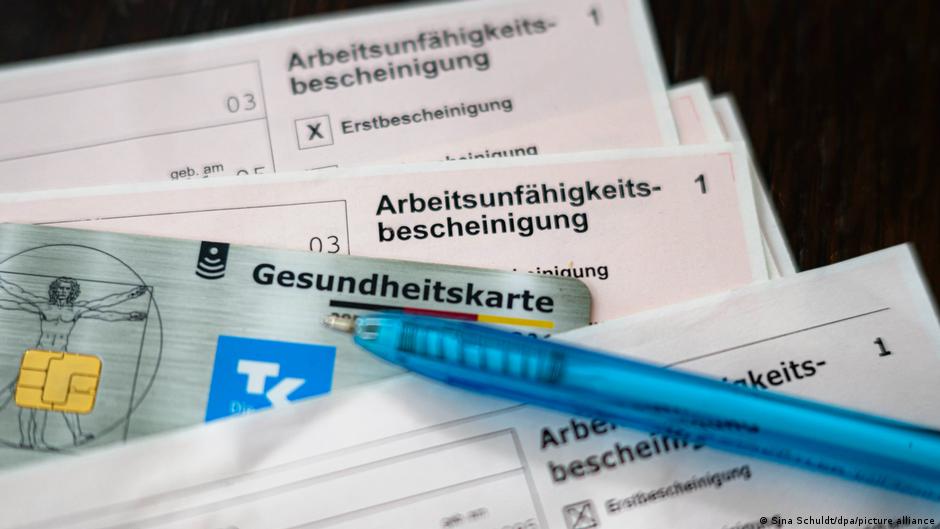
German workers aged between 60 and 65 took an average of 31.3 days of sick leave per year, based on data from 2024 released by the Health Ministry in response to a question posed by the Left party in the Bundestag.
The average number of sick days taken by all workers was 15, according to the Federal Office of Statistics (Destatis).
The number of 60 to 65-year-olds who have taken a year or more off for sick leave has also increased in recent years. It went from around 80,300 people in 2022 to 96,100 in 2024.
Left party spokesperson Sarah Vollath called the figures a "clear warning sign" in comments to the Rheinische Post and warned that workers cannot "keep working forever."
"If the federal government has its way, the retirement age for workers will soon be pushed even further into the future due to another increase in the standard retirement age. This completely ignores the reality of life for older workers."
The government of Chancellor Friedrich Merz has set retirement reform as one of its main goals, with policies including pushing the retirement age back to 67 years.
November 11, as well as being Armistice Day, is also the first day of the carneval season with events taking place throughout the Rhineland region, including in Cologne, Düsseldorf and Mainz.
We are also expecting the German Council of Economic Experts to publish their annual report providing forecasts and proposals to the German government.
- democracy
- germany
- news
- germans
- state
- authoritarianism
- study
- low