Kenya speaks out after Saudi court sentences woman to 100 lashes over out-of-wedlock birth
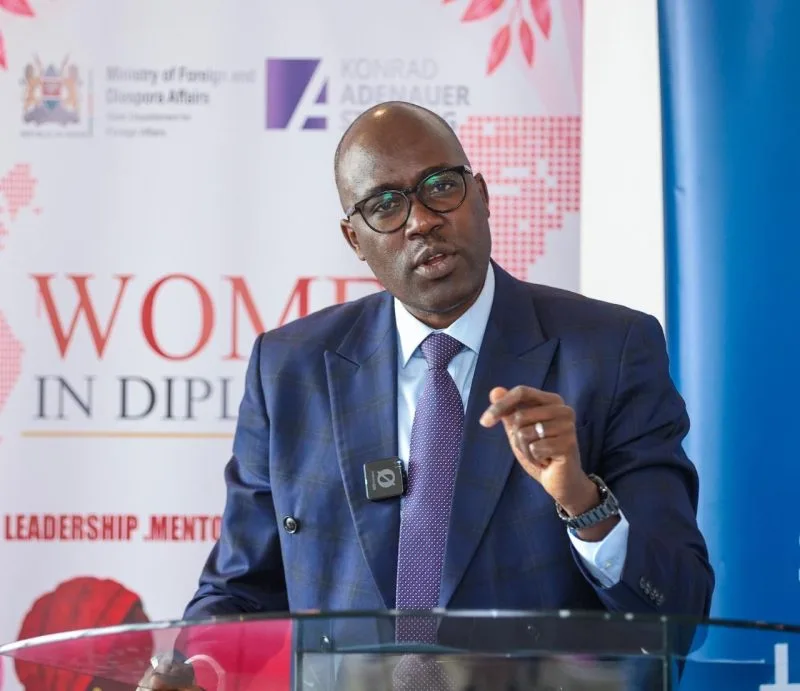
NAIROBI, Kenya, Nov 11 – Foreign Affairs Principal Secretary Korir Sing’oei has expressed concern over the sentencing of a Kenyan woman to 100 lashes in Saudi Arabia, describing the punishment as cruel and inhuman under Kenyan law while acknowledging the Gulf nation’s judicial sovereignty. In a statement on Wednesday, November 11, Sing’oei said the government was concerned by the punishment handed to the woman, identified as Esther Wanja Muthoni, but would continue engaging Saudi authorities through diplomatic channels.
NAIROBI, Kenya, Nov 11 – Foreign Affairs Principal Secretary Korir Sing’oei has expressed concern over the sentencing of a Kenyan woman to 100 lashes in Saudi Arabia, describing the punishment as cruel and inhuman under Kenyan law while acknowledging the Gulf nation’s judicial sovereignty.
In a statement on Wednesday, November 11, Sing’oei said the government was concerned by the punishment handed to the woman, identified as Esther Wanja Muthoni, but would continue engaging Saudi authorities through diplomatic channels.
“Saddened by what would constitute ‘cruel and inhuman’ punishment under our jurisdiction, but respectful of the sovereignty of Saudi legal system. We shall continue to work with our counterparts on these complex arenas of judicial enforcement,” he said.
The statement marks the government’s public response to a case that has sparked renewed debate about the protection of Kenyan migrant workers, particularly women employed as domestic workers in the Middle East.
Muthoni, 40, was sentenced by a criminal court in Riyadh in October after being convicted of having sexual relations outside marriage, following the birth of her son.
According to a report, the mother of five became pregnant following a brief relationship with an Egyptian man while working legally as a domestic worker in Saudi Arabia.
She gave birth to her son, Abudy, in August 2025 at staff accommodation. Her supervisor reportedly discovered the newborn and took both mother and child to hospital, where she was subsequently detained by police for questioning over the pregnancy.
The man identified as the child’s father had reportedly left Saudi Arabia by the time authorities began investigating the matter.
Court proceedings followed, with a three-judge panel eventually finding Muthoni guilty and imposing 100 lashes alongside one year of banishment.
The exact date when the punishment will be administered remains unclear. It is also uncertain whether the banishment will result in her deportation to Kenya.
Muthoni reportedly said she feared she would not withstand the punishment. She did not appeal the conviction, saying returning home to her children was her priority.
The case has also raised questions about the circumstances under which she was prosecuted and the legal assistance available to her during the proceedings.
Court documents cited in the report reportedly showed that she had a translator but no lawyer representing her.
The sentencing has drawn attention to Saudi Arabia’s continued use of corporal punishment despite reforms announced in 2020 that restricted flogging for certain categories of offences.
However, the reforms did not eliminate flogging in all cases, with punishments prescribed under particular interpretations of Islamic law remaining an exception.
The controversy comes against the backdrop of longstanding concerns over the treatment of Kenyan women working in Saudi Arabia, where thousands have travelled in search of employment as domestic workers.
In a report released in May 2025, Amnesty International documented allegations of widespread exploitation involving Kenyan women employed in Saudi households.
The organisation interviewed more than 70 former domestic workers and documented cases involving excessive working hours, unpaid wages, physical and sexual abuse, confiscation of passports and restrictions on movement.
The report also raised concerns about the kafala sponsorship system, which ties migrant workers’ legal status to their employers and can make it difficult for them to change jobs or leave abusive working environments.
The latest case has further highlighted the difficulties faced by Kenyan women who become pregnant outside marriage while working in Saudi Arabia, particularly when their children lack the documentation required for travel.
A 2024 investigation by The Guardian documented cases of Kenyan mothers stranded in Saudi Arabia because their children, born outside marriage, lacked birth certificates and exit documents.
Some of the women interviewed said they had been unable to return home for years because of complications surrounding their children’s legal status.
The Kenyan government has previously acknowledged the challenges facing mothers and children in Saudi Arabia, including difficulties obtaining birth certificates and securing travel documents.
In a November 2025 foreign affairs briefing, the ministry reported that it had collected 707 DNA samples through mobile consular services to help verify parent-child relationships and facilitate documentation.
The government also disclosed that a joint interdepartmental working group established in January 2025 had facilitated the return of 59 Kenyan mothers and 73 children from Saudi Arabia.
- woman
- saudi
- court
- punishment
- kenya
- birth
- arabia
- case