India simplifies visa regime; tourist visa renamed as visitor visa

The visitor visa category has been organised into two sub-categories, V-1 and V-2, so that applicants may select a visa suited to the nature and duration of their proposed visit
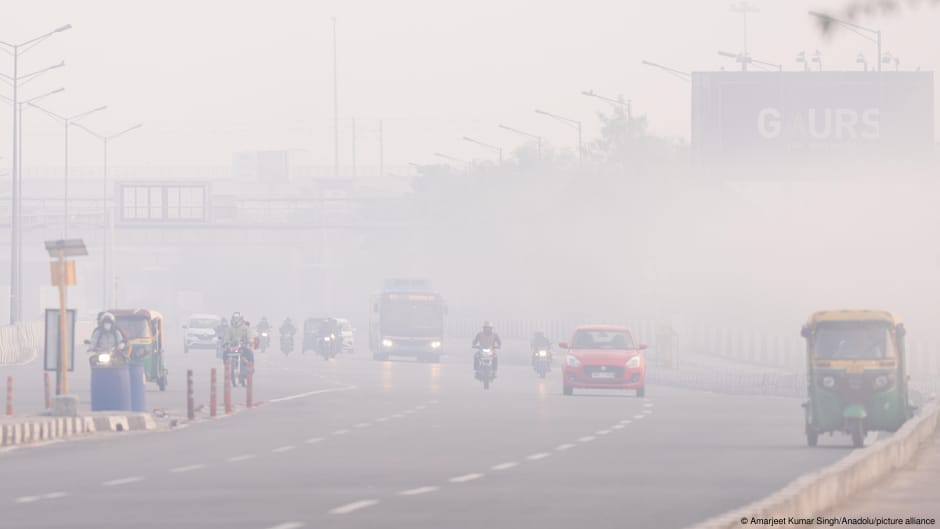
Representative image.
Government of India has simplified its visa regime by reducing the categories from 13 to nine and making the visa application forms leaner by up to 70%, the Ministry of Home Affairs (MHA) said in a statement on Wednesday (November 11, 2026). Significantly, the “Tourist Visa” has been renamed “Visitor Visa”, reflecting a broader range of permitted purposes beyond conventional tourism, the ministry said.
A specific provision, Production Investment Business Visa, has been carved out for foreign subject-matter specialists, engineers and technical personnel engaged by Indian companies in activities such as installation and commissioning, quality checks and essential maintenance, production, IT, training, supply-chain development, plant design and bring-up, senior management and technical support, including transfer of know-how, technology and services.
“The step aims at making it more compact, coherent and responsive to the requirements of foreign nationals visiting India. On August 27, 2026, MHA reduced the number of main visa categories from 13 to nine and the number of sub-categories from 49 to 23,” it said.
This follows the earlier rationalisation undertaken in October, 2025, when the main visa categories were reduced from 22 to 13 and sub-categories from 63 to 49. While enacting the changes, the Government of India studied the visa systems of developed countries and global standards.
The consolidation of similar purposes of travel is aimed at providing greater clarity and ease in identifying the appropriate visa category while facilitating legitimate foreign arrivals, MHA said.
Currently, e-visa is processed through electronic travel authorisation (ETA) under 13 subcategories. The facility of e-visa is presently available to the nationals of 172 countries.
As reported by The Hindu on November 4, the required filed/column for all 23 categories/sub-categories of Visas have been reduced 65%-70%. The initiative aims to significantly reduce the information required from foreign nationals, simplify the visa form while retaining essential details necessary for visa processing.
This will reduce the time and effort required to complete the application, and it will enhance administrative efficiency by facilitating more focused scrutiny and processing of visa applications. To implement all changes made in the Indian Visa Regime, the MHA is updating the IT systems and by year-end, visas will be granted as per new rationalisation.
The visitor visa category has been organised into two sub-categories, V-1 and V-2, so that applicants may select a visa suited to the nature and duration of their proposed visit.
In addition to other eligible visitor activities, V-1 visa covers short-term activities such as business meetings, medical consultations, wellness retreats, short-duration medical treatment and short-term courses in Indian languages, music, art and craft. It is granted for 30 days with multiple entries.
V-2 Visa is intended for longer-duration visits, with validity of one-year, five-year or 10-years, as specified. It covers the activities permissible under V-1 and mountaineering. For mountaineering, a visa of six months, with multiple entries, will be granted.
By bringing a wider range of short visits under a clearly identified category, the new arrangement makes visa selection simpler for travellers who may combine leisure with business meetings, medical consultations, wellness retreats, cultural learning or short-duration yoga programmes, MHA said. The longer-duration V-2 option provides continuity and convenience for eligible repeat visitors, while the specific mountaineering provision addresses the distinct needs of such travel.
The Medical Visa framework retains separate provisions for treatment under conventional and AYUSH systems. M-1 Visa covers medical treatment, while the M-3 Visa covers treatment under AYUSH systems. M-1 and M-3 Visas, including their e-Visa variants, will be granted for one year as a default option with multiple entries. Corresponding medical attendant visa provisions are also available accordingly M-2 and M-4 Visas will be granted for attendant of M-1 and M-3 visa holders respectively.
This arrangement gives patients greater predictability when treatment involves multiple consultations, follow-up appointments or staged procedures. Multiple-entry validity can reduce the need for repeated visa applications during a course of care, while the distinct AYUSH provision helps applicants identify the appropriate treatment route. The availability of attendant visas also facilitates support by accompanying persons. This will encourage the Medical Value Travel in India.
The Student Visa category has been consolidated into two broad sub-categories. S-1 Visa covers school, graduate and post-graduate education. S-2 Visa covers PhD and research scholars in Indian universities, visiting faculty, foreign research students visiting India for research, scientific and anthropological expeditions, internships and exchange students, among other specified academic activities.
For foreign students enrolled in Indian educational institutions through the Study in India portal, the e-S1 Visa may be granted for up to five years or for the duration of the academic course, whichever is less, with multiple entries. These provisions offer students a more readily identifiable visa pathway and greater certainty for academic planning. Longer validity linked to the course duration can also minimise procedural interruptions and make it easier for eligible students to travel during their studies.
The Business Visa category has been consolidated into B-1 and B-2. B-1 Visa covers long-term, licence-based business activities, including foreign nationals seeking to establish industrial or business ventures in India. B-2 Visa covers short-term, contract-based business activities, including Production Investment Business, conferences, sports, performative arts and films.
This was previously granted under e-B4 visa nomenclature. This differentiation gives businesses greater clarity when planning long-term investments as against short-term contractual assignments. The dedicated provision for technical specialists can facilitate timely deployment of expertise for setting up and operationalising industrial facilities, transferring technology, training personnel and supporting production, thereby improving predictability for companies and foreign professionals alike.
- visa
- visitor
- india
- regime
- tourist
- category
- simplifie
- sub