Uduaghan: The last of our statesmen, by Tonnie Iredia
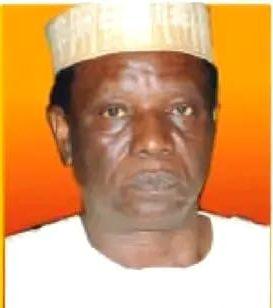
To my surprise, Dr. Emmanuel Eweta Uduaghan who had taken over as Delta State Governor appeared in person at the funeral mass held at the Holy Cross Cathedral in Benin City. Uduaghan concluded that if truly the federal government was willing to let me go, then the Delta State government would gladly host me at least once a month to learn the strategies I designed to manage an organization such as the NTA which had grown within a short period from what he called an amorphous entity to the largest network in Africa.
As Director General of the Nigerian Television Authority NTA, my resolve in year 2006, was to transform the structures of the NTA Television College, Jos. Some state governors among them: Adamu Muazu of Bauchi, James Ibori of Delta, Gbenga Daniel of Ogun and Oyinlola Olagunsoye of Osun state greatly supported me and I remain grateful to them. My visit to them and some others who eventually didn’t offer any help left me with so much to remember about the disposition of our political leaders.
The visit to James Ibori in Asaba was particularly revealing. While there, I made an appeal to the governor to sponsor a female hostel at the College. The request was approved within a few minutes and implemented before governor Ibori left office. When it was commissioned a few months later, the hostel was named “Delta Block, TV College, Jos.” If the instantaneous approval by Ibori vividly showed me his pragmatic approach to governance, I was even more touched by the reason the governor gave for the approval.
In the words of James Ibori, “this is my 7th year in office and I dare say you are the first to make a request to me for the public good.” It was worthy of note that the governor used my visit to admonish all those before me who had come for help for themselves or their families. The trip to Delta was also remarkable because it offered me a chance meeting with Emmanuel Uduaghan, the then Secretary to the State Government.
It was the latter who actually encouraged me to wait to see the governor. On arrival that fateful day, Ibori was said to be out of town on official duties and while I was trying to take my leave as I didn’t really have an appointment to see the governor, Uduaghan whom I didn’t know at all, appeared with smiles urging me to wait briefly for the governor who was reportedly only some 10 minutes away from the office.
Interestingly, it was Uduaghan who succeeded Ibori, but I didn’t establish enough ties to reach him thereafter. I was reconnected with him again about a year later when my mother died – a development that made me to send invitations to many personalities to attend the funeral. To my surprise, Dr. Emmanuel Eweta Uduaghan who had taken over as Delta State Governor appeared in person at the funeral mass held at the Holy Cross Cathedral in Benin City.
The Edo state governor who was absent complained bitterly that I invited other governors except himself to an event within his seat of power until he found that invitation cards for governors to the burial were ably shared by his own protocol officer. The next time I saw Uduaghan was at the Abuja Airport. We were both on a flight to Benin and he came and sat with me with an anxious look on how I was fairing having just been replaced as DG, NTA by government.
He asked me more than once if I was sure the then President was aware that I was no longer in office. Uduaghan concluded that if truly the federal government was willing to let me go, then the Delta State government would gladly host me at least once a month to learn the strategies I designed to manage an organization such as the NTA which had grown within a short period from what he called an amorphous entity to the largest network in Africa.
I thanked him and promised to reach him anytime I was ready to visit Asaba. However, I was not surprised that government could decide to change any federal chief executive. I also knew that whether the president was aware of the development or not was irrelevant. Indeed, an old school mate close to the new government had actually warned me that persons heading certain bodies such as the NNPC, the CBN and NTA would certainly be changed.
He added that I could only be saved if I could get close to Babagana Kingibe who was then the Secretary to the Government of the Federation. Of course, that was a no-go- area for me. There are numerous Nigerians who worked their ways into top political positions with little or no attribute of statesmanship. Most of them do not believe in empiricism, rather they are ethnic heroes who more often than not embrace prescriptive criteria for decision making.
In other parts of the world, when people who have held high offices or have worked in government for a considerable time retire, they become statesmen. It is not so in Nigeria where people in their 80s are still fighting with mates of their grandchildren for routine official duties. As a matter of fact, one does not need to retire before adopting the posture of statesmen.
A president of a country or a state governor is a statesman even if he is young. He is only sectional and partisan when seeking the office or a re-election to it. Once elected, he becomes a statesman – the president or governor for all. It is only a country such as ours that statesmen often operate below expectations. During Buhari’s administration, supporters of the president’s party were seen and heard openly rationalizing the decision to divert development projects away from certain communities that did
- uduaghan
- governor
- ibori
- government
- state
- nta
- delta
- office