FG targets 1,000 CNG stations nationwide, commissions five in Lagos
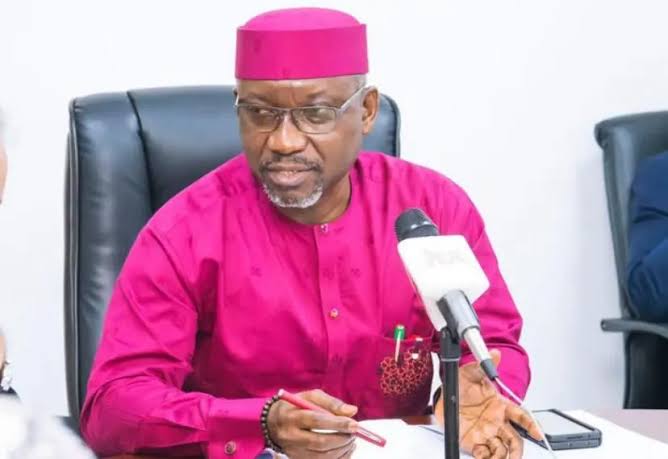
The Minister of State for Petroleum Resources (Gas), Mr Ekperikpe Ekpo, disclosed this during the commissioning of five CNG daughter and last-mile retail stations developed by IBILE Oil and Gas Corporation, with support from the Midstream and Downstream Gas Infrastructure Fund (MDGIF), in Lagos. … we commissioned the first four CNG stations in Ikota, Agege, Ogudu and Ojota, and now we are commissioning an additional five, with the remaining six, which are at different stages of completion, to be commissioned by Q1 2027.”
Stations target 8,400 vehicles daily – MDGIF By Udeme Akpan, Energy Editor The Federal Government has unveiled plans to expand Nigeria’s Compressed Natural Gas (CNG) refuelling network to 1,000 stations nationwide, including 500 additional facilities, as part of efforts to reduce transportation costs and deepen domestic gas utilisation. The Minister of State for Petroleum Resources (Gas), Mr Ekperikpe Ekpo, disclosed this during the commissioning of five CNG daughter and last-mile retail stations developed by IBILE Oil and Gas Corporation, with support from the Midstream and Downstream Gas Infrastructure Fund (MDGIF), in Lagos.
The facilities, located at Idimu, Ogolonto, Abule-Egba, Ajah and Oko-Oba, are expected to bring natural gas closer to motorists, commercial transport operators and businesses. Ekpo said: “The President has specifically directed the expansion of CNG infrastructure nationwide, including an additional 500 CNG refuelling stations towards a planned national network of 1,000 stations, with emphasis on ensuring that the benefits translate into lower transportation costs for Nigerians.” According to him, each facility has a CNG compression capacity of 24,000 standard cubic metres per day and storage capacity of 9,800 standard cubic metres.
He said the success of the initiative would be measured by its impact on transportation costs, businesses and households. “Our objective is therefore not simply to count the number of stations commissioned. Success must ultimately be measured by impact: whether the infrastructure helps reduce operating costs for transporters and businesses, whether those savings reach commuters, and whether Nigerian families begin to feel tangible relief,” he stated.
Similarly, the Executive Director of MDGIF, Mr Oluwole Adama, said the five stations had a combined gas storage capacity of 45,640 standard cubic metres and could serve about 8,400 vehicles daily at full capacity. He said: “Together, the five stations at Abule Egba, Ajah, Oko-Oba, Idimu and Ogolonto can hold 45,640 standard cubic metres of gas. At full capacity, they can fill about 8,400 cars per day, using natural gas produced right here in Nigeria.” Adama said the facilities would help reduce fuel costs for commercial drivers and fleet operators, while creating employment opportunities in operations, safety, maintenance, logistics and technical services.
“For the commercial driver, this means less time in a queue and more time on the road earning. For the fleet owner, it means a fuel bill that is easier to plan for. For the rest of us, it means cleaner air on the roads we share,” he stated. He, however, stressed the importance of reliable gas supply, regular maintenance and safety, saying: “The real achievement will be safe operations, reliable supply, professional maintenance and lasting public confidence.” Meanwhile, the Managing Director/Chief Executive Officer of IBILE Oil and Gas Corporation, Mr Temitayo Gbajumo, said the corporation was targeting 15 CNG stations across Lagos, with the remaining six expected to be completed and commissioned by the first quarter of 2027.
He stated: “We had a mandate to deliver 15 CNG stations across Lagos State. … we commissioned the first four CNG stations in Ikota, Agege, Ogudu and Ojota, and now we are commissioning an additional five, with the remaining six, which are at different stages of completion, to be commissioned by Q1 2027.” Gbajumo said the initiative was designed to expand access to affordable energy and accelerate the adoption of CNG-powered vehicles.
- cng
- station
- gas
- lagos
- cost
- capacity
- facility
- metre