ICC, TikTok launch free digital commerce labs to prepare Ghanaian SMEs for cross-border trade

Small and medium-sized enterprises (SMEs) across Ghana, including those in rural communities, can now access free training to sell beyond their local markets following the launch of the ICC-TikTok Digital Commerce Labs at the Institute of Statistical, Social and Economic Research (ISSER), University of Ghana, Legon, on Tuesday, November 10, 2026. From job seekers to job creators The Head of Government Relations and Public Policy, Southern Africa, at TikTok, Tholoana Ncheke-Mahlaela, said the initiative is fundamentally about employment, particularly the jobs entrepreneurs create for…
Small and medium-sized enterprises (SMEs) across Ghana, including those in rural communities, can now access free training to sell beyond their local markets following the launch of the ICC-TikTok Digital Commerce Labs at the Institute of Statistical, Social and Economic Research (ISSER), University of Ghana, Legon, on Tuesday, November 10, 2026.
All components of the programme, including community events, online modules and virtual classrooms, are free of charge, and SMEs are being encouraged to register.
The promoters say the initiative will equip businesses with the skills, tools and compliance know-how needed to compete in cross-border digital trade and build sustainable, job-creating enterprises. They stress that customer trust, regulatory discipline and consistent service, rather than access to technology alone, will distinguish successful businesses from the rest.
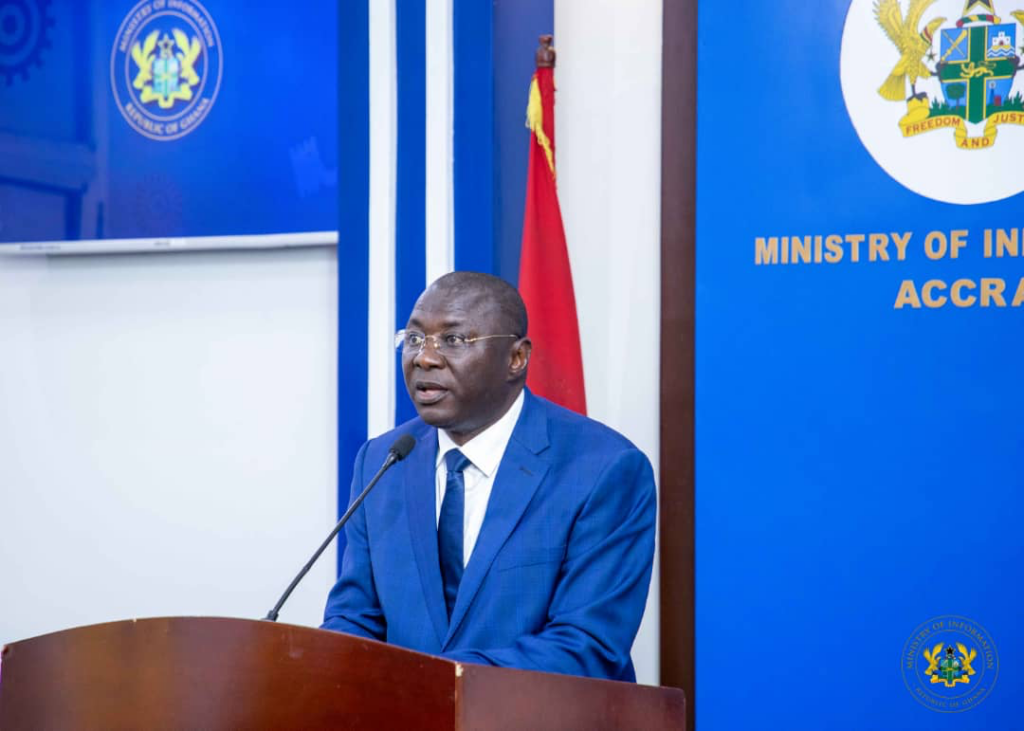
The Deputy Minister for Communication, Digital Technology and Innovations, Mohammed Adams Sukparu, said the government would support the programme to ensure it reaches all Ghanaian SMEs, including those outside the major urban centres.
In a sideline interview after the launch, he said digital commerce must not be confined to cities but should extend to rural entrepreneurs, traders, farmers and artisans, enabling them to access new markets, increase their incomes and grow their businesses.
He said the partnership between the International Chamber of Commerce (ICC), TikTok and Universal Merchant Bank (UMB) aligns with the government's agenda of building an inclusive digital economy in which no community is left behind.
Government, he added, would continue working with stakeholders to create an enabling environment where digital innovation supports business growth, job creation and sustainable livelihoods.
The Head of Government Relations and Public Policy, Southern Africa, at TikTok, Tholoana Ncheke-Mahlaela, said the initiative is fundamentally about employment, particularly the jobs entrepreneurs create for themselves.
“We’re talking about job creation. Sometimes it sounds as if we need somebody to come and create it for us. At such venues, we will create our own jobs, and not only our own jobs,” she said.
She described the labs as a mindset shift from job seeker to job creator and outlined how small businesses could grow.
“We can do a small business and employ two or three around us. The two, three becomes 30, 40. The 40, 50 becomes 60, and so on and so forth,” she said, adding that “this is where it starts.”
Consistency and trust as the core skills
Ncheke-Mahlaela said reputation is the foundation of online selling.
“What is core is to be consistent, to be able to reach out, create a reputation. If today I successfully sell to you, your good experience with me will go out to bring others to buy from me,” she said.
She stressed that digital commerce depends heavily on customer confidence.
“The customer that you are selling to is not in your shop. He’s not on the roadside pavement looking at your merchandise. He’s at his home. Maybe he’s in his bed flicking on his phone. You need to be able to convince him, and he has to have the trust that as soon as he presses purchase and he pays and sleeps, then the goods will be delivered as per the specification that you said on your list,” she said. “So there is a lot to learn.”
She added that businesses must also be equipped with the right attitude towards doing business with the international market.
The Acting Chair of ICC Ghana, Mohammed Samara, said in an interview that the programme is designed to help small businesses overcome infrastructure challenges.
“Through our platform and the global nature of our platform, as well as very specific and targeted interventions by the Centre of Entrepreneurship of ICC, we then would be able to empower a specific cohort of enterprises in Ghana, and that actually would have a snowball effect,” he said.
He said the ambition goes beyond individual businesses to the wider value chains in which many SMEs operate.
“Some of the SMEs that we have here are people who sometimes source some of their produce from local markets. They then are able to supply to retailers. They are able to supply to restaurants. They are able to supply to homes as well. So there’s an entire value chain that we are hoping through this collaboration, we will be able to positively impact,” he said.
The Labs will deliver training through three integrated components.
Community Events will offer in-person sessions that connect entrepreneurs with experts and peers. Online Modules will provide self-paced digital commerce courses, while Virtual Classrooms will host instructor-led sessions where participants can engage directly with industry experts.
The programme also includes specific tools and practical exercises that participants can immediately apply to their businesses.
The ICC Ghana Secretary-General, Emmanuel Doni-Kwame, said the initiative would build the capacity of Ghanaian businesses to use digital platforms to expand beyond the country's borders.
He had earlier announced that the Ghana launch would be implemented in collaboration with the Ghana Enterprises Agency to ensure the programme reaches businesses outside Accra.
The programme is also supported by UMB, the official financial partner, and the Ghana Chamber of Telecommunications.
With the launch complete, Mr Samara said SMEs could now enrol in the programme. He urged businesses to commit to the full curriculum rather than selecting only a few modules.
“We invite SMEs to really sign up in their numbers and to go through the modules, and not just one or two modules, but to actually go through the entire module offering, because then each module builds on the next,” he said.
The Digital Commerce Labs is a joint initiative of TikTok and the ICC aimed at unlocking digital commerce opportunities for small businesses in selected markets across Latin America, Africa and South-east Asia.
It combines TikTok’s digital commerce tools and global reach with the ICC’s expertise in international trade and its network of national committees and chambers of commerce in over 170 countries.
Ghana is part of Wave 2 of the global rollout, alongside Argentina, Kenya, South Africa and Thailand. Activities began in October 2026 and will run throughout the year.
The launch brought together government representatives, business leaders and development partners.
For Ghana’s SME sector, a major source of employment, the Labs represent an opportunity to leverage formal business skills, trade discipline and digital reach to transform small businesses into scalable exporters and job creators.
- icc
- commerce
- job
- business
- tiktok
- launch
- digital
- government