Gov’t launches Foundational Learning Programme 2026-20240 to improve early childhood education
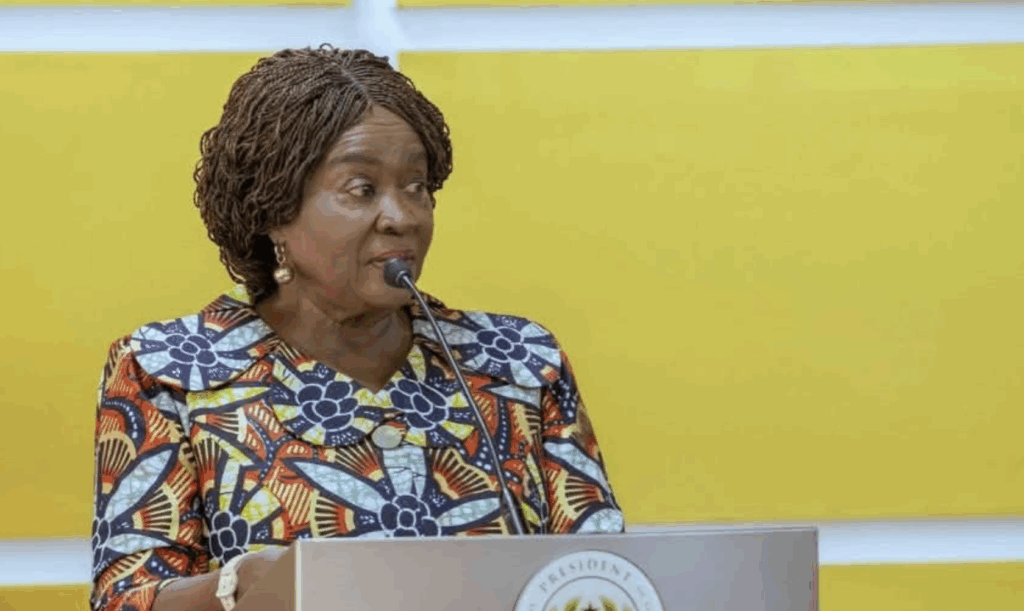
The government has launched a flagship foundational learning programme aimed at improving the quality of early childhood education and strengthening literacy and numeracy skills among preschoolers and young learners across the country. She said that strong foundational education was essential to Ghana’s ambition of building a productive economy capable of creating jobs, developing competitive industries and improving living standards.
The government has launched a flagship foundational learning programme aimed at improving the quality of early childhood education and strengthening literacy and numeracy skills among preschoolers and young learners across the country.
She said the target formed part of the government’s 2026–2040 Foundational Learning Agenda, which seeks to address learning gaps and ensure that children acquire essential skills during their early years of education.
Speaking at the launch, Vice-President Professor Naana Jane Opoku-Agyemang announced a 2030 target to significantly improve foundational literacy, numeracy and psychosocial development among children aged four to eight in public and low-fee private schools across the country.
She said the necessary benchmarks and structures had been put in place to guide the implementation of the programme.
She said that strong foundational education was essential to Ghana's ambition of building a productive economy capable of creating jobs, developing competitive industries and improving living standards.
According to her, achieving these goals requires more than investment in physical infrastructure and technology. It also depends on developing a population with the ability to think critically, solve problems, and apply knowledge in practical situations.
“We want an economy that produces more of what it consumes, processes more of its agricultural output, develops competitive industries, and creates better employment opportunities. This requires investment in infrastructure, technology, and enterprise,” she said.
The Vice-President added that such an economy could only be achieved if children received the right educational foundation to develop their abilities and contribute meaningfully to national development.
“It also requires people who can learn, reason, adapt, and apply knowledge in practical ways,” she said.
Professor Opoku-Agyemang further highlighted the importance of equity in education, arguing that children from different backgrounds often begin their educational journeys with unequal levels of preparation and support.
She observed that while some children have access to learning materials and other educational resources at home, others depend largely on what their schools can provide.
“Strong foundational education helps ensure that a child's future opportunities are not determined so heavily by the circumstances into which that child was born,” she said.
The Vice-President acknowledged that Ghana had introduced several education reforms over the years to improve the quality of teaching and learning. However, she noted that progress in improving learning outcomes had not been consistent across the country.
She said the new programme presented an opportunity to build on previous interventions and make sustained improvements in foundational learning.
“The years ahead of us allow us to make steady, measurable improvements in foundational learning. We must pursue our objectives consistently, learn from experience, and respond to the needs of our schools and learners,” she said.
The Minister for Education also mentioned the importance of ensuring that every Ghanaian child receives a strong educational foundation, describing the programme as a critical intervention in the country's efforts to improve basic education.
He said the initiative was being championed by the Vice-President because of her longstanding contribution to education and her commitment to improving learning outcomes.
The Minister also assured development partners of the government's commitment to working together to achieve the programme's objectives.
He specifically acknowledged the support of the British Government and other development partners, expressing confidence that their collaboration would help deliver the expected results.
“The government of Ghana will partner with the British government and other development partners to realise the goal set,” he said.
The Minister further cautioned against assessing the success of education reforms within the short term, arguing that meaningful improvements in foundational learning require sustained investment and long-term commitment.
He suggested that the impact of the programme should be assessed over a decade rather than within the first two to four years of implementation.
“I'll disappoint you if you think that you want to measure the success of a Minister for Education in two, three, or four years. In a decade,” he said.
The Minister also cited Ghana's literacy performance as an indication of the progress made in education, while acknowledging the need to strengthen foundational learning further.
He put the country's literacy rate at approximately 78 per cent, compared with a global figure of about 98 per cent.
However, he noted that the country's performance among younger people was encouraging, with literacy among those aged 15 and below estimated at about 91 per cent.
“What is encouraging is that about 91 per cent of the literacy is within the age cohort of up to 15 years. So we are doing pretty well as a country,” he said.
The launch featured the unveiling of the Foundational Learning Ecosystem Framework and strategic documents, the handover of learning materials, the inauguration of the National Foundational Learning Working Group and the signing of a National Foundational Learning Compact.
- education
- learning
- programme
- child
- foundational
- childhood
- government
- country