business

Only 36% of businesses described electricity as very or mostly reliable – KPMG, UNDP survey
Only 36% of businesses described electricity as very or mostly reliable – KPMG, UNDP survey

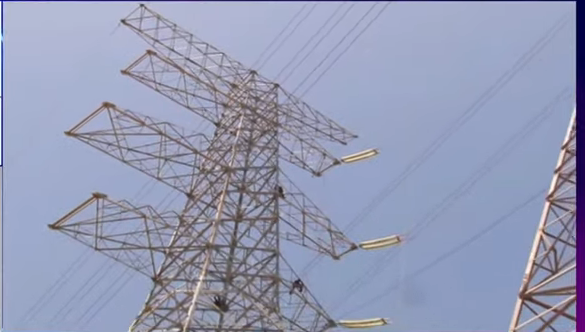
A survey by professional services firm KPMG and the United Nations Development Programme has revealed that only 36% of businesses described electricity as very or mostly reliable. It pointed out that the International Monetary Fund’s (IMF’s) November review also highlighted the importance of completing the delayed audit of Electricity Company of Ghana collection accounts, adding any extended-hours tariff arrangement must be evaluated against cost recovery and actual electricity demand.

A survey by professional services firm KPMG and the United Nations Development Programme has revealed that only 36% of businesses described electricity as very or mostly reliable.

Forty-seven percent also experienced occasional interruptions and 44% prioritised affordable and predictable tariffs.

The survey highlights the combined effect of power interruptions, affordability and billing.

The report stated that the government and sector institutions should prioritise feeder-level reliability, meter accuracy, complaint resolution and the disclosure of service-quality performance in productive areas.

“A tariff hold can provide stability but cannot substitute for operational improvement. ECG distribution reform should address billing accuracy, technical and commercial losses and a transparent treatment of public-service obligations”, the report stated.

It pointed out that the International Monetary Fund’s (IMF’s) November review also highlighted the importance of completing the delayed audit of Electricity Company of Ghana collection accounts, adding any extended-hours tariff arrangement must be evaluated against cost recovery and actual electricity demand.

The focus-group participants identified billing disputes and power interruptions as operational constraints affecting production and cash-flow planning.

They therefore want better metering, distribution performance and transparent service standards, describing them as essential for reliable production.

Seventy-five percent of the respondents surveyed were male, while 66.1% reside in the Greater Accra region.

  • electricity
  • survey
  • kpmg
  • service
  • interruption
  • tariff
  • billing
  • business

Summaries and tags are generated automatically. Stay informed with VidiaNews.

Related news

2027 Budget should protect fiscal credibility, direct scarce public resources towards productive capacity – KPMG Boss
business

2027 Budget should protect fiscal credibility, direct scarce public resources towards productive capacity – KPMG Boss

The Country Managing Partner of KPMG, Andy Akoto, wants the 2027 Budget to protect fiscal credibility while directing scarce public and private resources towards productive capacity, jobs and infrastructure that can be implemented and maintained. Highlighting his expectations of the 2027 Budget, Mr. Akoto said Ghana enters the 2027 budget cycle from a stronger macroeconomic position, with growth remaining firm and inflation materially lower.

Read →
Over 70% of Ghanaians expect jobs and youth employment as top priorities in 2027 Budget-KPMG/UNDP survey
business

Over 70% of Ghanaians expect jobs and youth employment as top priorities in 2027 Budget-KPMG/UNDP survey

Results from a survey by the Auditing and Advisory firm KPMG and the United Nations Development Programme has revealed that 71.0% of respondents want jobs and youth employment to be national priorities in the 2027 Budget. Drawing on these findings, the report sets out four priority areas for policy consideration: They are enabling enterprise growth through affordable finance and predictable taxation; turning the 24H+ programme and New Economy agenda into productive investment; improving public investment value and strengthening financial discipline, supported by effective coordination through…

Read →
Join BRICS, Nigeria has no business with poverty — Falana tells FG
business

Join BRICS, Nigeria has no business with poverty — Falana tells FG

Join BRICS, Nigeria has no business with poverty — Falana tells FG. …Urges government to prioritise local refining, alternative economic policies By Favour Ulebor, Abuja A Senior Advocate of Nigeria, Femi Falana, has urged the Federal Government to join the BRICS economic bloc and adopt alternative economic policies, declaring that Nigeria has no business with poverty. He urged the Federal Government to reconsider economic policies promoted by the IMF and the World Bank and explore alternative programmes that prioritise domestic production, economic self-reliance and the welfare of Nigerians.

Read →