64,000 Nigerians flee to Niger Republic over Insecurity — UNHCR
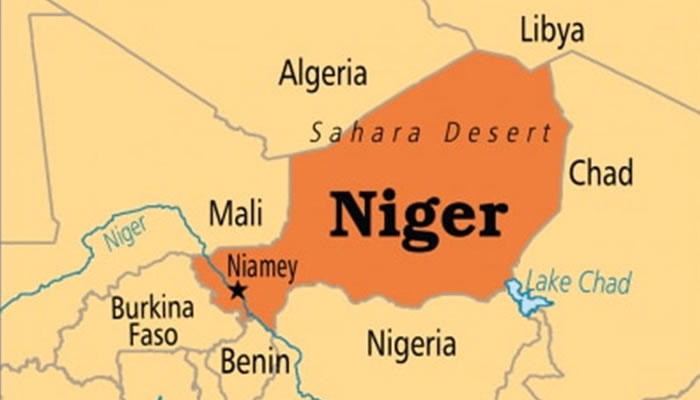
*FG, UNHCR, Germany take essential services to hard-to-reach communities By Joseph Erunke & Ibrahim Hassan-Wuyo NEARLY 64,000 Nigerians have fled their homes and crossed into neighbouring Niger Republic since the beginning of 2026 to escape violence involving Islamist militants and armed criminal gangs, the United Nations High Commissioner for Refugees, UNHCR, has disclosed. UNHCR, in a report monitored on Radio France International, RFI, Hausa Service, said about 327,500 Nigerians were already seeking refuge in Niger, which hosts over 500,000 refugees and asylum-seekers.
*FG, UNHCR, Germany take essential services to hard-to-reach communities By Joseph Erunke & Ibrahim Hassan-Wuyo NEARLY 64,000 Nigerians have fled their homes and crossed into neighbouring Niger Republic since the beginning of 2026 to escape violence involving Islamist militants and armed criminal gangs, the United Nations High Commissioner for Refugees, UNHCR, has disclosed.
This came the federal government, UNHCR and the German government launched a mobile service delivery initiative to address documentation challenges facing an estimated 3.7 million Nigerians displaced by conflict, insecurity and natural disasters. UNHCR, in a report monitored on Radio France International, RFI, Hausa Service, said about 327,500 Nigerians were already seeking refuge in Niger, which hosts over 500,000 refugees and asylum-seekers.
Several hundred others have reportedly crossed into Benin Republic. UNHCR said most of the new arrivals settled in Diffa and Tahoua, with more than 23,000 people, over two-thirds of them children, arriving in Diffa since January. It warned that many displaced families were living in makeshift shelters without adequate food, clean water and healthcare, amid rising cases of malnutrition and respiratory infections.
The agency also said only about five per cent of Nigerians who arrived in Niger this year had been formally registered, limiting their access to humanitarian assistance and essential services. It appealed for $11.4 million to support its response in Niger, Nigeria and Benin, including $2 million for urgent food, water, shelter, healthcare and protection needs.
Meanwhile, the Federal Government, UNHCR and the German government have launched a mobile service delivery initiative to address documentation challenges facing an estimated 3.7 million Nigerians displaced by conflict, insecurity and natural disasters. Under the programme, 10 specially equipped mobile centres have been handed over to selected state governments to provide National Identification Numbers (NIN), birth certificates, Bank Verification Numbers, BVN, SIM registration, bank accounts and enrolment in the National Social Register.
The initiative, tagged One Motor, Plenty Services, is designed to bring essential government services to internally displaced persons, refugees and vulnerable populations in remote communities. Speaking at the handover ceremony, the Minister of Humanitarian Affairs and Poverty Reduction, Dr Bernard Doro, said the intervention would address the exclusion of vulnerable citizens who could not access government services because of distance, displacement and lack of identification.
“For millions of our citizens, the problem is not merely that services do not exist. The problem is that those services most often do not reach them,” the minister said. “They are invisible to the very system that has been designed to care for them. So today, we are changing the narrative. We are changing the direction of travel. When people cannot reach essential services, we must bring those services directly to them,” he said.
Doro said identity documentation was critical to accessing economic opportunities, government assistance and social protection. “This matters because ID is the first step out of poverty. You cannot be paid if you cannot be identified. You cannot be protected if you cannot be counted. Every NIN issued and every account opened from these vehicles is a person moving from the margins into the system,” he said.
He warned beneficiary states against allowing the vehicles to become abandoned assets, insisting that they must be maintained and regularly deployed. “Today, we hand you more than vehicles. We hand you a responsibility. These units must not sit in government car parks. They must be fueled, maintained, secured and kept on the road, reaching the last camp, the last village and the last family,” he said.
- unhcr
- nigerians
- service
- niger
- government
- republic
- insecurity
- initiative