Victorian Psycho review – Maika Monroe has a blast in unsteady horror romp
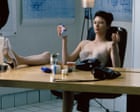
The It Follows and Longlegs star tears into the role of a murderous governess in this hit-and-miss adaptation of Virginia Feito’s gory novel It’s not that hard to figure out why a lower-class woman toiling away in Victorian England would be so easily driven to violently murder everyone around her. As Winifred Notty (Maika Monroe) fills the frame in Victorian Psycho, heading to a new job as governess for a rich family, it’s easy to be on her side.
The It Follows and Longlegs star tears into the role of a murderous governess in this hit-and-miss adaptation of Virginia Feito’s gory novel
It’s not that hard to figure out why a lower-class woman toiling away in Victorian England would be so easily driven to violently murder everyone around her. If it’s not the brittle entitlement of those who employ you, it’s the unending misogyny of the system you’re forced to be a subservient part of, all the while being underpaid and undervalued and at the mercy of sexual violence, a multitude of diseases and an average lifespan of just 42.
As Winifred Notty (Maika Monroe) fills the frame in Victorian Psycho, heading to a new job as governess for a rich family, it’s easy to be on her side. Even as her murderous impulses start to rear their head, they’re made somewhat understandable, although Winifred isn’t just a woman reacting to the various injustices of the time – she’s one responding to a demon within her, a darkness she has chosen to embrace rather than resist. Darkness is her friend, a protection against harm, and a way to possess some sort of control in a world that has denied her any of it.
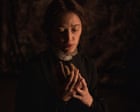
The film, based on the recent book by Virginia Feito, is less interested in taking Winifred and her psychological unravelling all that seriously, and more in what gonzo fun might be had in watching what happens when she takes an axe to the world around her. Feito, who also acts as screenwriter, and director Zachary Wigon, who last made dom/sub chamberpiece Sanctuary, wisely avoid turning her into a simplified Victorian girlboss fighting back against the patriarchy, and instead there’s something stranger and possibly supernatural in her urge to kill. We spend the film alongside her, and Wigon employs some marvelously unsettling sound design to denote that there is also a truly monstrous presence under the surface. But his greatest special effect is Monroe herself.
The actor has become known as a bit of a scream queen (an all too easily crowned title these days) ever since she broke out in It Follows, but despite roles in hits such as Longlegs and Watcher, she’s never really been afforded that much to do beyond looking petrified. Maybe that’s why it feels like she has so much more to give and prove here, really tearing into a character that requires her to do the petrifying. It’s not just the malevolent soundscape that makes it seem like there is an evil within her but Monroe’s unearthly contortions, an all-in, all-body performance that avoids slipping into histrionic silliness.
The film around her isn’t quite as steady, with the comedic elements pushing some scenes closer to the over-egged buffoonery of Downton Abbey spoof Fackham Hall (it also shares a star in Thomasin McKenzie, here playing a gullible co-worker). Ruth Wilson and Jason Isaacs play the vile heads of household with Hamnet’s Jacobi Jupe and Wednesday’s Evie Templeton as their increasingly disturbed offspring. As absurd as the upper classes were then and still are now, the extremes become a little too extreme here, and like Winifred herself, Feito and Wigon are often incapable of showing some necessary restraint (as a comedy it’s resoundingly unfunny). The direction, while often effectively off-kilter, can also be a little excessive (did we really need an immersive CG shot of a key going into a door?), so while the story does involve the character spiralling into chaos, the film itself could often do with spiralling a little less.
For all of its many flourishes, the plot is essentially a classic domestic thriller narrative, close to The Hand That Rocks the Cradle, the remake of which actually starred Monroe in the Rebecca De Mornay role (she fares far better here). There’s even a rather predictable reveal that, yes, there is also an ulterior motive aside from just madness, so while there’s great glee in pushing past boundaries (cannibalism, incest, infanticide), the structure is not one that ever truly surprises. There are a few too many touches, like some zany chapter titles, that fall into the self-congratulatory “aren’t we being wicked?” category, yet it’s just not as wicked as the makers seem to think it is or as wicked as Monroe deserves. It’s a film of great bloodshed, of cutting, slitting and stabbing, yet it never quite gets under our skin.
Victorian Psycho is out in US cinemas on 13 November, in Australia on 4 February, and in the UK at a date to be announced
- psycho
- maika
- monroe
- review
- blast
- horror
- romp
- governess