Time running out for young people to receive meningitis B vaccines in UK
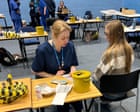
Just 28.2% of 18- and 19-year-olds have received their first dose in one-off campaign, UKHSA says The clock is ticking for young people in the UK to receive vaccinations to protect against meningitis B, experts have said, as figures reveal fewer than one in three eligible in one-off campaign have received their first dose. Earlier this year an unprecedented outbreak of meningitis B in Kent and clusters of cases in Dorset and Berkshire caused three deaths, as well as life-long health consequences among some of those who survived.
Just 28.2% of 18- and 19-year-olds have received their first dose in one-off campaign, UKHSA says
The clock is ticking for young people in the UK to receive vaccinations to protect against meningitis B, experts have said, as figures reveal fewer than one in three eligible in one-off campaign have received their first dose.
Earlier this year an unprecedented outbreak of meningitis B in Kent and clusters of cases in Dorset and Berkshire caused three deaths, as well as life-long health consequences among some of those who survived.
As a result, the government announced in June a one-off, time-limited programme offering young adults two doses of a vaccine that protects against most strains of MenB bacteria.
But figures from the UK Health Security Agency have revealed just 28.2% of 18- and 19-year-olds have received a first dose. Dr Shamez Ladhani, consultant epidemiologist at the UKHSA, said time was running out for young people to get both doses of the vaccine, and urged those eligible to book an appointment.
He said: “The deadline for getting your first dose is 31 December, so please don’t leave it until the end of term or forget it amongst all the Christmas and other holiday festivities.”
Prof Andrew Pollard, director of the Oxford Vaccine Group, also raised concerns. He said: “While we can’t be sure whether there will be more student outbreaks of meningitis, as happened earlier this year in Kent, it is very worrying to me that uptake is so low.
“MenB vaccines can’t stop all cases, but they are still highly effective. It would be a tragedy if even one preventable case were to occur, when we have the tools to keep our young people safe.”
Two doses of the vaccine, given at least 28 days apart, are needed for protection, with UKHSA noting a second dose will be available until 31 March 2027. The latest data suggests almost 70% of 18- and 19-years-olds who have received a first dose have already had their second dose.
According to UKHSA, all those born between 1 September 2007 and 31 August 2008, are eligible for the vaccinations, as well as people under the age of 25 who started university, or residential further education, for the first time this autumn.
UKHSA said freshers had a risk about seven times higher than their peers who did not go to university. Experts have said factors such as shared accommodation, parties and large social networks can aid the spread of the bacteria.
Dr Eliza Gil, a clinical lecturer at the London School of Hygiene and Tropical Medicine, said the peak season for invasive MenB infection was typically December to March. She said: “The decision to make the vaccine offer time limited likely reflects both modelled cost effectiveness and an attempt to ensure eligible young people have their first vaccine dose before peak season, so that they have immune protection by the time they are most likely to be exposed.
“Although the overall risk of MenB remains low, if eligible young people are not vaccinated in sufficient numbers, or in time for peak season, the vaccine programme is likely to be less effective in preventing further outbreaks.”
Henry Gregg, chief executive of the National Pharmacy Association, said further action was needed to promote the offer. He said: “This should also include universities promoting this campaign strongly to those living in residential accommodation.”
Dr Michael Head, associate professor in global public health at the University of Southampton, said there was a case for reconsidering the December deadline, alongside enhanced health promotion campaigns.
“The risk of meningitis doesn’t suddenly disappear on 1 January. Young people will continue to mix inside and outside of universities,” he said. “I would also favour a wider review of whether MenB vaccination should routinely be offered to adolescents.”
The charity Meningitis Now and the National Union of Students also back routine MenB vaccination for young people; while earlier this year the Joint Committee on Vaccination and Immunisation recommended a routine single MenB booster jab for 15-year olds who had menB vaccinations as infants, with two doses for those who missed out.
Gregg said an annual campaign should replace an ad-hoc, standalone event. He said: “MenB is an extremely serious illness and we must do all we can to minimise the risk of tragic outbreaks that we have already seen this year in Kent, Berkshire and Dorset.”
- meningitis
- people
- time
- dose
- campaign
- vaccine
- old
- ukhsa