COP31: ‘Africa won’t sacrifice development to decarbonise’
African negotiators and civil society want a Brazil-led roadmap to transition from fossil fuels and deliver energy access, industry and jobs across the continent.
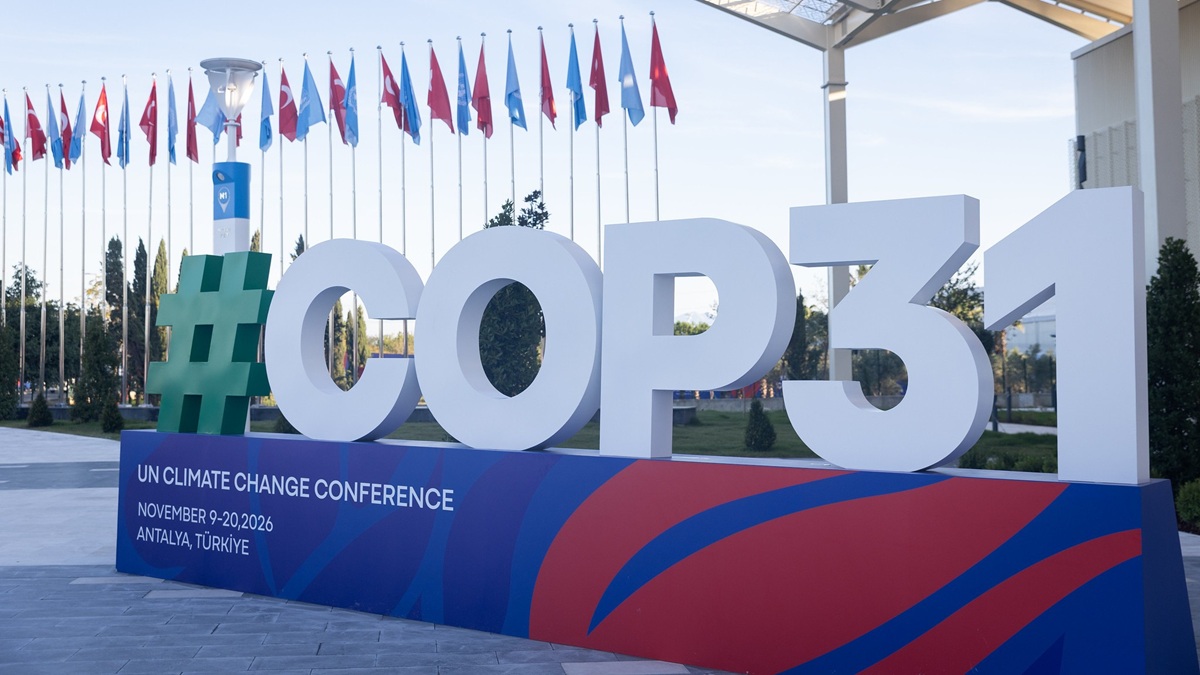
African negotiators and civil society groups have said the continent’s shift from fossil fuels must not sacrifice its development, after a Brazil-led roadmap for the transition was presented at COP31 in Antalya, Türkey.
The chair of the African Group of Negotiators (AGN), Nana Antwi-Boasiako Amoah, told journalists in Antalya that Africa needs to make the transition. Still, it has to be a just one, with the finance and technology to implement it.
“African countries have put forward ambitious NDCs and adaptation plans, but most of that ambition depends on finance that has not yet arrived,” he said.
Mr Antwi-Boasiako said ahead of the summit that Africa cannot allow its natural resources to be stranded when it needs them to develop, PREMIUM TIMES reported.
Mithika Mwenda, executive director of the Pan African Climate Justice Alliance (PACJA), a coalition of African civil society organisations, told a high-level dialogue on the roadmap that the transition should be measured by what it adds to energy access, economic transformation and sustainable development, and not solely by how much fossil fuel infrastructure is retired.
Mr Mwenda said developed countries should lead in cutting dependence on fossil fuels, given their historical responsibility for emissions and their greater financial and technological capacity, according to a PACJA statement.
“The roadmap should recognise that Africa’s energy transition must support broader structural economic transformation and must address the structural constraints that prevent African countries from pushing an ambitious and development-compatible energy transition,” he said.
PACJA made the same case in a position paper Mr Mwenda presented at the summit.
“Africa supports mitigation ambition aligned with science and the Paris Agreement—but ambition must be equitable, financed, technology-enabled and compatible with development,” the paper said. “Africa cannot be required to decarbonise without the means to do so.”
The group asked governments at COP31 to recognise energy access as a climate goal. The International Energy Agency said 655 million people worldwide lack electricity, including more than 560 million in sub-Saharan Africa.
Brazil’s COP30 presidency published the Roadmap on Transitioning Away from Fossil Fuels on 3 November as a voluntary guide to help energy systems shift from coal, oil and gas.
The 182-page document was presented in Antalya on Tuesday and is not open to negotiation. It invites countries to prepare national plans for clean energy systems by 2028
Nigeria was among the countries that backed the roadmap, alongside India, Germany, the Netherlands, the United Kingdom and Australia, according to the report. Nigeria’s representative told the launch that countries’ different starting points were fundamental.
Omotenioye Majekodunmi, director-general of Nigeria’s National Council on Climate Change (NCCC), set out the country’s conditions for the transition in her opening remarks at Nigeria Day at the Nigerian pavilion in Antalya on Wednesday.
“A just transition must be equitable and nationally determined, adequately financed, and responsive to the development realities of emerging economies,” Ms Majekodunmi said.
She noted that Nigeria had come to COP31 to build partnerships that could turn its priorities into action.
“For Nigeria, climate implementation must mean economic opportunity,” she said.
Nigeria’s climate plan puts the cost of meeting its goals at about $337 billion between 2026 and 2035, according to the NCCC.
About $2.5 billion a year went to climate action in Nigeria in 2021 and 2022, counting domestic and international sources, according to data from Climate Policy Initiative.
The UN secretary-general, António Guterres, proposed a climate justice compact on Wednesday to support developing countries’ transition from fossil fuels while protecting people already suffering from climate change.
Mr Guterres called for the roadmap to be fed into the next global stocktake, the review of progress under the Paris Agreement due in 2028. Saudi Arabia and other producers are expected to oppose that.
The AGN is pressing for a target to triple adaptation finance to be given priority in the cover decision, the political text adopted at the close of the summit on Thursday. The group lost its bid on Monday for separate agenda items on the target and on trade.
Mr Antwi-Boasiako told a press conference on Tuesday that the increase needs the right structures and a clear timeline. He addressed the opening plenary on Monday on behalf of the continent, noting that roughly two-thirds of the climate finance reported by rich countries came as loans.
“The transition cannot be called ‘just’ if low- and middle-income countries must mortgage their futures in the process,” he said.
- africa
- development
- negotiator
- society
- brazil
- roadmap
- transition
- fuel